Eleven Madison Park
| Food rating | 8-/10 (rating system) |
| Michelin stars | |
| Vegetarian menu availability | Fully vegan |
| Website | elevenmadisonpark.com |
All restaurants have changed a little as a result of the pandemic, but few have changed as radically as Eleven Madison Park. Pre-pandemic, it was one of the world’s most famous restaurants, holding three Michelin stars, ranked first on the world’s 50 best restaurants list in 2017, and famous around the world for its duck. Led by the Swiss chef Daniel Humm, its French-inspired cooking was a safe choice for coaxing unsuspecting clients into questionable business deals, or whatever else people do in Midtown Manhattan.
Then the pandemic hit; the restaurant closed, and to the surprise of everyone, Humm announced that it would reopen with a purely plant-based menu. Not vegetarian, not vegan with an optional meat supplement course, fully and entirely plant-based. I greatly admire the courage this took: placing vegan food at the very top of the fine dining world.
However, courage alone doesn’t make for tasty food, and early reviews of the vegan menu were harsh. Regardless, the restaurant has kept its three Michelin stars and its commitment to plant-based food. I’m curious then to see whether, now four years after the switch to the vegan menu, these initial reviews still feel accurate or whether they sound like a distant complaint from a disgruntled duck lover.
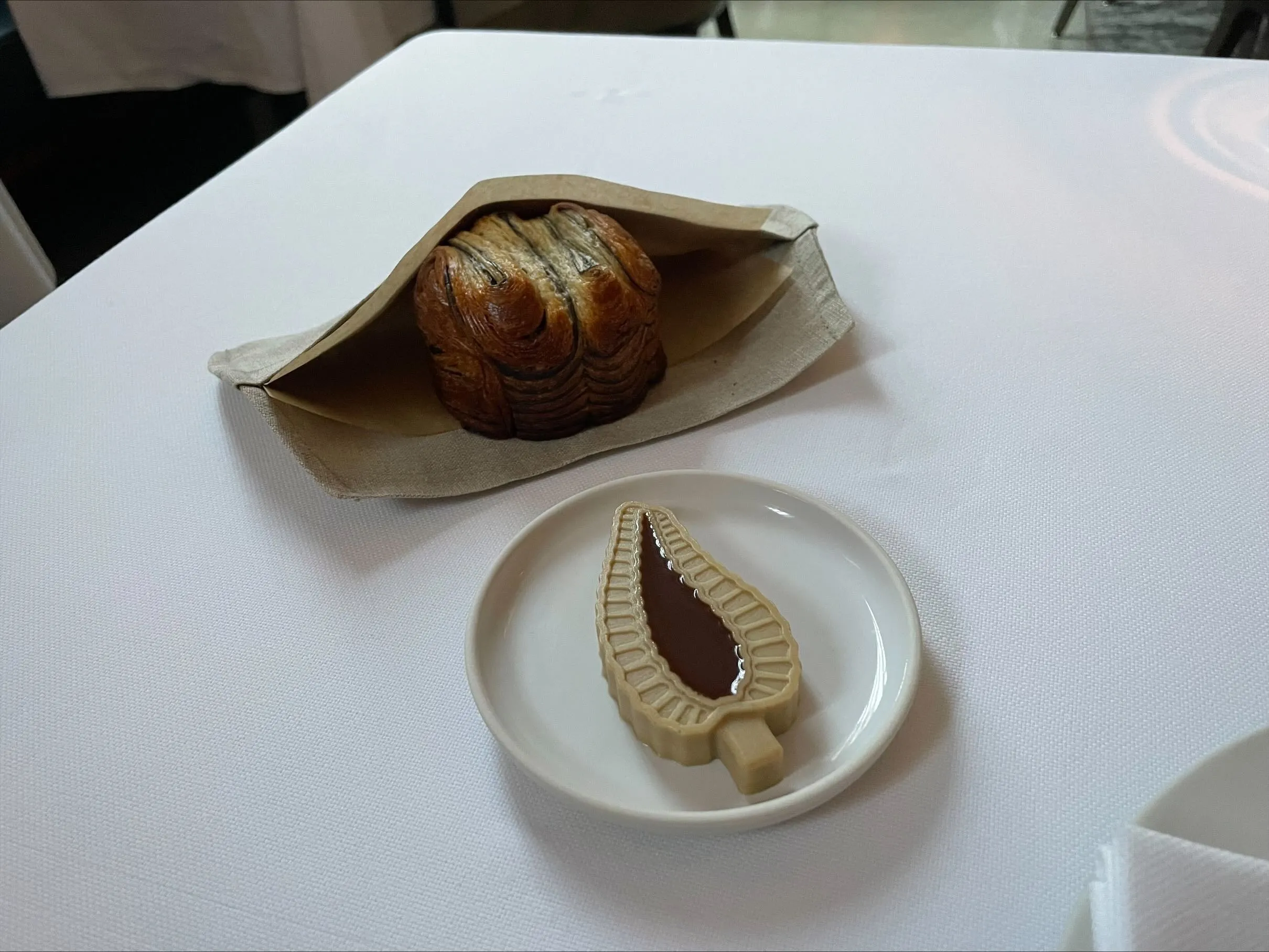
Refreshingly, instead of a long sequence of tiny amuse bouches to be eaten on an empty stomach, the menu starts with bread. And what a bread it is: perfectly laminated dough with streaks of caramelized onions, it is quite simply the best bread I’ve ever had. It’s vegan too, though that is almost beside the point. It’s served with a morel butter with a shallot glaze, which doesn’t taste very much of morels. But who cares if this is the bread it comes with? (10/10)
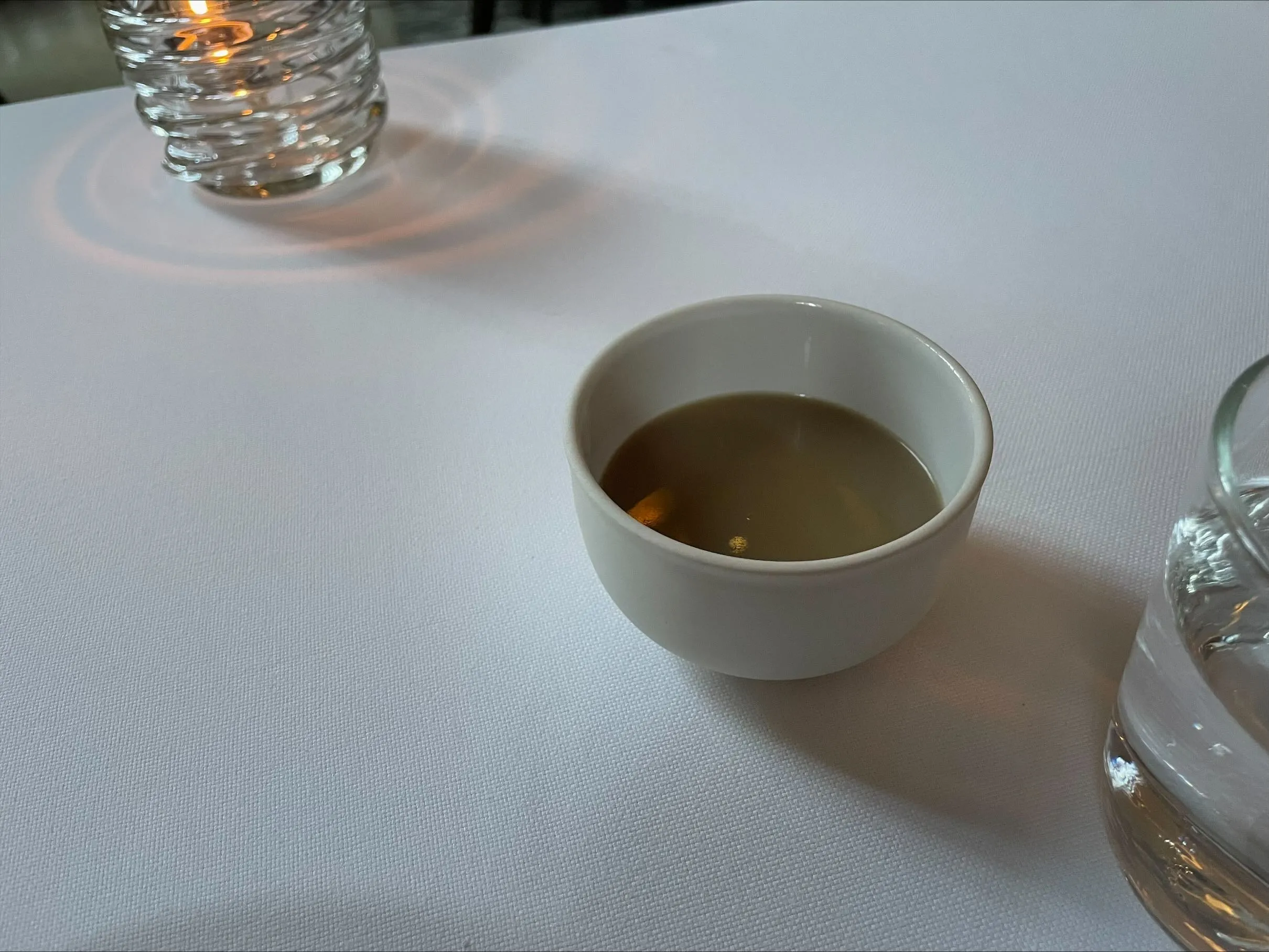
A morel velouté looks like a useful liquid to dip the bread into, but that would be a mistake. It does not taste as cleanly of mushrooms as I would have hoped, and in stark contrast to the bread itself, seems to suffer from the absence of dairy. (6/10)
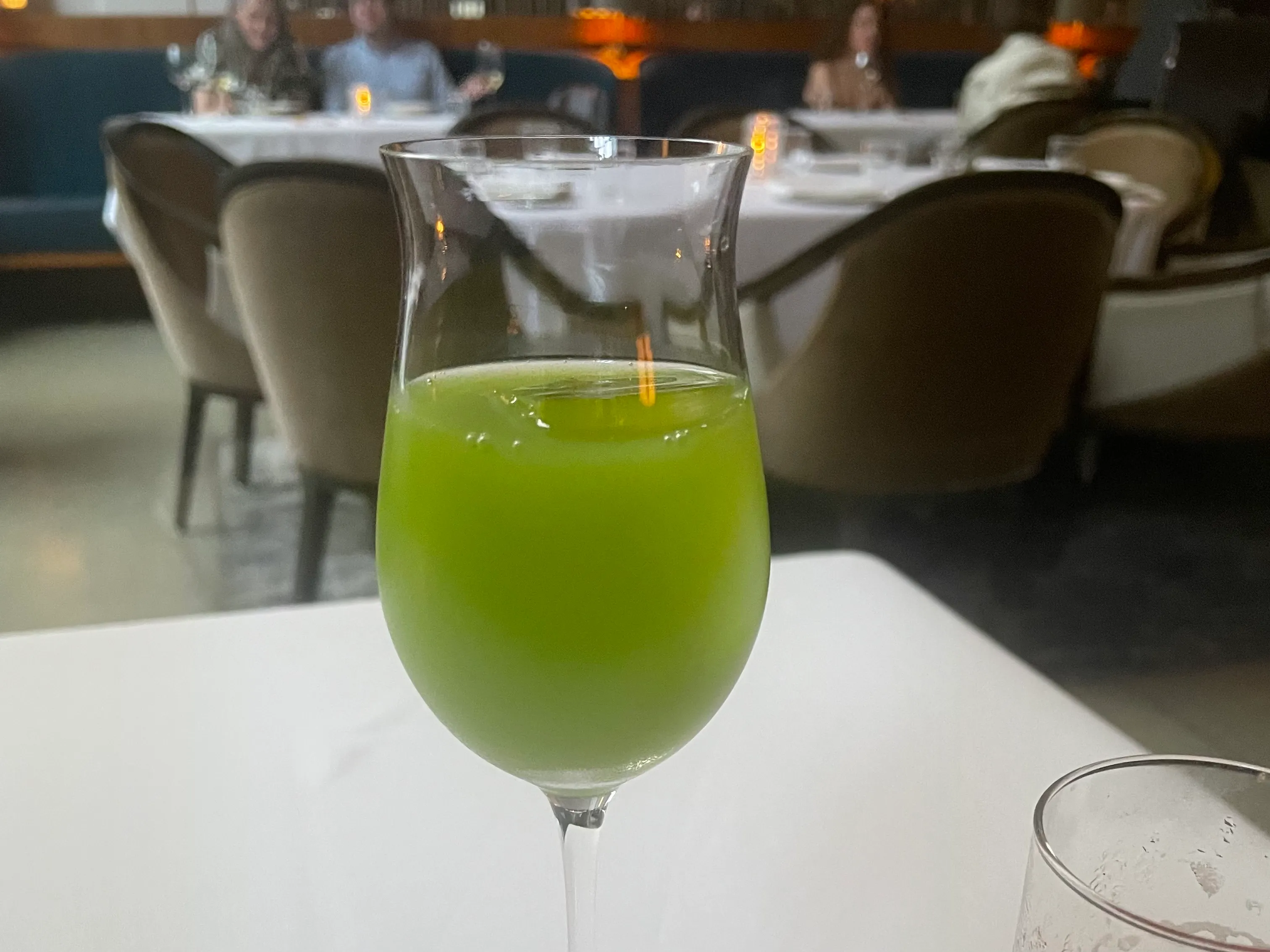
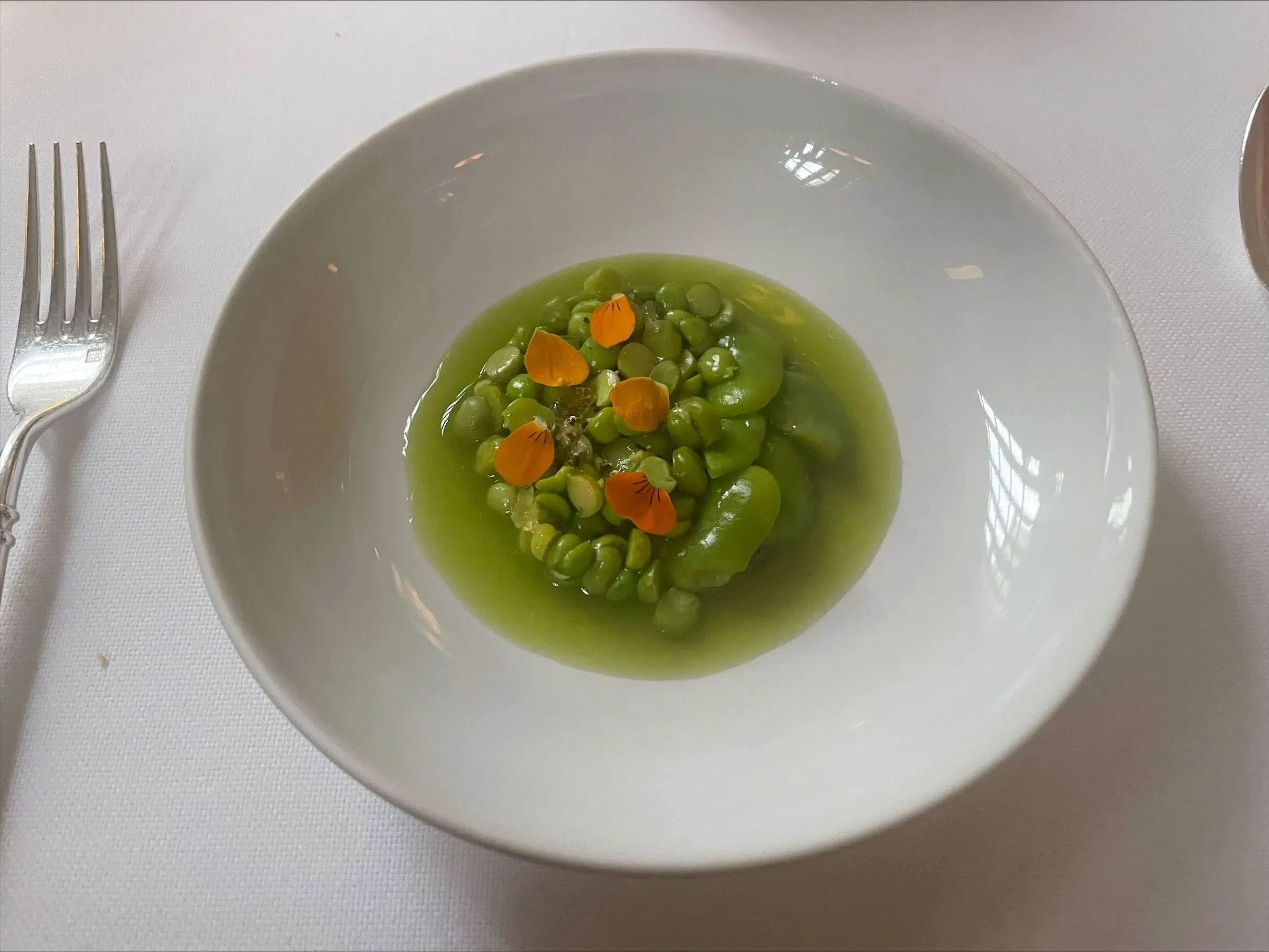
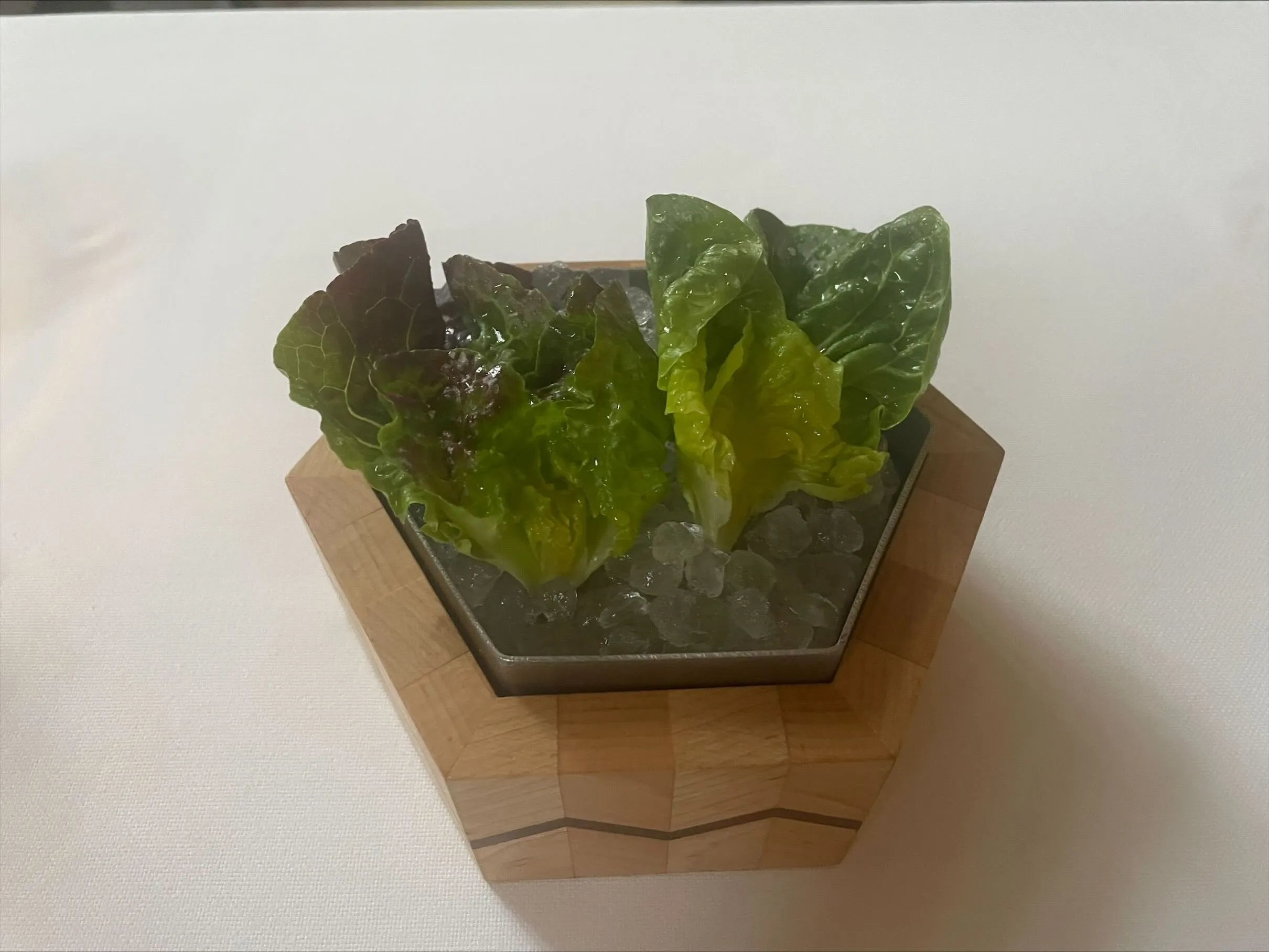
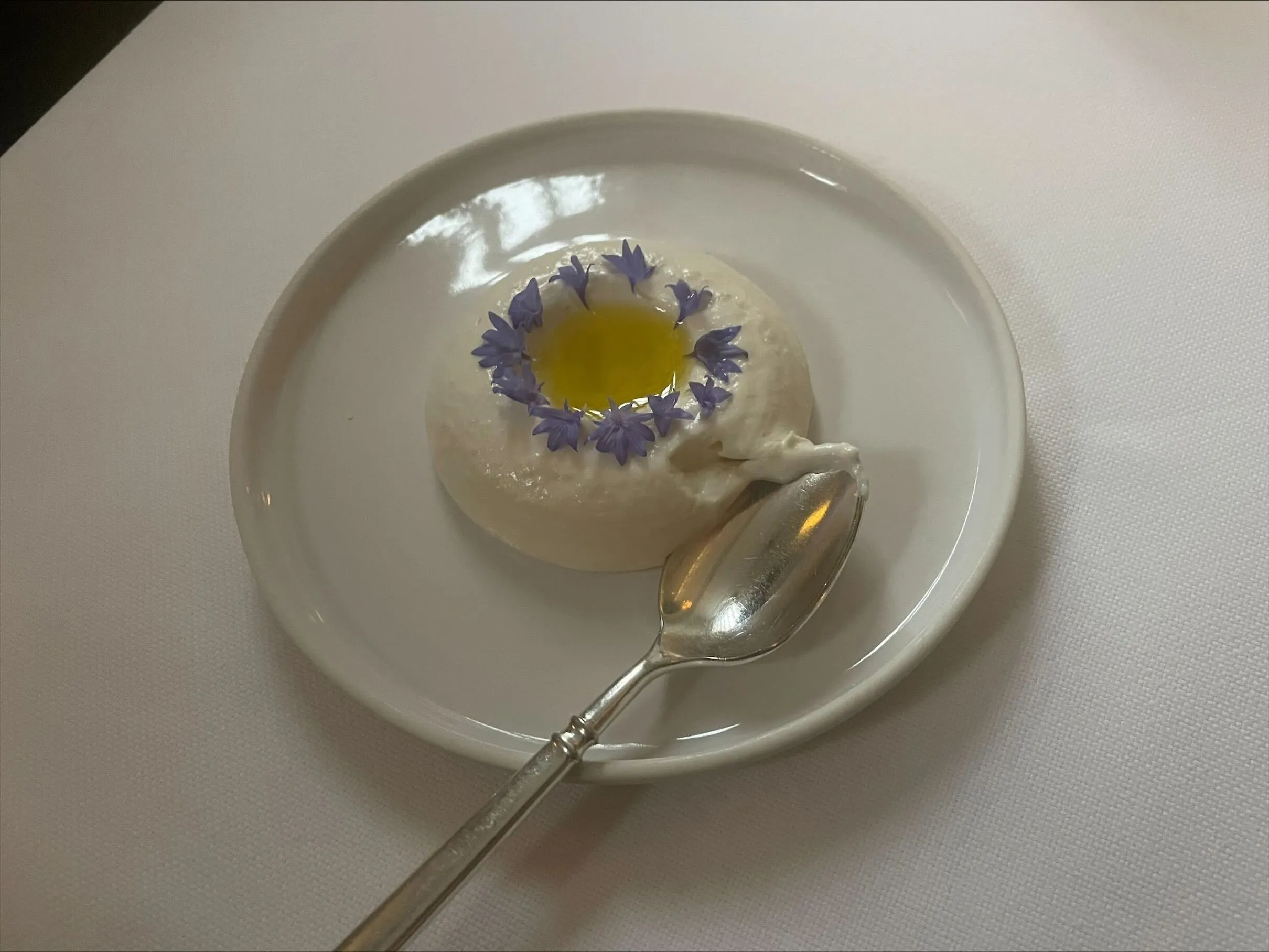
The first actual course consists of four parts, collectively titled a “celtuce celebration”. Part one is a juice of pea, apple, and celtuce, which is prepared at the table with great fanfare, like a cocktail. The juice is very well balanced and fresh, but at the end of the day it’s still just a juice and doesn’t have the kind of complexity I had hoped for, given the elaborate preparation. (7/10) Part two, a dish of peas and fava beans looks beautiful and tastes even better, with superb peas, a delicious sauce, and a citrus jelly on top for extra freshness and intrigue. (9/10) Parts three and four are meant to be eaten together: lettuce leaves dressed in a vinaigrette with almond ricotta. The vinaigrette is very acidic, and when mixed with a ricotta, the whole thing has a somewhat unpleasant sour milk taste. On a technical level, this is still very well executed, but the flavors don’t quite work for me. (6/10) When viewed as one dish, this is very well conceived and the simplicity of the juice works well with the remaining elements, so I overall enjoy this course more than the individual scores might suggest. (8/10)
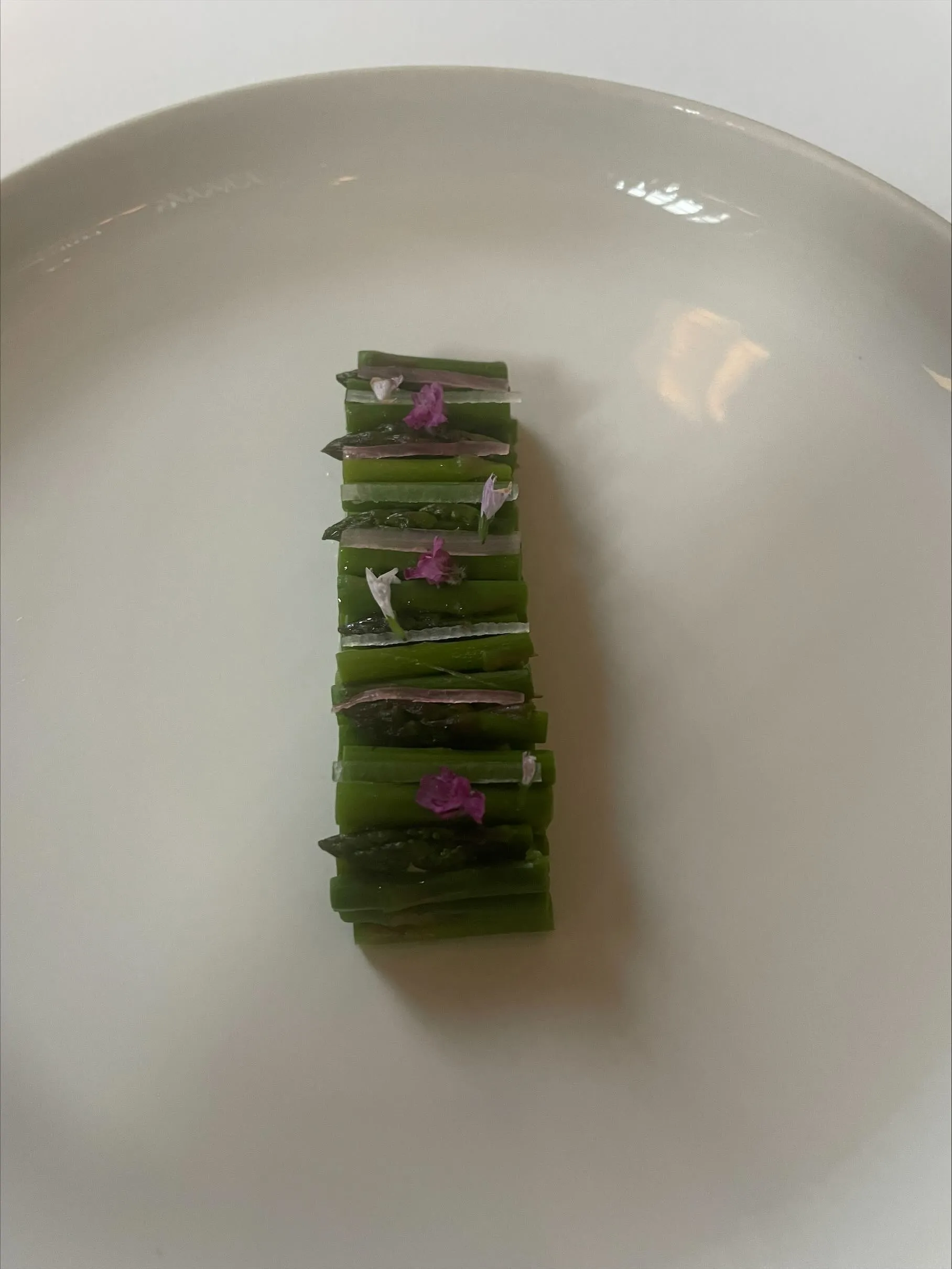
The next dish features baby asparagus, radish, shiso, and a number of other ingredients, carefully arranged in a little wall. This presentation, while pretty, presents an immediate issue: the outside ends of the wall have none of the sauce and seasoning that’s present in the middle part and thus taste comparatively bland. The middle part itself is very nice, although the asparagus itself is more watery and muted than I would like. (7/10)
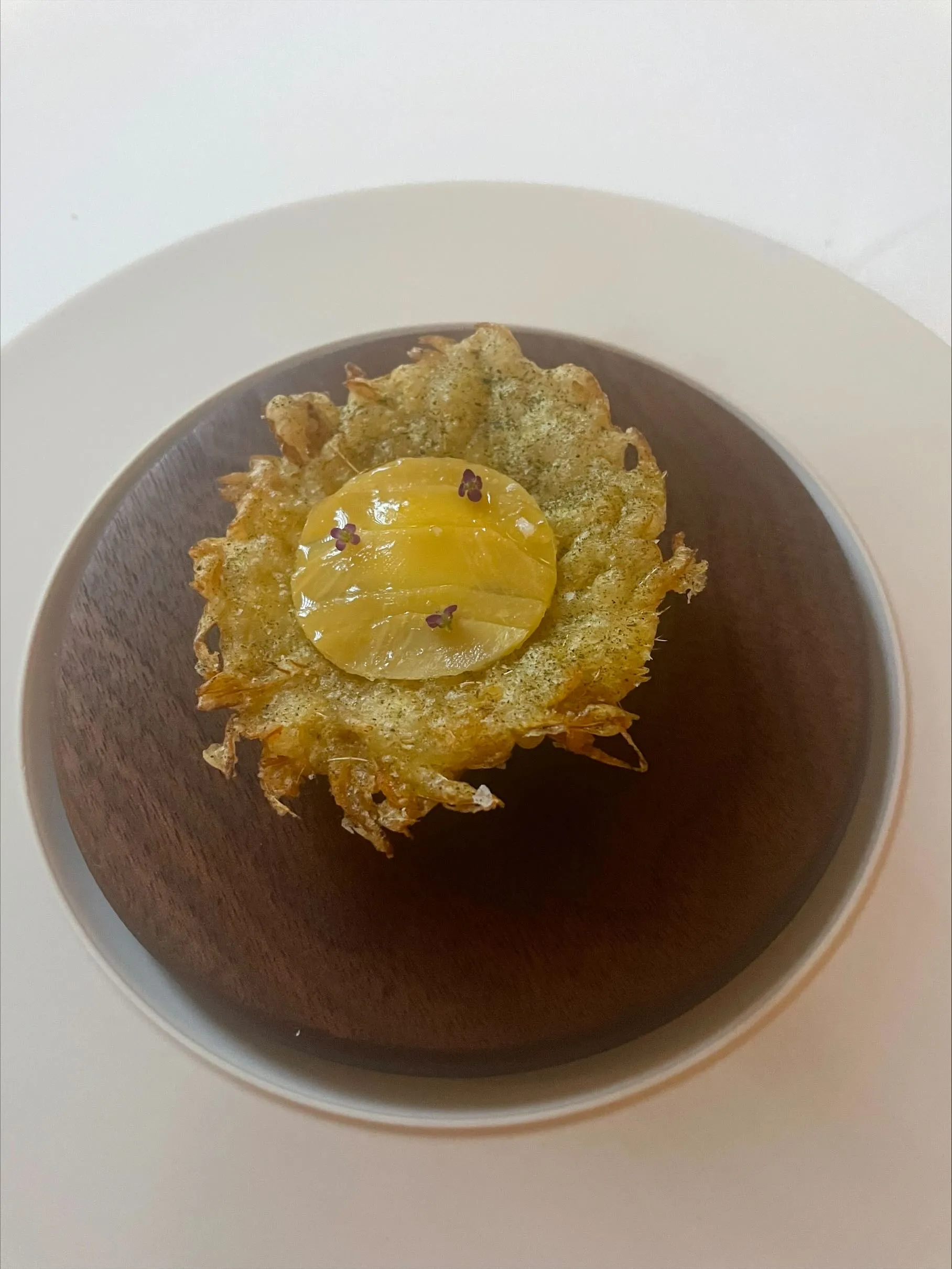
After these two cold and very light courses, we move on to a hot, greasy, fried tempura artichoke with a filling whose details I fail to note down. This is tasty in a straightforward sort of way, but there’s nothing special or surprising about it. The deep frying removes a lot of the more subtle flavor of the artichoke, so the whole thing ends up tasting like a well-executed bar snack that one enjoys for the one minute it takes to eat, and then never thinks of again. (6+/10)
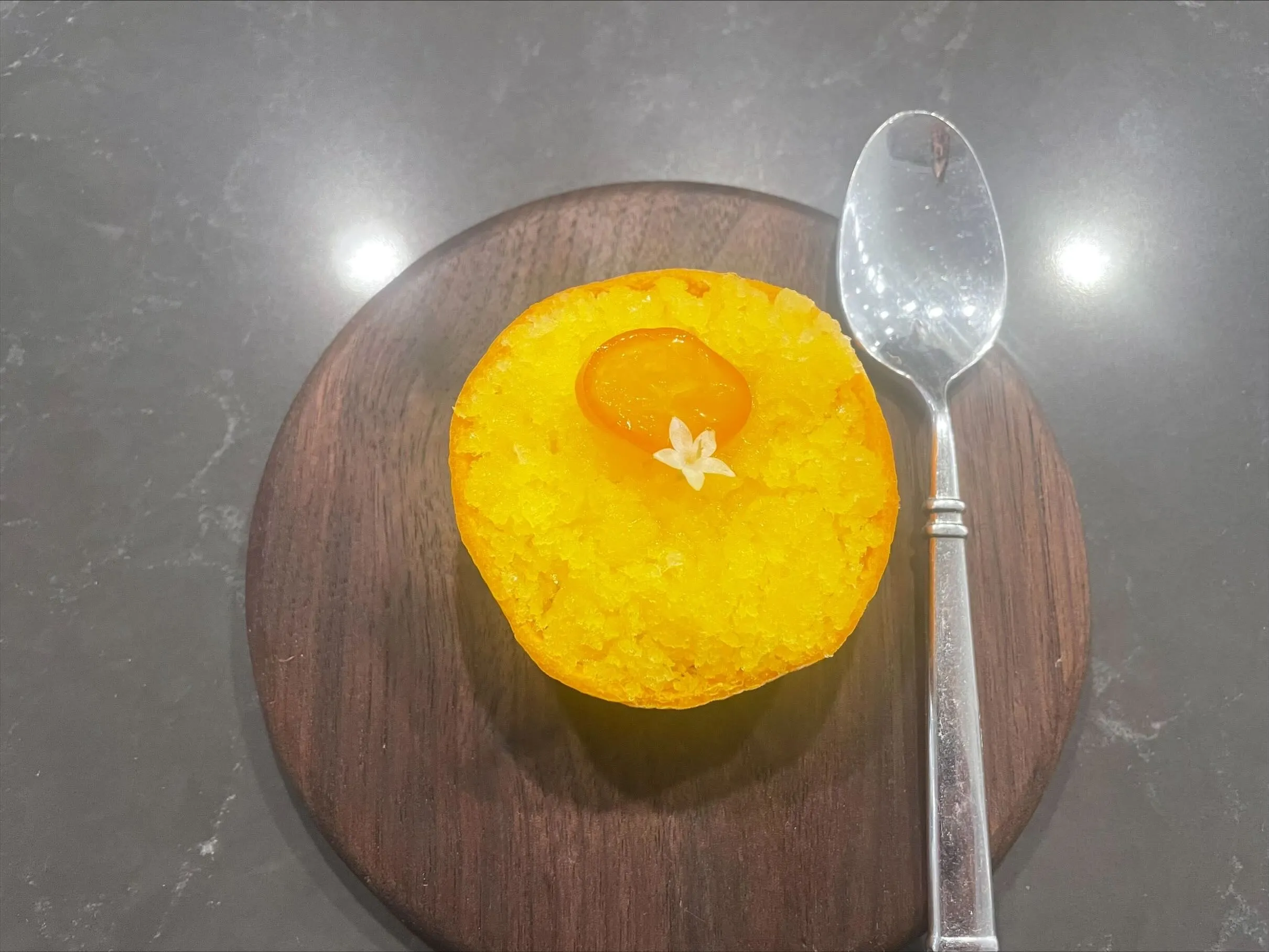
At this point, the service invites me to a little kitchen tour, which comes with a superb mandarin orange palate cleanser. (9/10)
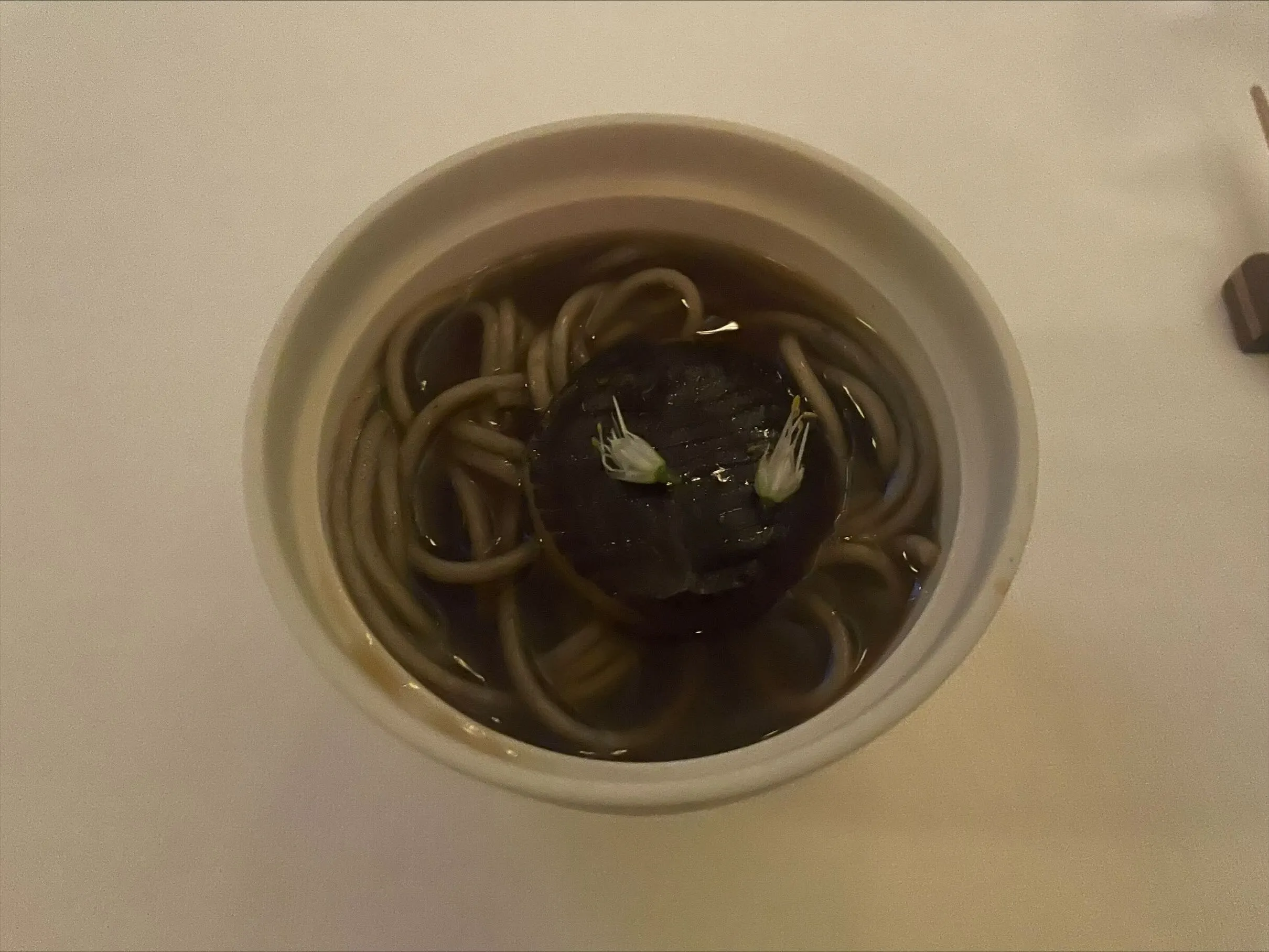
Back at my seat, the menu continues with soba noodles with a shiitake broth. The servers explain how very few places in the U.S. make their own soba noodles with 100% buckwheat flour, and how they had a soba master teach them the process for a long time before they were able to master it. I appreciate the commitment, but I must confess that even after a visit to Japan, I am hardly a soba connoisseur, so I cannot say much besides the fact that these seemed like very well made soba noodles. To me, the real star of the dish is the broth, which is astonishingly rich, with a deep mushroom umami flavor and a delicious sweet shiitake on top. The whole dish is served very hot, so I enjoy a few glorious minutes of steamy umami noodle slurping that I would count among the most enjoyable time I have spent in a restaurant. (10/10)
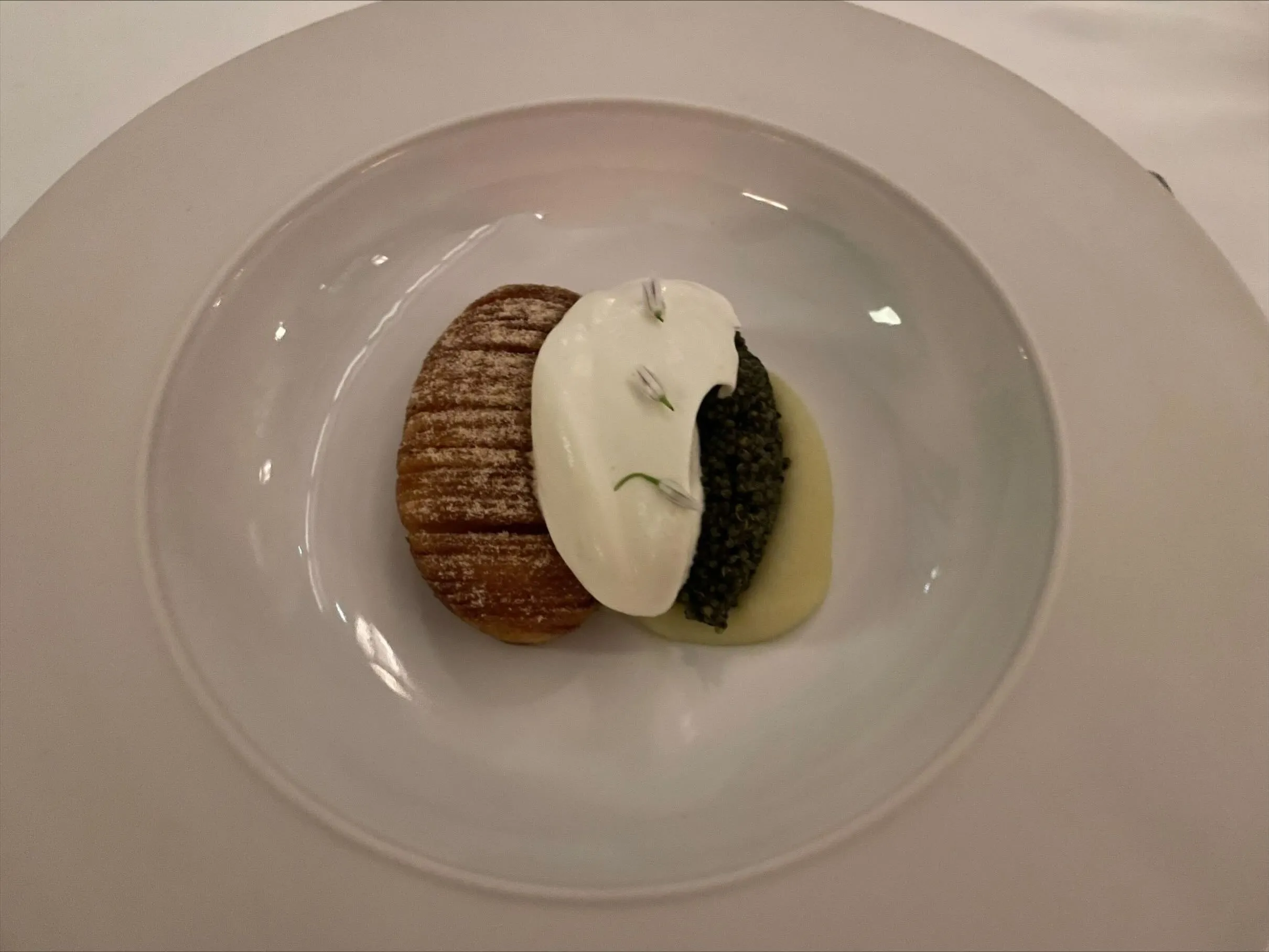
The next course takes excruciatingly long to arrive, and when it finally does, I see why: a hasselback potato comes in a mobile smoker, of which the restaurant only seems to have one, so I had to wait in the smoker queue before it was my turn. The smoker itself is a very impressive contraption, but what comes out of it is less so: the hasselback potato has almost no smoke flavor and is heavily oversalted; the tonburi mostly adds texture; and the two creams below and on top of the tonburi add nothing at all. When everything is properly mixed together, the salt is diluted enough to make this a pleasant enough thing to eat, but it’s hardly enjoyable. (6/10)
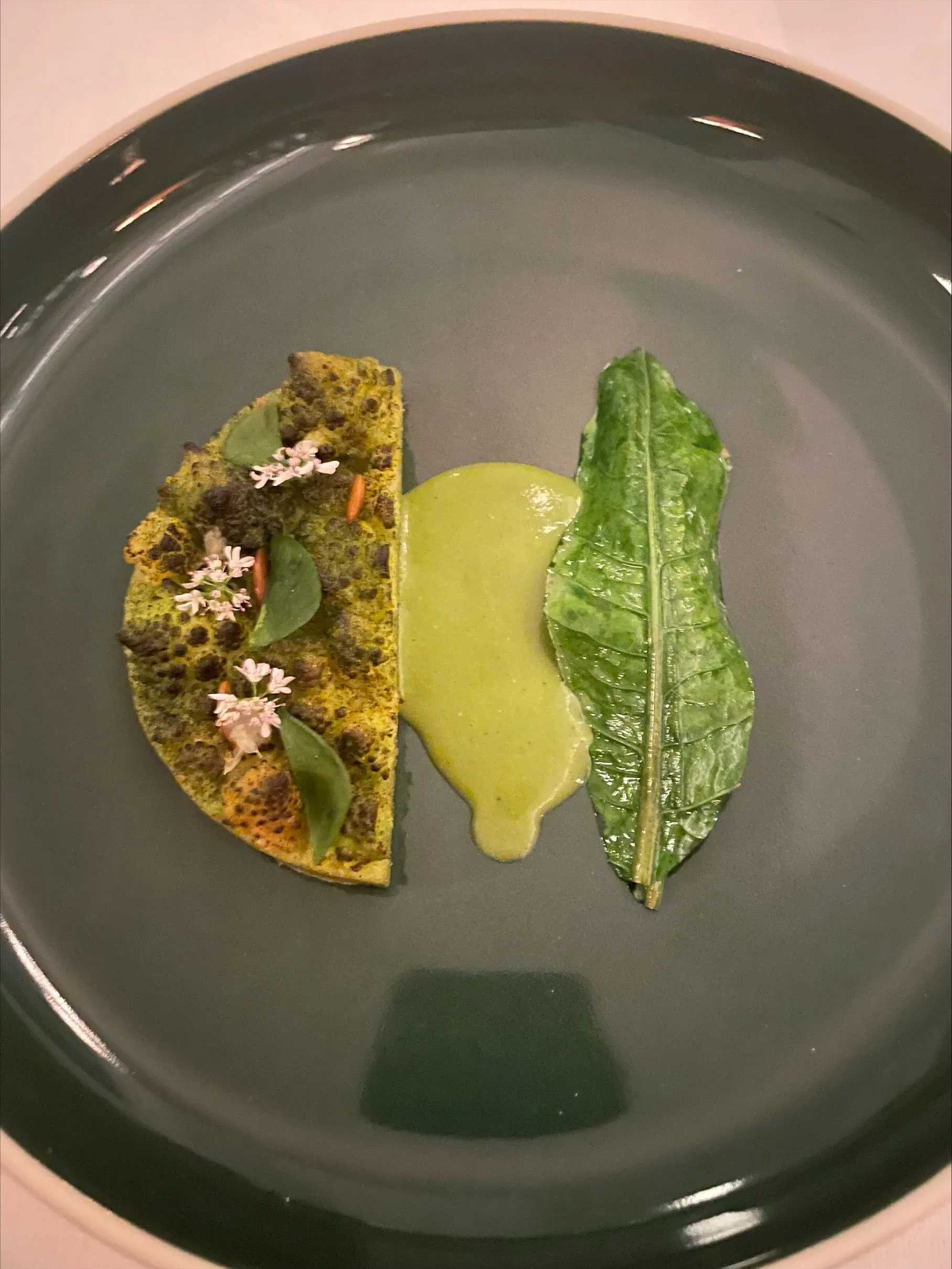
The main course is Romesco cauliflower on green masa, with some sort of salsa hidden under the leaf to the right. Texturally, this is a little uniform, with both the cauliflower and the masa being quite mushy, but taste-wise it’s very good, with the salsa in particular adding a welcome kick. (7+/10)
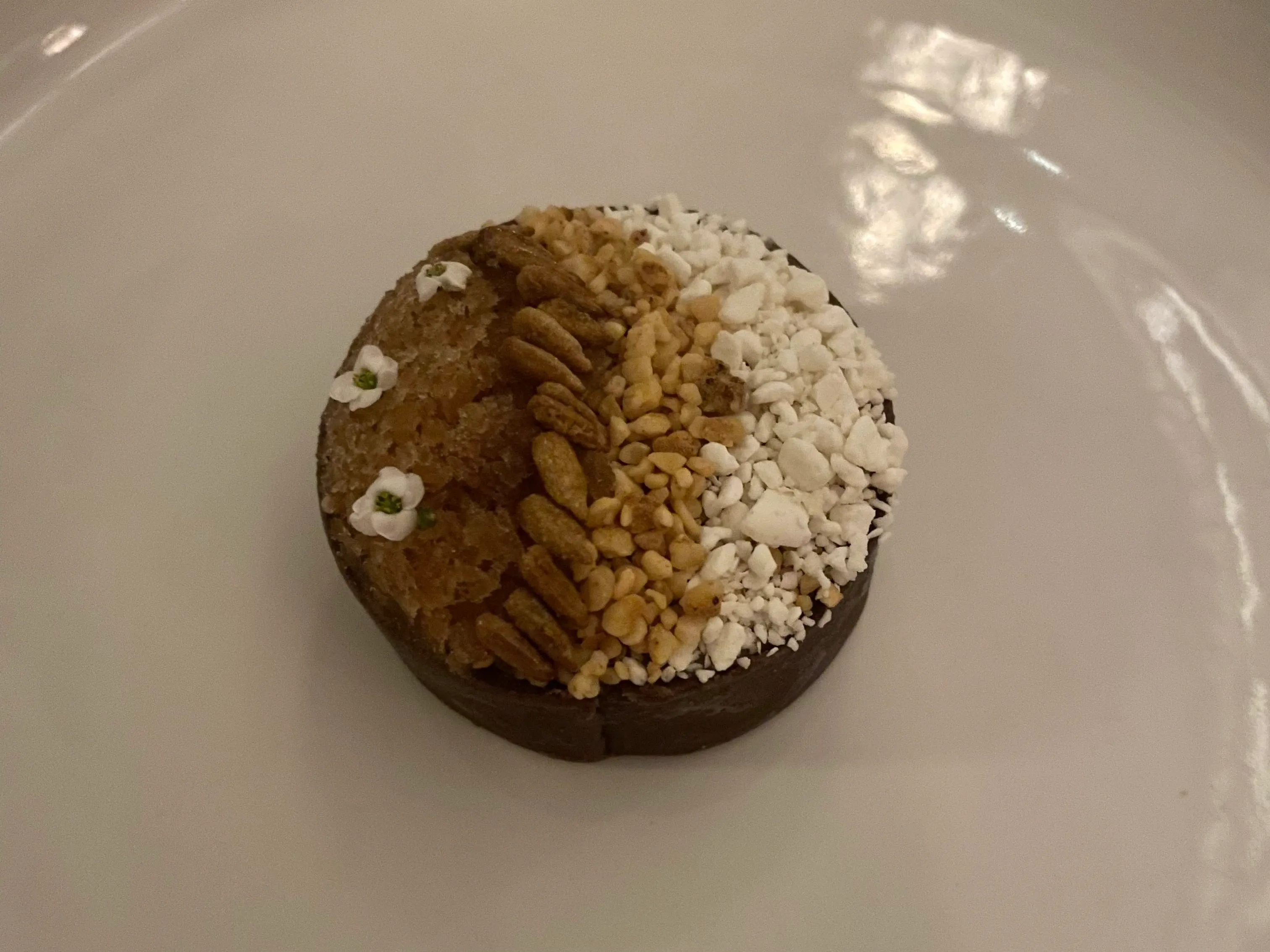
The “standard” dessert at this time of year is based on Japanese strawberries, but since I am mildly allergic to strawberries, I receive an alternative chocolate-and-hazelnut dessert instead. This, unfortunately, is a complete failure: it’s a sort of massive praline, which is so cold and hard that I can hardly smash it into appropriate bites; once I do, the overly sweet and very basic chocolate-hazelnut combination is hardly a reward for my efforts. (5/10)
The meal ends with an excellent alcohol-free vermouth made in-house, which I am pleased to learn is available for purchase on their website. The EMP granola, which is also available for purchase but much less worth purchasing, and a tasty but unspectacular sesame and chocolate pretzel.
Overall, this was a surprisingly uneven menu for a three-star restaurant. Some dishes, like the bread, the peas, and the soba, were truly excellent. Others, like the asparagus or the cauliflower, were very good but not particularly memorable, and a few, like the over-salted hasselback potato and the solid block of gianduja for dessert, weren’t even worth one star.
Despite the uneven food, however, I did very much enjoy my visit, in large part thanks to the friendly service and the beautiful theatrical dining room, which made Eleven Madison Park feel very much like a special occasion restaurant. One just should not rely on the food itself to be the special occasion.