Horváth
| Food rating | 9-/10 (rating system) |
| Michelin stars | |
| Vegetarian menu availability | Dedicated vegetarian menu (the standard menu is already almost vegetarian), vegan on request |
| Website | restaurant-horvath.de |
Any restaurant that needs to give a name to its own concept is a little suspect to me. Good food is not created from dogmas, but excellent ingredients and solid technique. And yet, tonight I find myself at Horváth, which serves a self-proclaimed Austrian-focused “emancipated vegetable cuisine”. This means that even in the omnivore menu, vegetables take center stage and non-vegetarian ingredients are only used as supporting actors in sauces, sides, etc (with a purely vegetarian version available, which I choose). It also means eschewing traditional luxury products — the vegetables here are grown-ups and don’t need a truffle to shine. At least that’s the thought.
Despite the high-minded concept, the high accolades (two stars), and high prices (260 Eur for the full menu, with a shorter 160 Eur available as well), the atmosphere is casual and relaxed: no suits, no tablecloths, no silly handbag stools. Shortly after sitting down, I’m presented with two snacks.
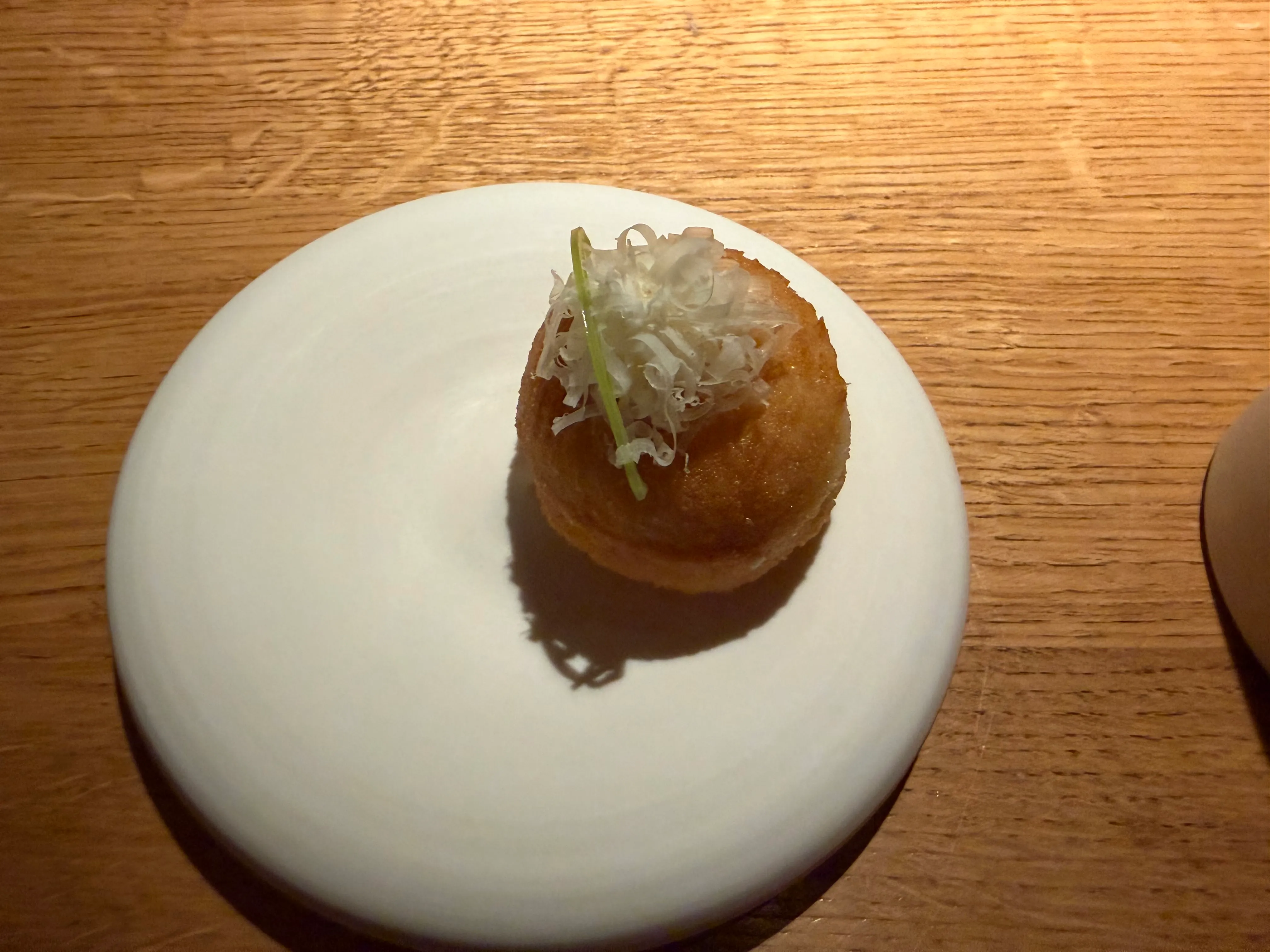
A langos, a Hungarian snack of fried dough, is served with aged mountain cheese. Fluffy, hot, greasy, and cheesy — perhaps not the most refined start to the menu, but certainly delicious. (7/10)
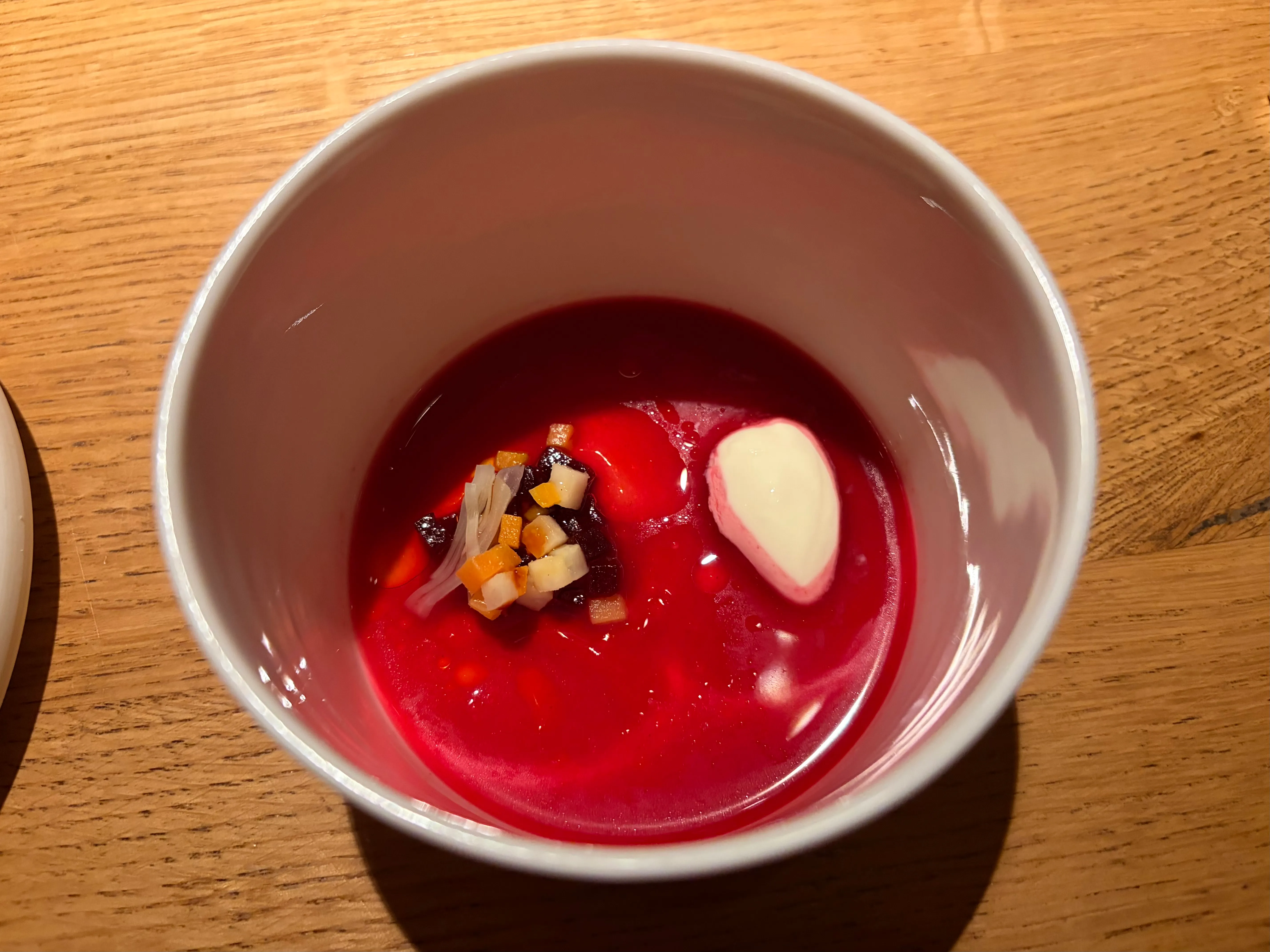
A modern interpretation of borscht is pretty mild, but the bell pepper-based broth has an interesting floral aroma. (8/10)
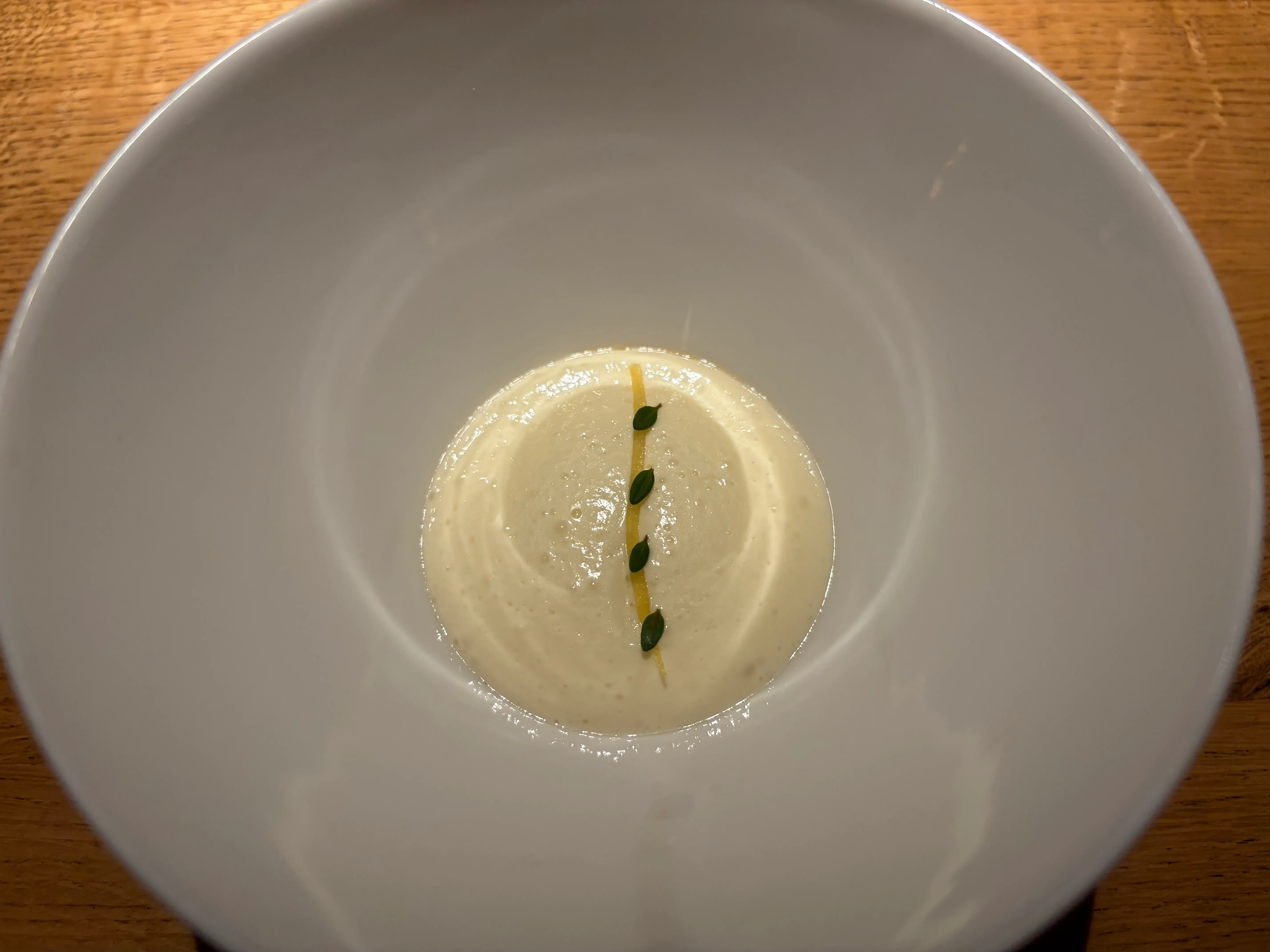
After this comforting but rather muted start, the next amuse bouche dials up the intensity. Braised leeks are paired with a reduced porcini cream and topped with an onion foam. The whole thing is, as one would expect, deliciously onion-y, but little pieces of citrus provide some welcome freshness and acidity. The salt levels are at the upper end and I would have liked a little more of the citrus, but nonetheless a promising start. (8-/10)
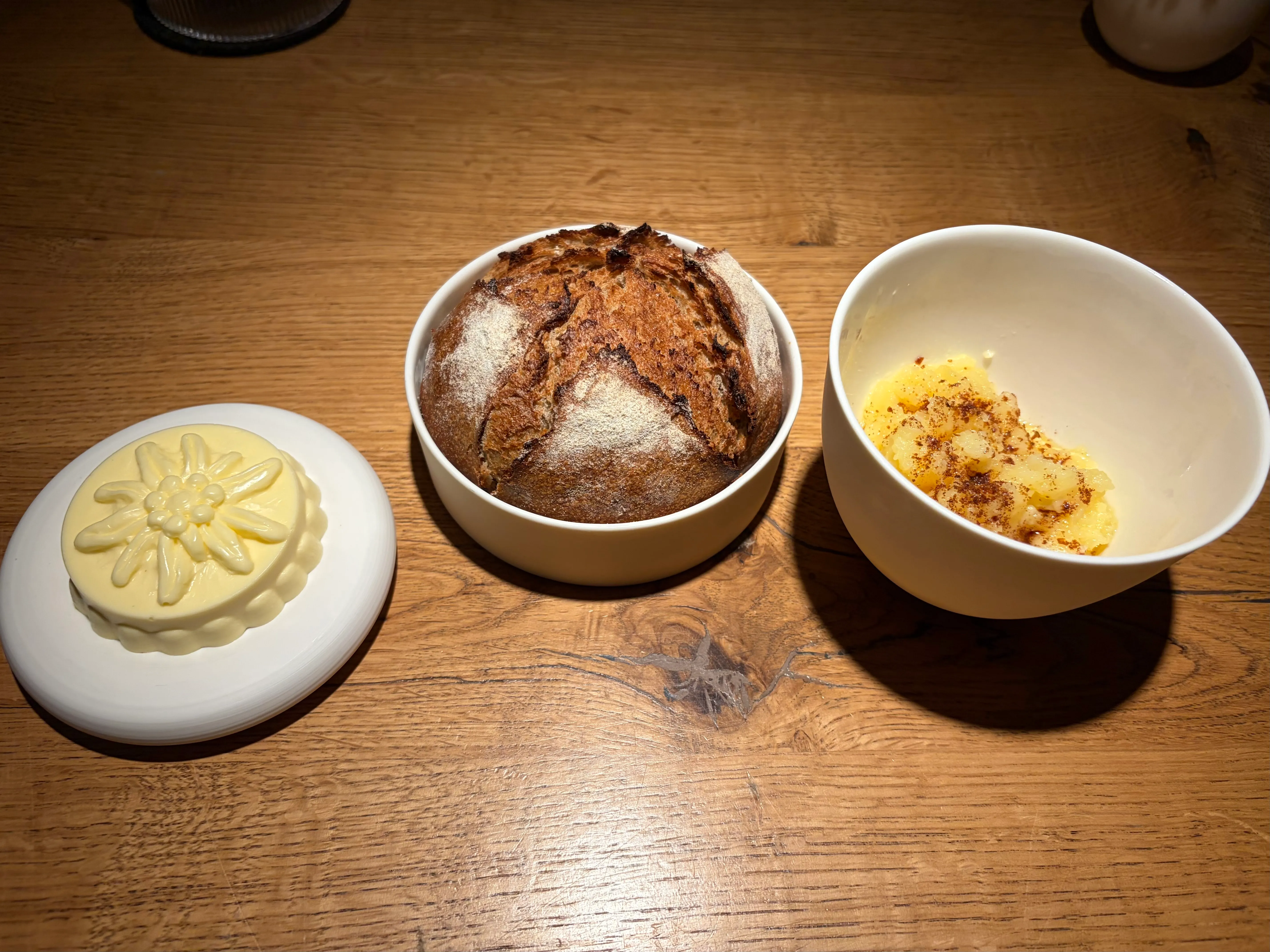
The bread is an excellent sourdough bread, served with good butter and, surprisingly, coarsely mashed potato. I’m a little confused by the potato (Do I put it on the bread? That’s carbs on carbs. Do I eat it straight? That’s very filling.) and given my lukewarm feelings about the ingredient itself, mostly stick to the very good bread. (7/10)
Now is also the time to get the administrative portion of the dinner out of the way: when booking, I had already chosen the full 7-course menu (260 Eur). A signature dish based on celeriac can be added for an additional 40 Eur (I defer this decision, but ultimately decide to try it). In addition to the usual wine options, Horváth also offers a non-alcoholic pairing. At 130 Eur for 7 courses this is expensive, but, as we will see, well worth it. While I usually don’t cover drinks in detail, I will make an exception here because the drinks were all homemade specifically to pair with the dishes and often felt like a genuine part of the dish. Very highly recommended!

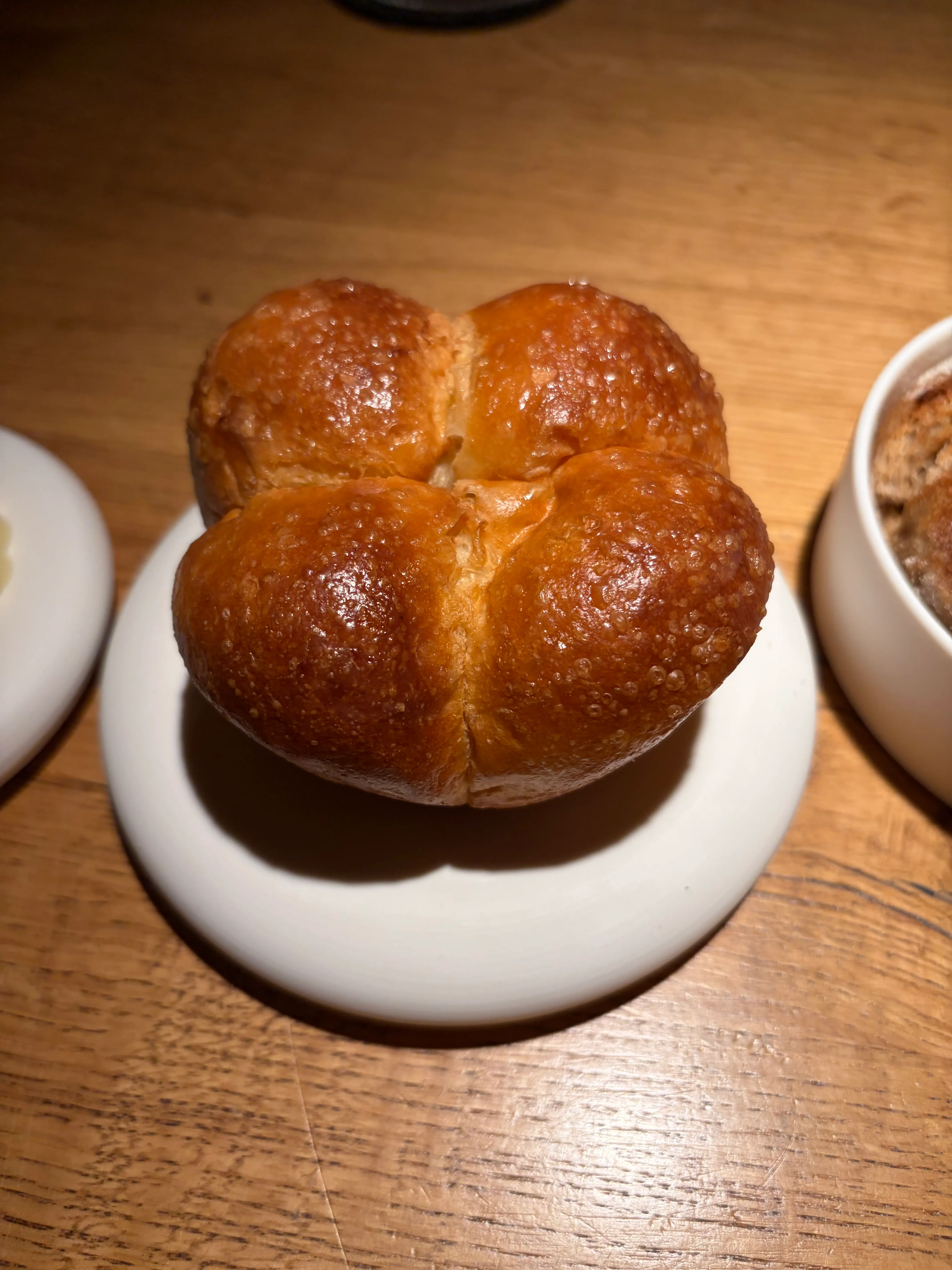
The first course of the menu is a mushroom-based vegetarian foie gras, served with a fluffy delicious Austrian bread filled with an apricot pit butter that almost tastes like marzipan. I have never had real foie gras, so I can’t comment on the comparison. This version is rich, umami, and undoubtedly pleasant, but essentially tastes like flavoured butter. If this is what real foie gras tastes like, no duck should have to suffer for this. (7/10)
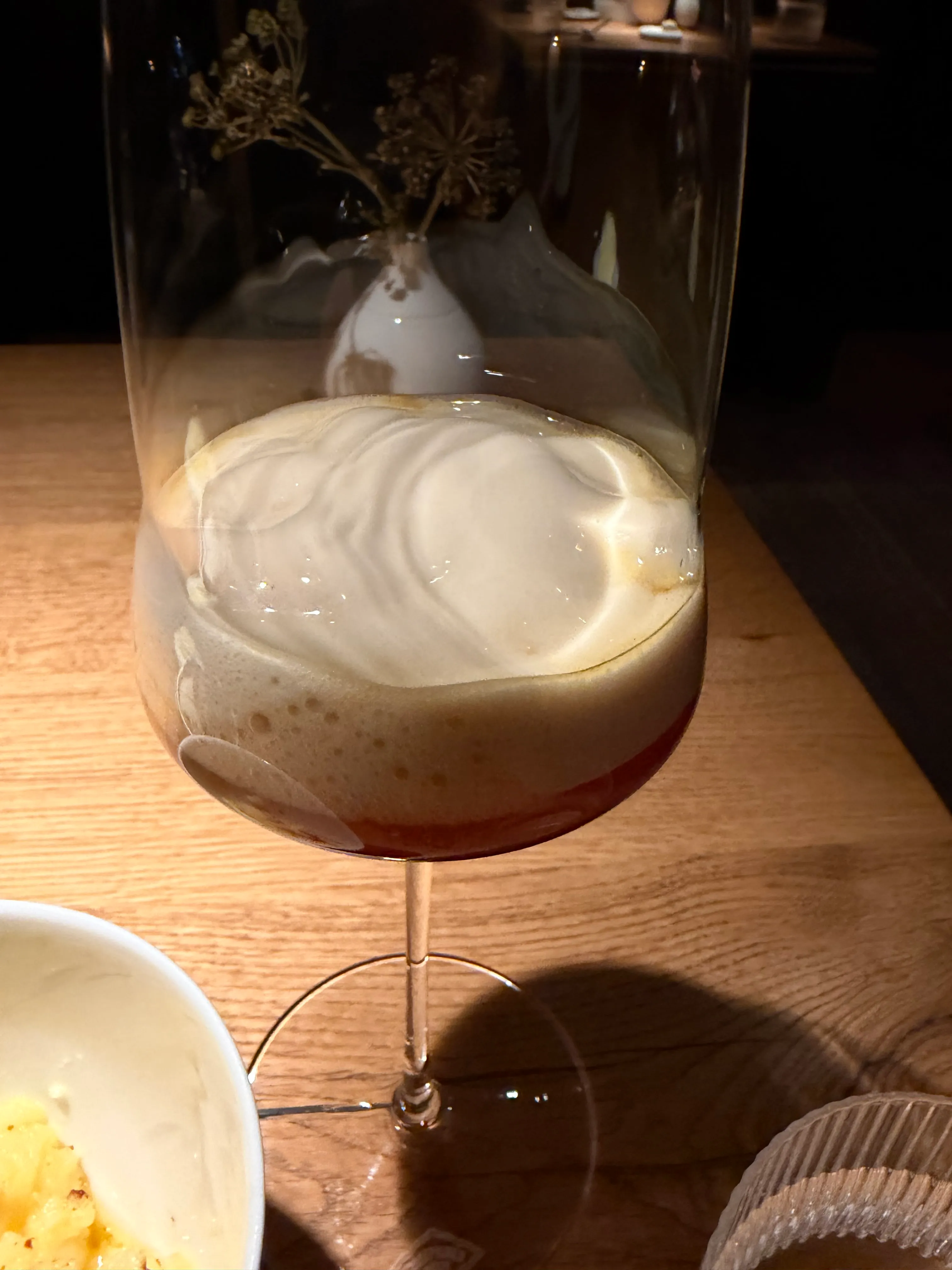
The foie gras is paired with a juice made from roasted root vegetables topped with malt beer foam. This is a stunning creation, capturing all the wholesome richness of a bowl of roasted carrots in a cool, clean drink. Very memorable. (10/10)
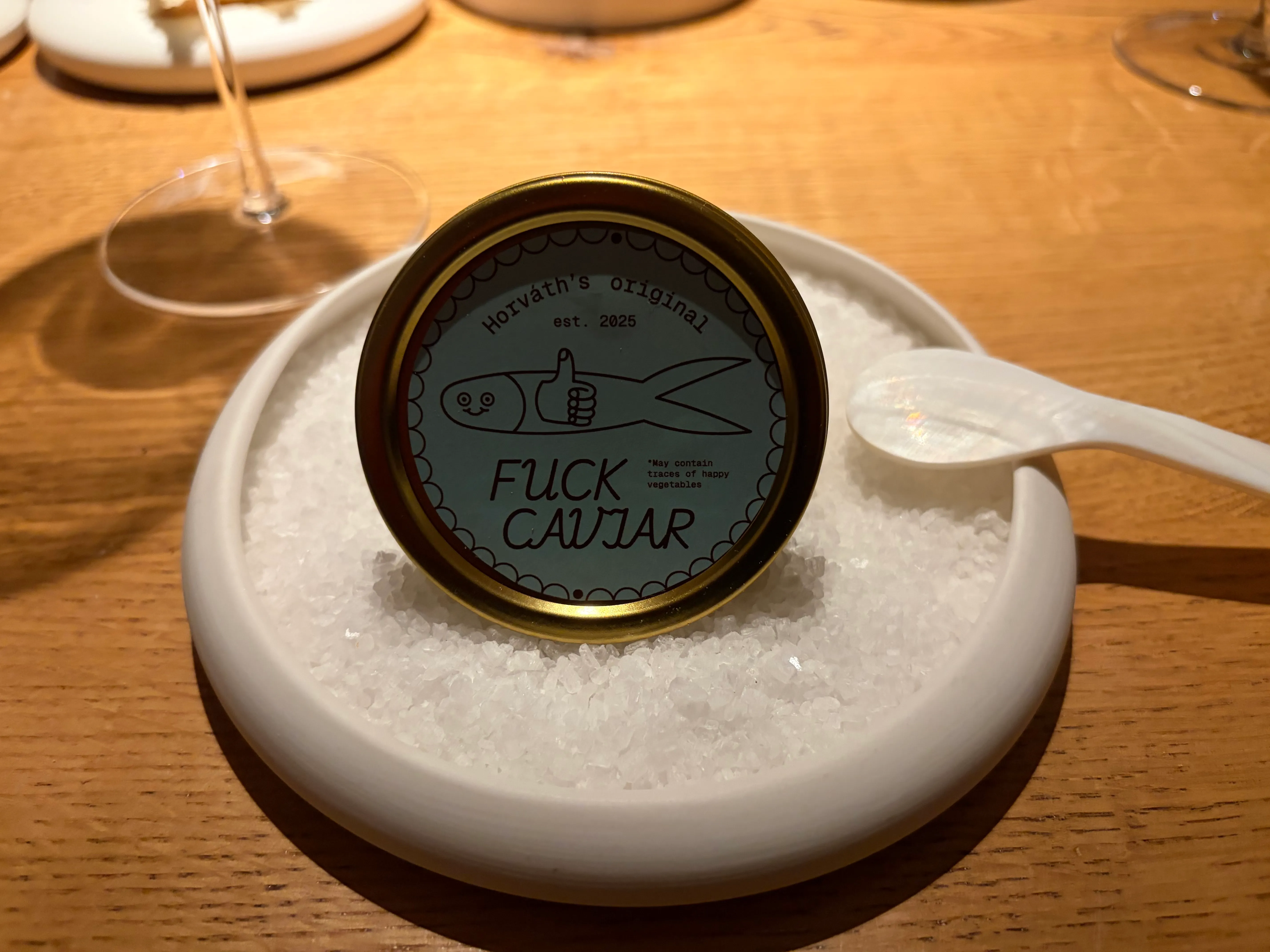
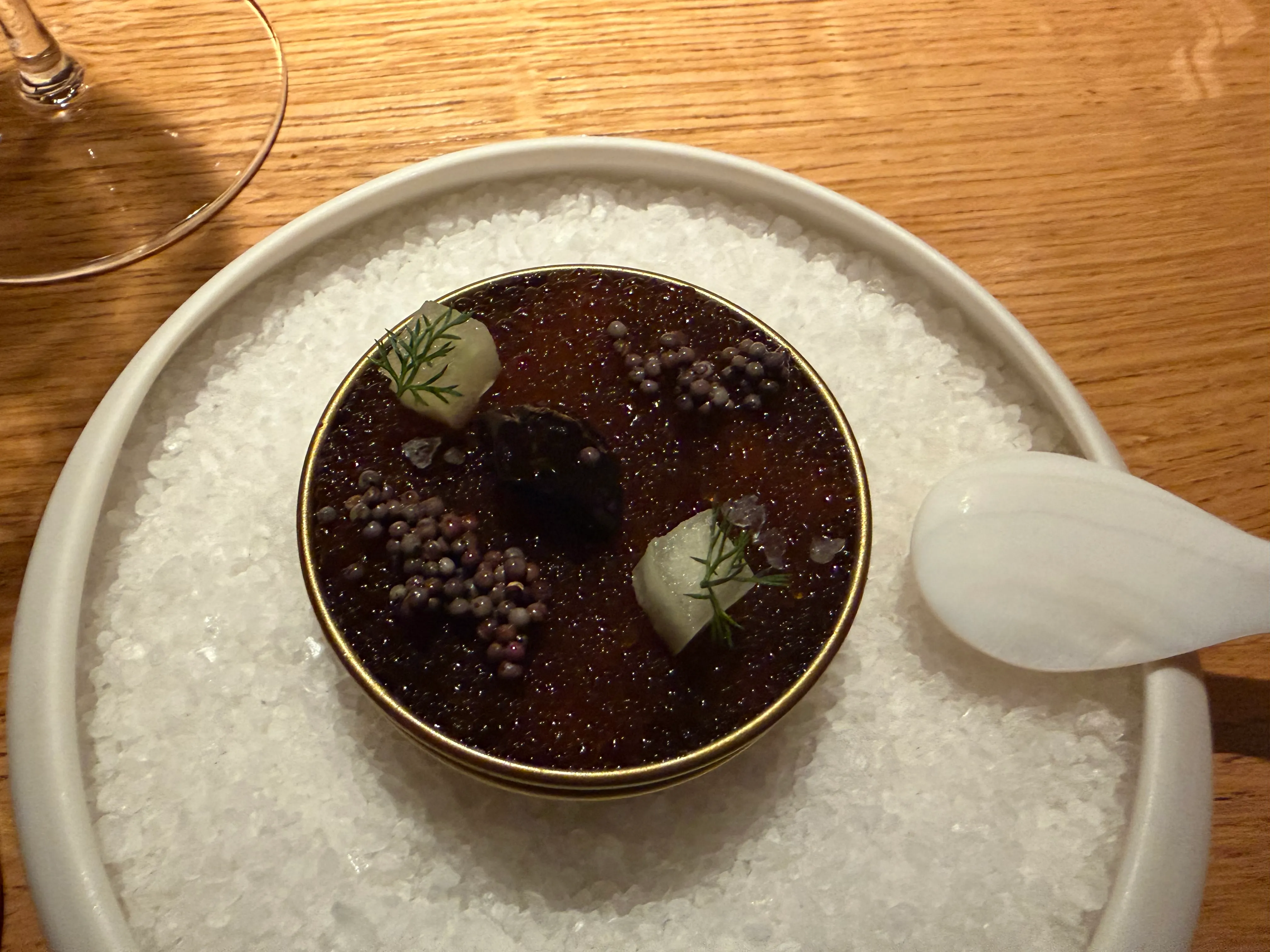
The next course is named, rather unsubtly, f**k caviar. The service explains that this is not born out of a hatred of the ingredient, but because they feel that caviar (much like foie gras, wagyu, langoustines, etc) is used as a generic “fancy ingredient” in fine dining restaurants around the world. Instead, their idea of fine dining means labour intensive preparations, not expensive bought-in ingredients.
I applaud the spirit, but is it tasty? Thankfully, yes! The fake caviar is made from spherified mushroom, topped with roasted mustard seeds and served on a jerusalem artichoke puree. A little apple adds some freshness. The result is quite salty (just like real caviar), but delicious, complex, and unusual. A much more enjoyable vegetarian take on caviar than tonburi. (8-/10)
The caviar is served with juice of cooked pear with some citrus and thyme (not pictured). The cooked pear conjures up memories of childhood desserts. The citrus and thyme add more aroma than taste. The end result almost feels like drinking the world’s most delicious perfume. Again, stunning. (10/10)
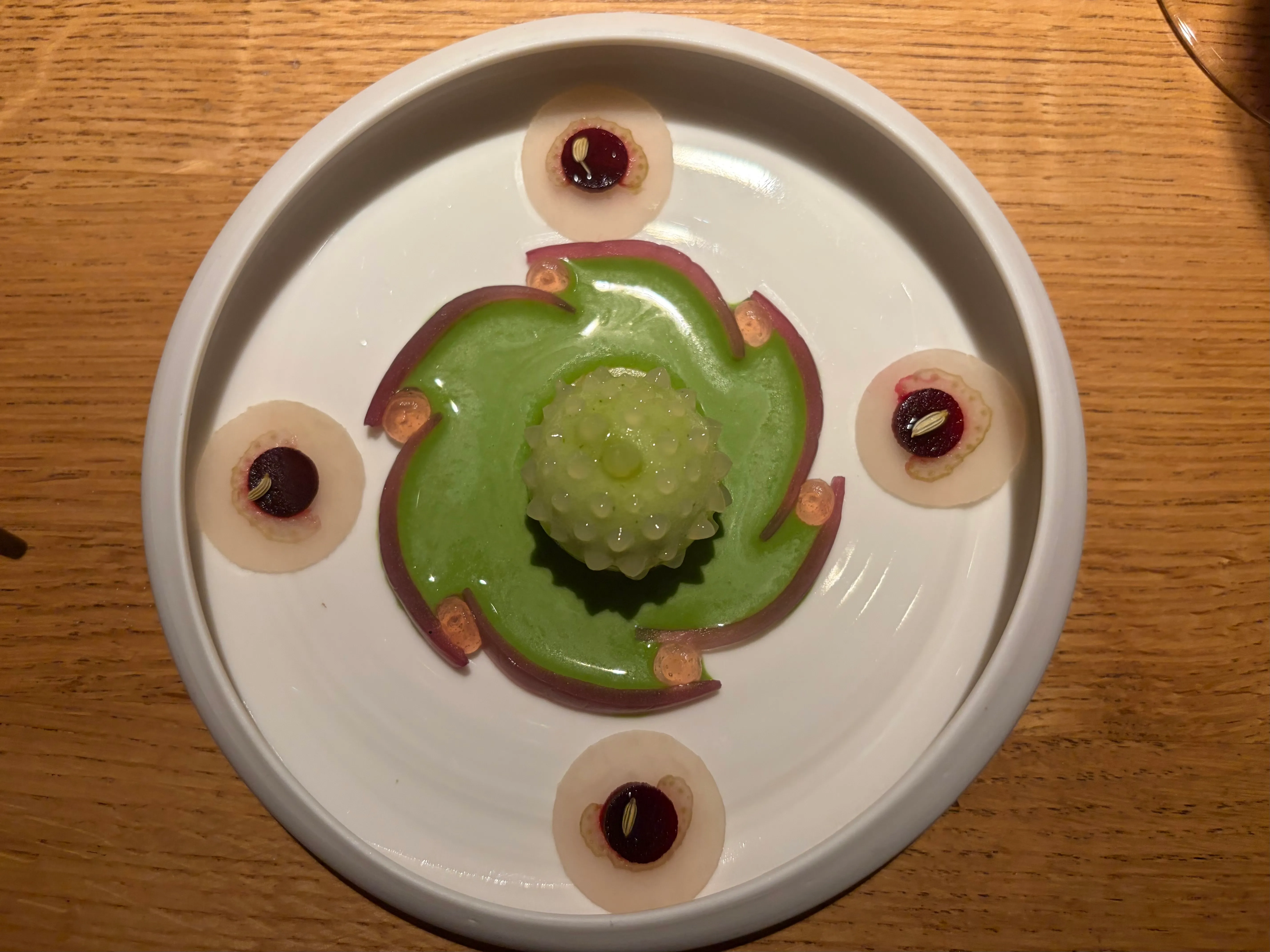
The next dish is simply titled “pickles”, but looks much more like a piece of abstract art than a jar of pickled cucumbers. The flavors are just as precise as the presentation: various ingredients having been pickled (hardly a surprise), but a celery sorbet in the middle adds enough freshness and sweetness that the dish feels well-balanced and beautifully complex instead of repetitively acidic. (9/10)
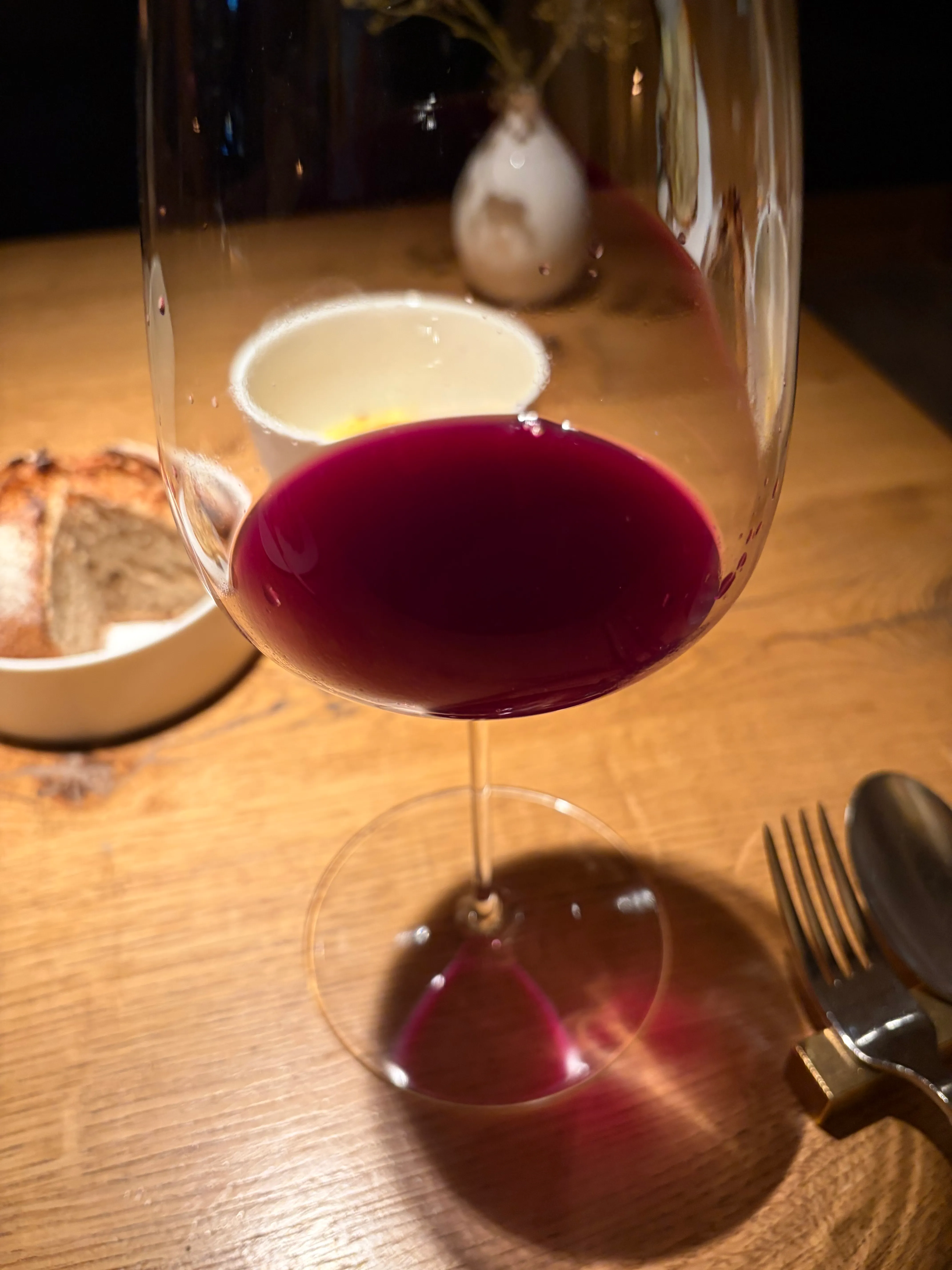
The juice accompaniment for the pickles consists of three preparations of red cabbage. On the upside, this does taste very distinctly and cleanly of cabbage, but on the downside I would argue that there is such a thing as too much cabbage in a juice. (7-/10)
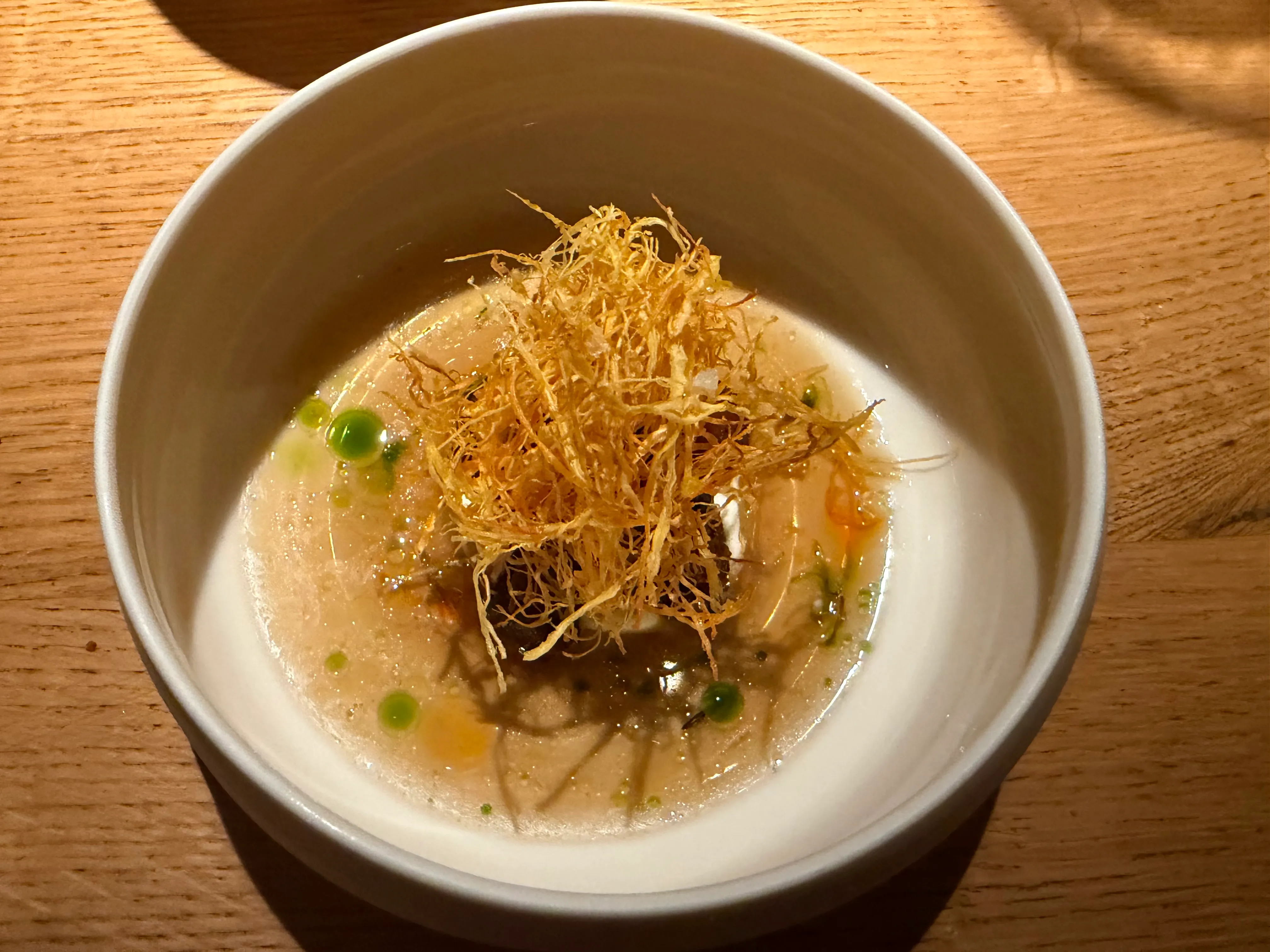
The next dish is titled mushroom kidney. Similar to the mushroom foie gras at the start, I cannot compare this to the animal-based version, but it sure is delicious: fried mushroom, apple gel, an umami broth, and a straw made from celeriac (?) that adds a surprising amount of flavor and texture. (8+/10)
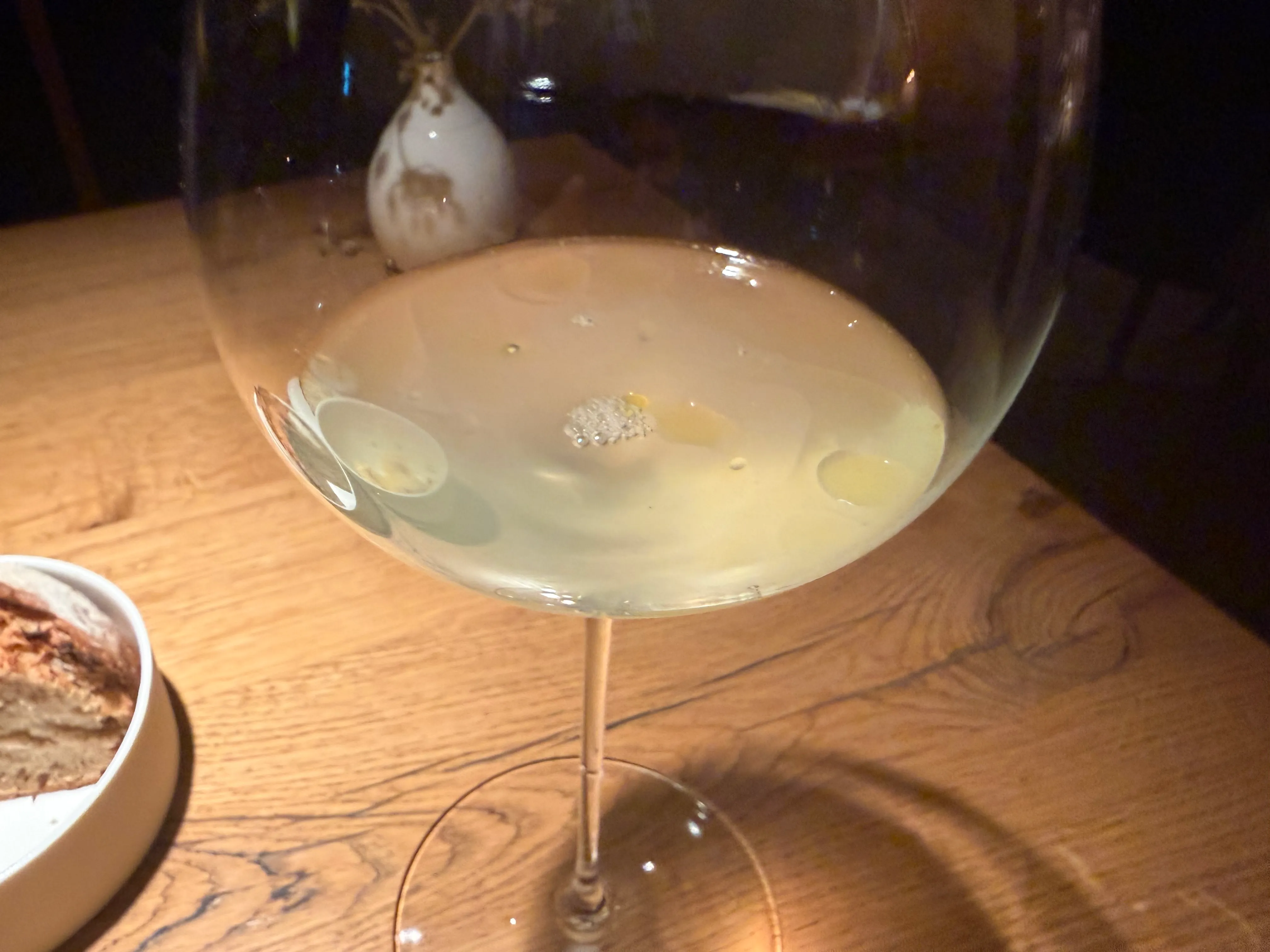
The juice accompaniment for the mushroom kidney sounds a little questionable. Whey, flaxseed oil, and horseradish sounds like a list of everything I’d like to avoid in a juice, but somehow, improbably, and quite amazingly, the combination is stunning. The horseradish is present but so light that it is more a hint of aroma than a biting taste; the whey and flaxseed oil add a wonderful richness to the lightly sweet vegetable juice base; it’s as close to a miracle as a juice can be. (10/10)
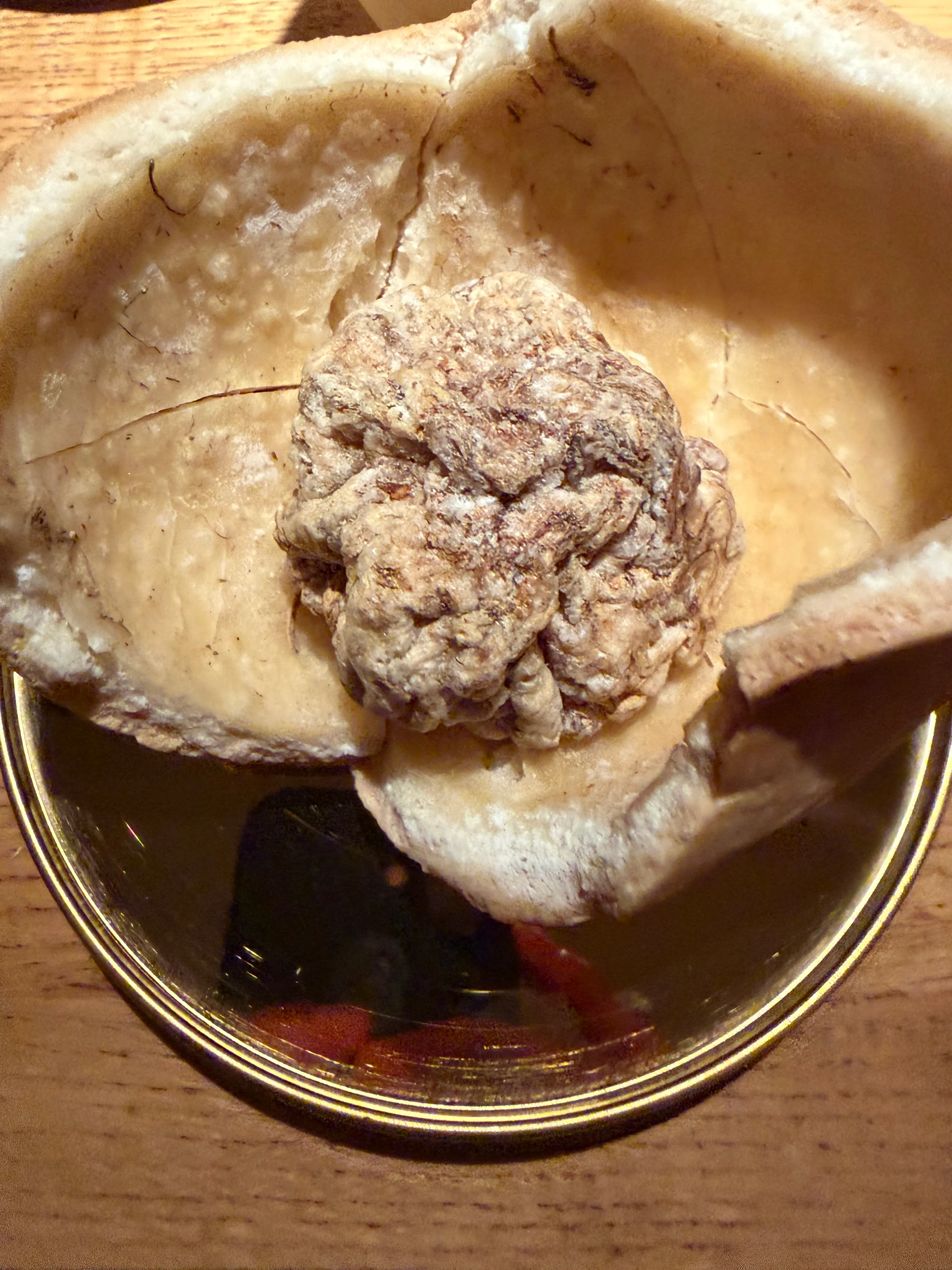
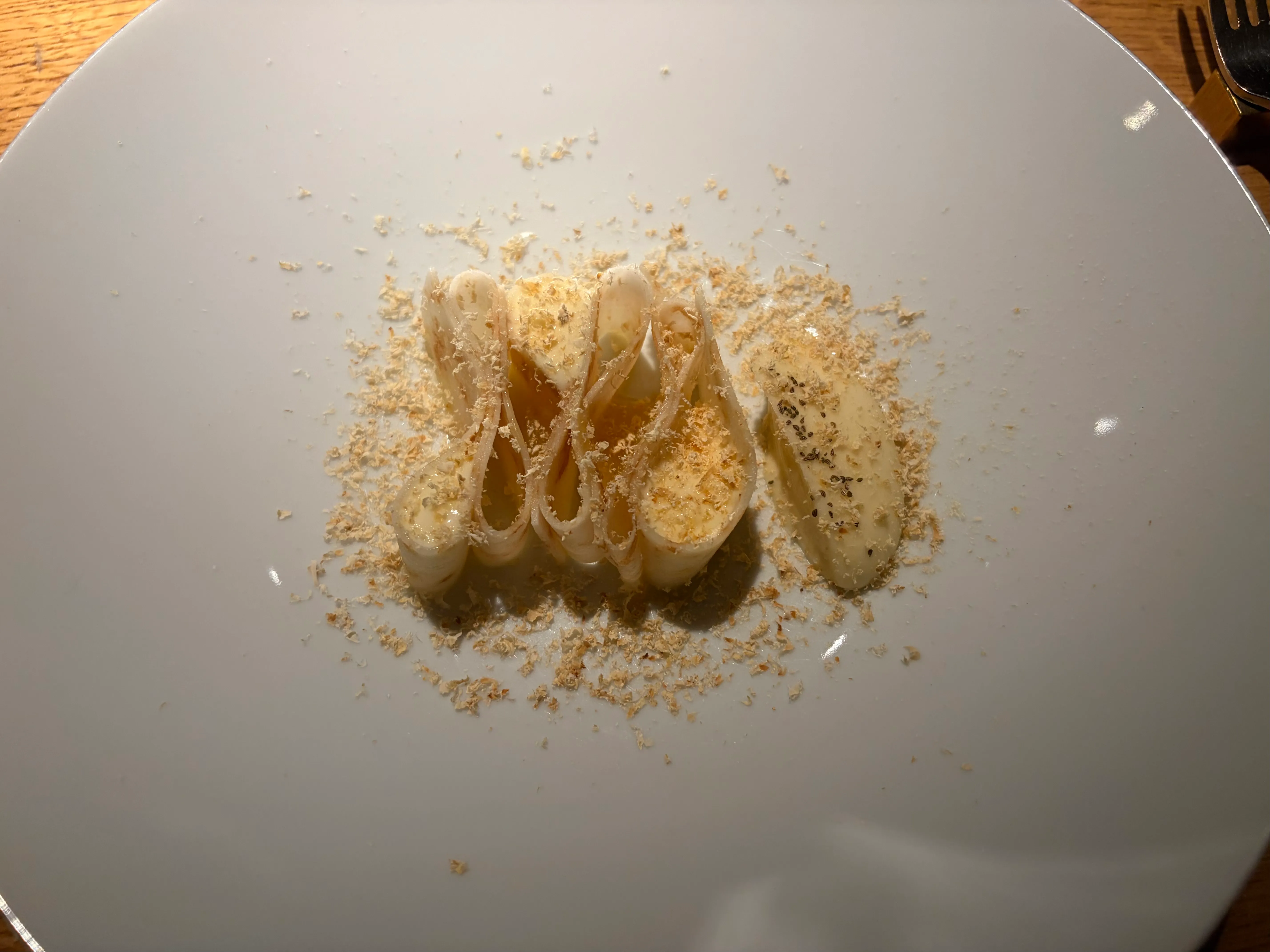
Next up, the signature celeriac dish: the supplement of 40 Eur gets me not only the dish but also a lengthy explanation of how they developed this dish, nicely presented and illustrated with pictures from their own cookbook. The short version is that a whole head of celeriac is baked in salt dough and then aged for up to a year in the dough, which is repeatedly turned to let moisture evaporate. After this lengthy process, the celeriac has shrunk into a truffle-sized and truffle-looking ball, which is grated over celeriac ribbons, a celeriac bechamel, and a celeriac puree. The result is a whole lot of celeriac, but in contrast to other single-ingredient dishes that I have tried, it does not feel repetitive. The celeriac ribbons are surprisingly firm and fresh, the sauce and puree rich but distinct, and the aged celeriac adds an umami note (though I’m not a huge fan of its texture). A dish that is conceptually compelling, superbly executed, and doesn’t sacrifice anything in flavor for the sake of cleverness. (8+/10)
The friendly service also offers a supplemental glass of the juice pairing, which is a lightly oxidized apple juice with nutritional yeast, (unfortunately undetectable) lovage, and a salted lemon rim (not pictured). Not quite as complex as the previous juices, but a very pleasant combination of sweetness, umami, and salt. (8/10)
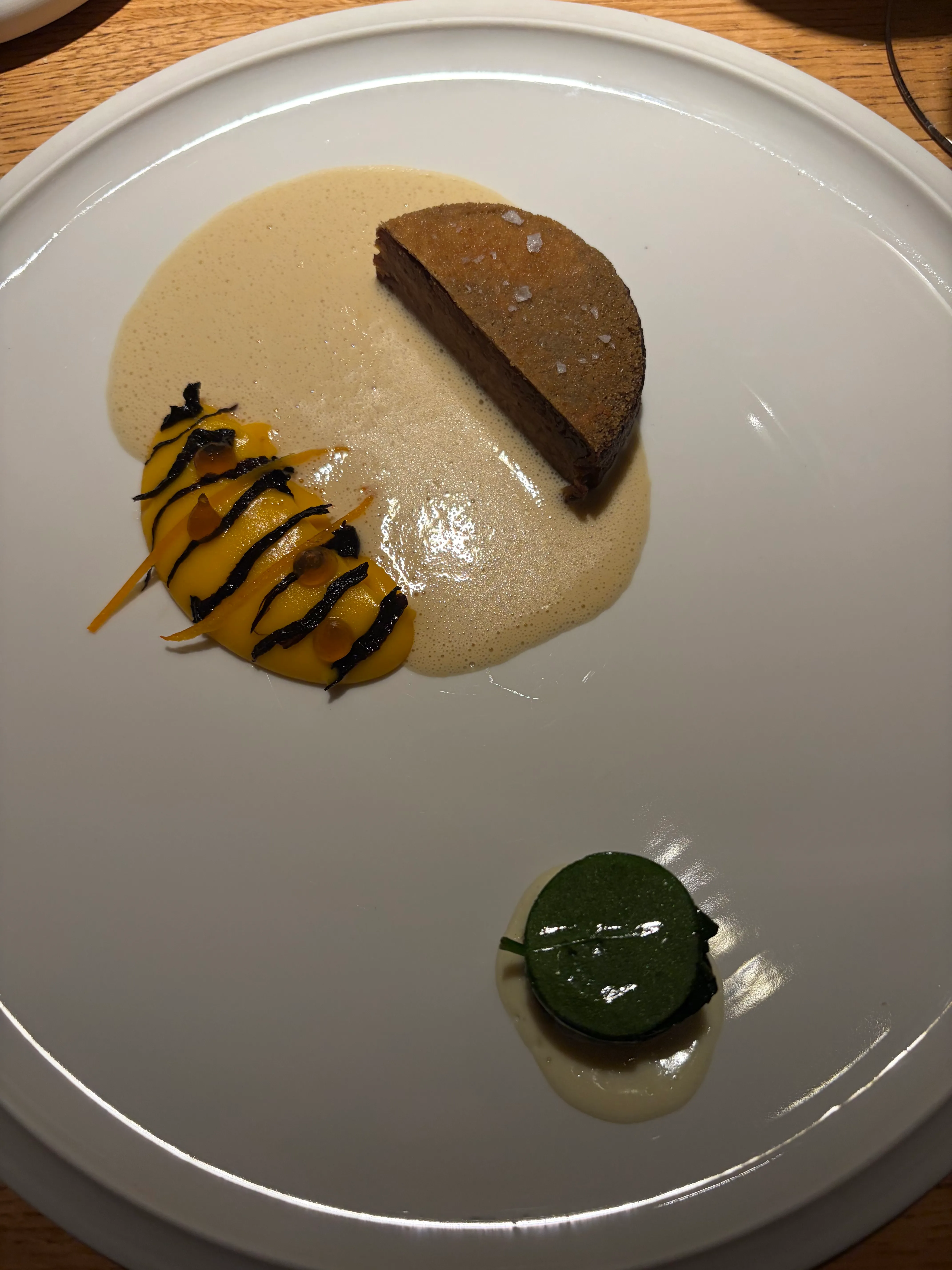
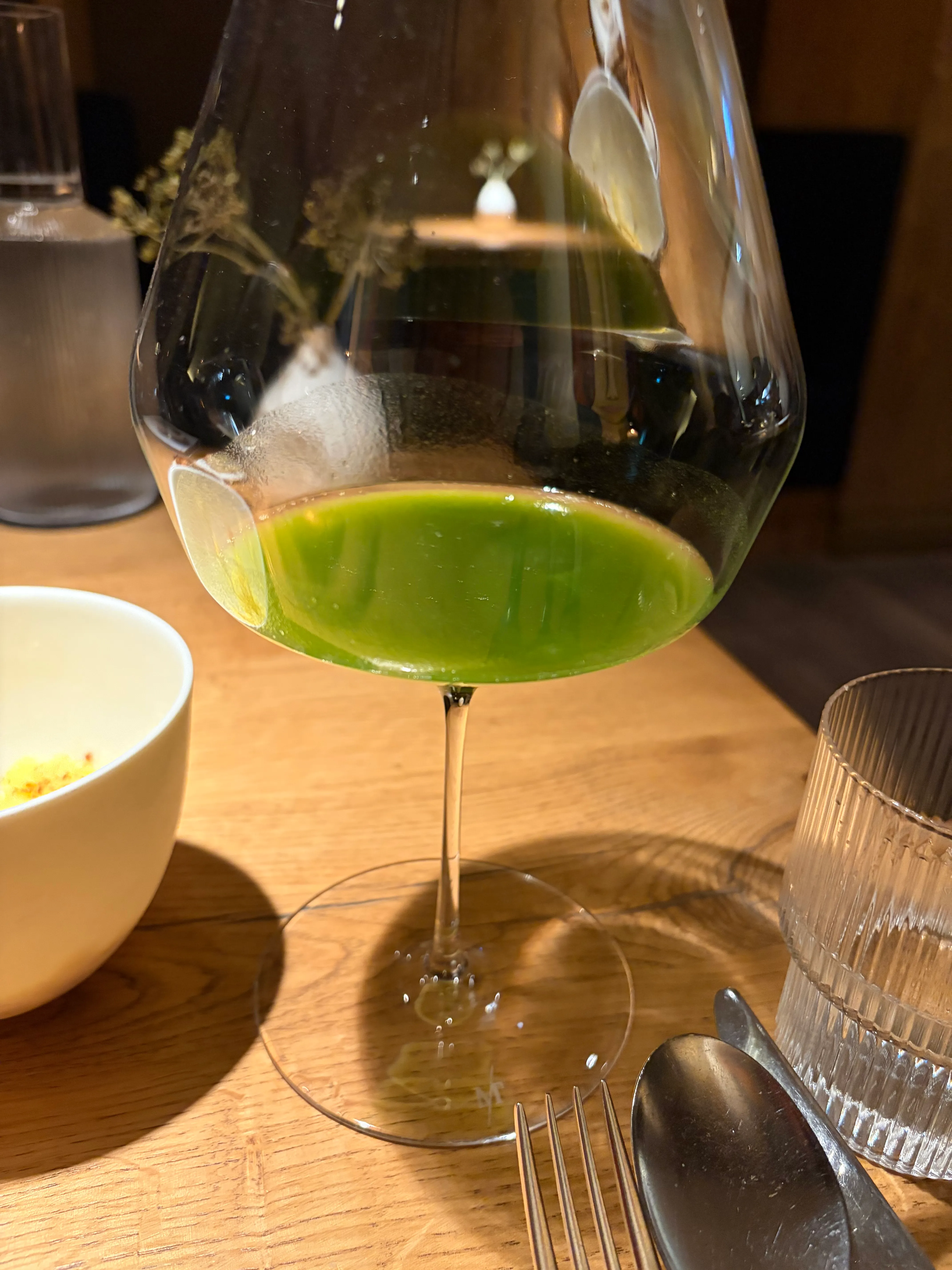
For the main course, we’re back to celeriac, which now comes baked in a dense disk, topped with a crispy yeast lid and served with pumpkin puree, spinach, and a delicious, slightly acidic sauce. Every element on this plate is perfect, and they all perfectly work together. Every flavor is dialed up to the maximum, and yet nothing clashes. One of the most perfect dishes I have ever tried. (10/10)
The juice that comes with the main course is inspired by the typical side dishes to a Viennese schnitzel: lemon, parsley, and capers. Indeed, it does capture these flavors very well, but thankfully it does so without any of the face-puckering unpleasantness of a green smoothie. Instead, it’s light, elegant, slightly sweet, and a wonderful side dish in juice form. (10/10)
At this point, I can already confidently say that Horváth has served the most delicious, impressive, thought-provoking, and flavorful food I have ever tried. But there are still desserts to come, and frankly, despite the consistently stunning food so far, my hopes are rather low: the first dessert has porcini mushrooms as its main ingredient, and the second features parsnip root. This sounds like we are on track for the sort of modern vegetable-based dessert that leaves everyone feeling like they should have enjoyed this more than they did.
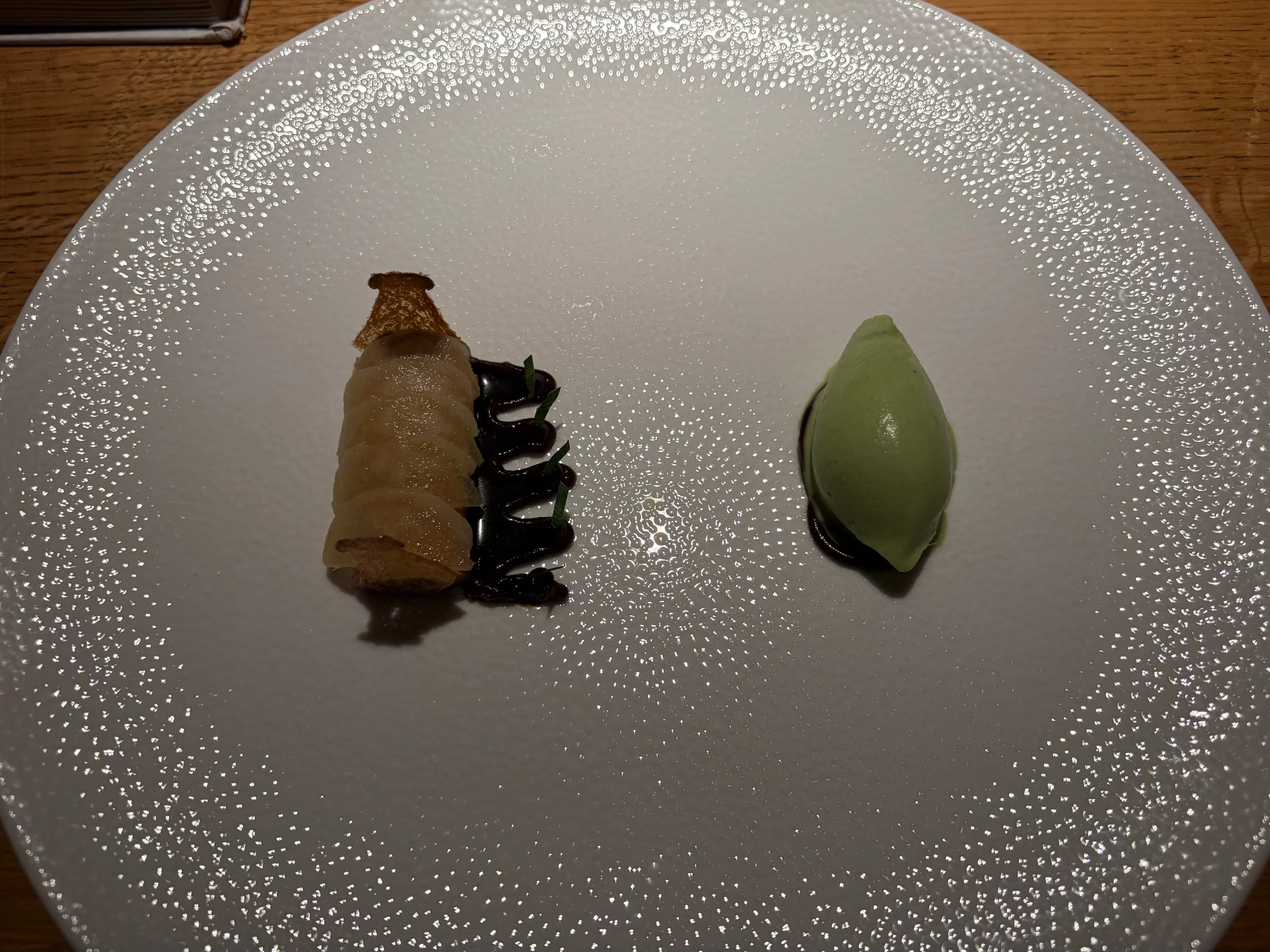
Here we go then: porcini mousse no chocolat with pear and a palate cleansing herb sorbet. The porcini mushrooms have been cooked for an extremely long time into a dense mousse that is meant to be an alternative to chocolate while only using local ingredients. To drive the point home, there’s even a crispy slice of mini porcini at either end of the mousse. Thank you.
Rarely have I been more surprised by a dessert. The porcini mousse does indeed taste a little bit like chocolate, but it doesn’t taste like it’s trying to imitate chocolate. It’s its own thing, entirely sweet, earthy, umami, and slightly mushroomy, but especially in combination with the pear on top, delicious. While few desserts come with their own palate cleanser included, here it makes perfect sense. The mushroom cream is so intense, so complex, so unusual that I’m happy for the contrast so I can taste it anew with each spoonful. (10/10)
The accompanying juice (not pictured) is unfortunately a flop. Beetroot, blackberry, and roasted cacao have the flavor profile of a typical vegetable dessert, but at this point, who cares? (6/10)
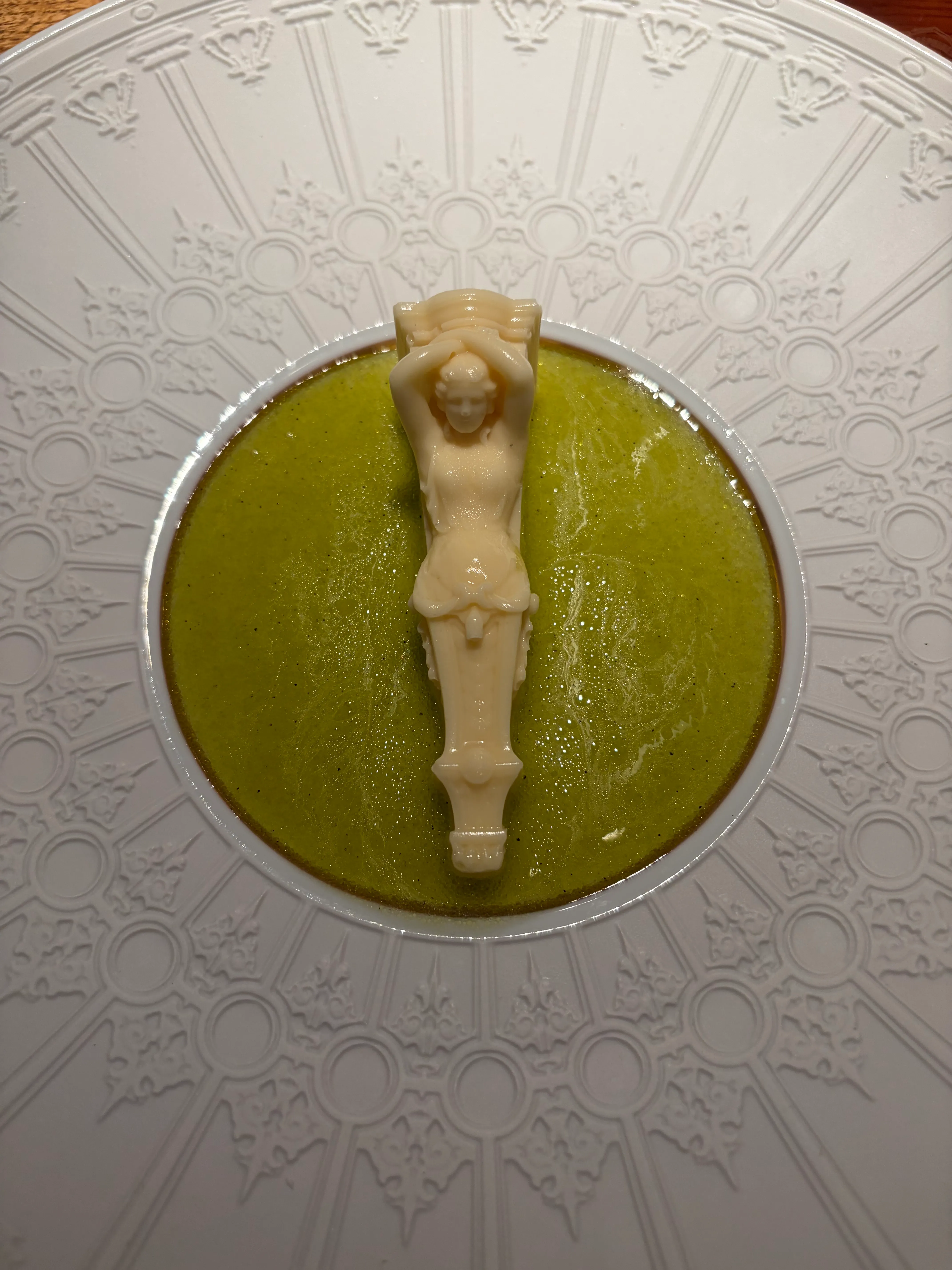
The final dessert is a parsley root mousse in the form of a statue that is an architectural detail at the entrance of the restaurant. Her name is Marianne, and she comes with a green sauce of cherry blossom and lemon. This all sounds very high concept and very complicated, but thankfully it tastes straightforwardly delicious: the cream is sweet, the sauce is fresh, combined it’s delicious. (8/10)
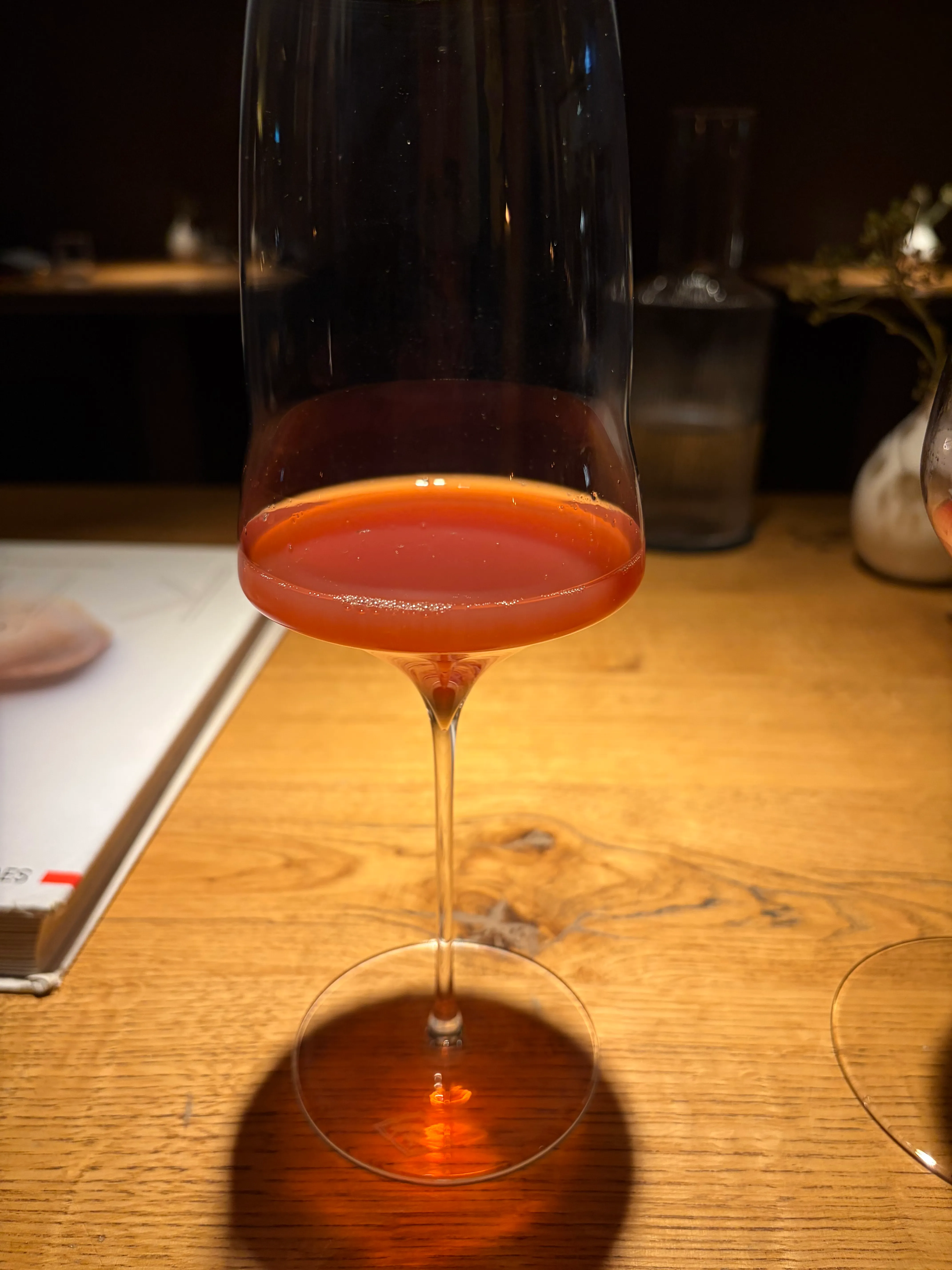
The final juice, featuring quince and lemon verbena, is similarly straightforwardly delicious. (8/10)
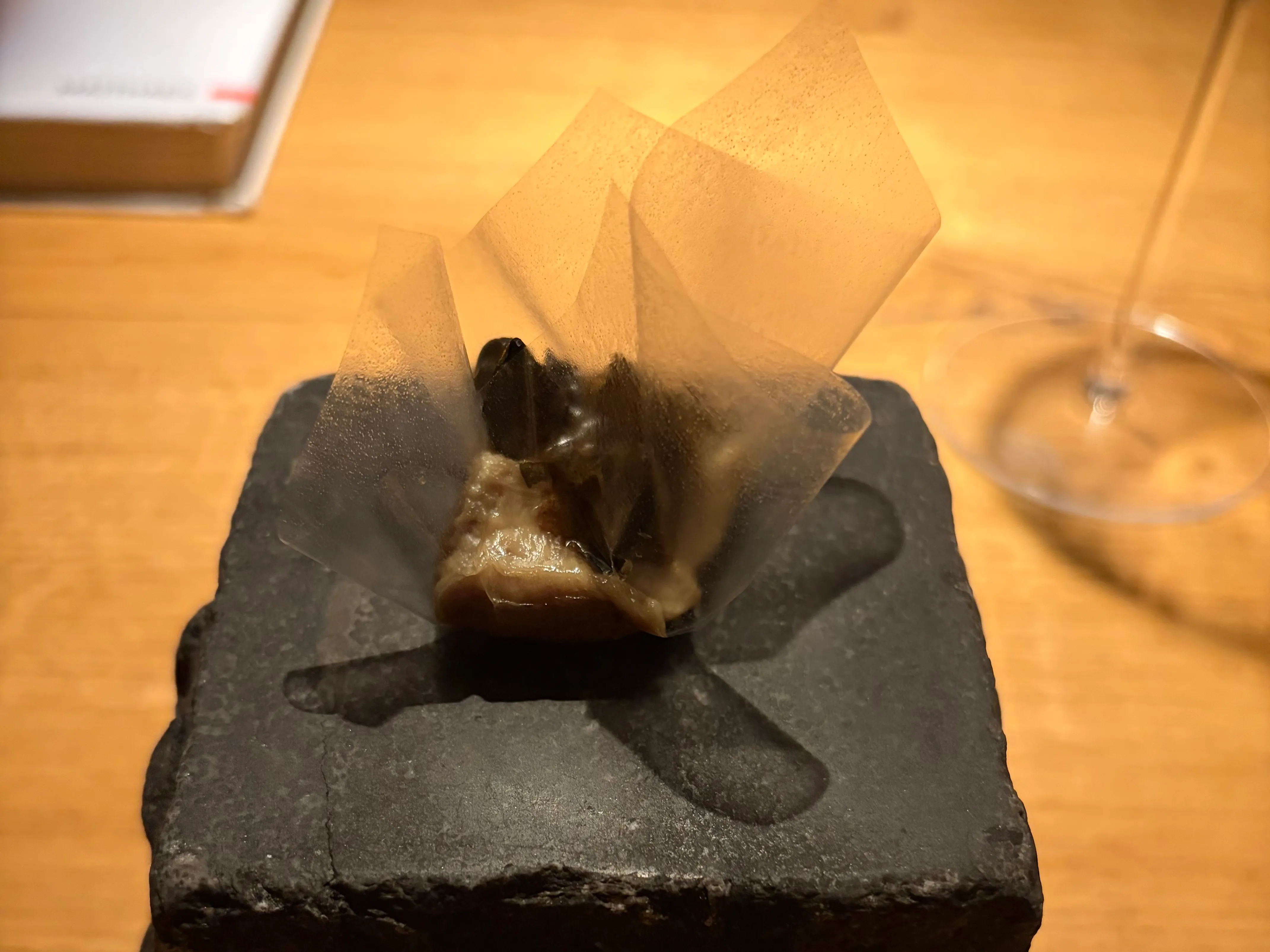
After so much complex, thought-provoking food, Horváth has the good sense to stick to just one praline to end the meal, a rather unappetizing-looking creation of pumpkin seed puree in rice paper. What it lacks in looks, it makes up for in taste: a straight hit of perfectly roasted pumpkin seed that somehow manages to avoid the cloying effect of eating straight peanut butter. Simple but very memorable. (10/10)
What a meal! I have nothing more to add, except that I hope to be back soon.