La Bandiera
| Food rating | 8/10 (rating system) |
| Michelin stars | |
| Vegetarian menu availability | Dedicated vegetarian menu |
| Website | labandiera.it |
I spent the morning hiking in the Gran Sasso region, a mountain range in the middle of Italy that remains wild enough to house one of Europe’s few stable populations of wolves. From there, an hour on winding mountain roads brings me to Civitella Casanova, halfway between the mountains and the Adriatic coast. A few more hairpins lead to La Bandiera, “the flag”, planted firmly in the middle of nowhere, with one Michelin star. Michelin’s explanation of their rating system categorises one star as “worth a stop”. This seems misplaced in this instance — how would you stop if there’s no reason to pass by in the first place? Let’s hope then that La Bandiera is in fact “worth a detour”, Michelin’s description for two stars.
The building itself is not: a stylistically confused 70s-facade isn’t overly inviting, but once inside, the large windows and the beautiful terrace make up for the questionable exterior. With a beautiful view over the valley, I get comfortable on the terrace — all alone, since the other (exclusively Italian) guests all prefer dining inside. The friendly service is happy to accommodate me outside — while the front-of-house team lacks a little polish at times, I much prefer the friendly atmosphere of this third-generation family business to any highly choreographed but impersonal “fine dining experience”.
The vegetarian tasting menu is priced very affordably at 85 EUR, with two additional non-vegetarian menus available, too. Most dishes are also available a la carte. I choose the vegetarian tasting menu and request an additional vegetarian course from the à la carte section — unusually for an Italian restaurant, La Bandiera seems to have more vegetarian dishes than a single tasting menu can hold.
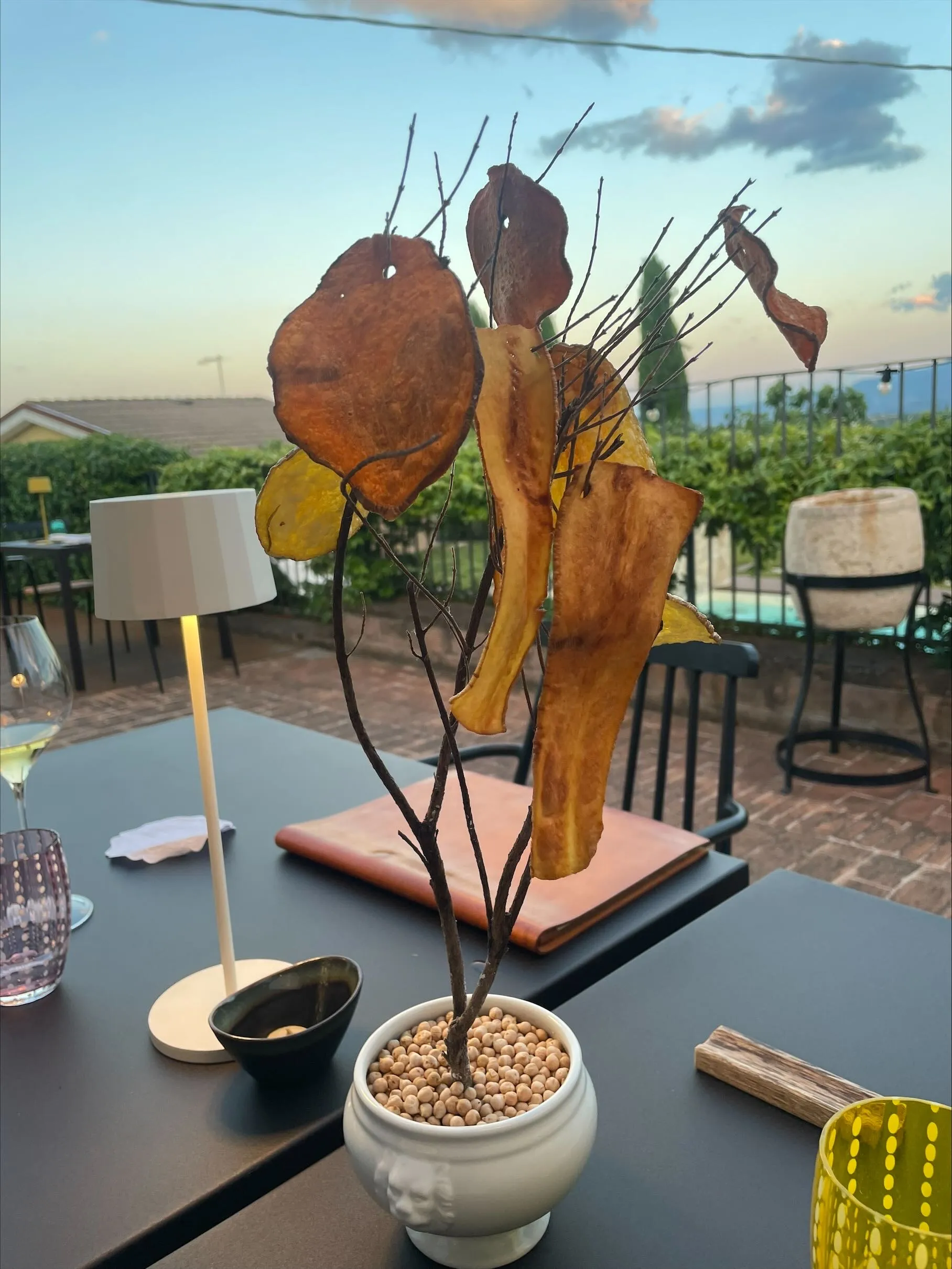
With the apéritif, we are presented with a tree of chips: sweet potato, potato, and parsnip. Why they’re on a tree I don’t know, but they’re crisp and tasty, though the parsnip is a little too tough (6/10).
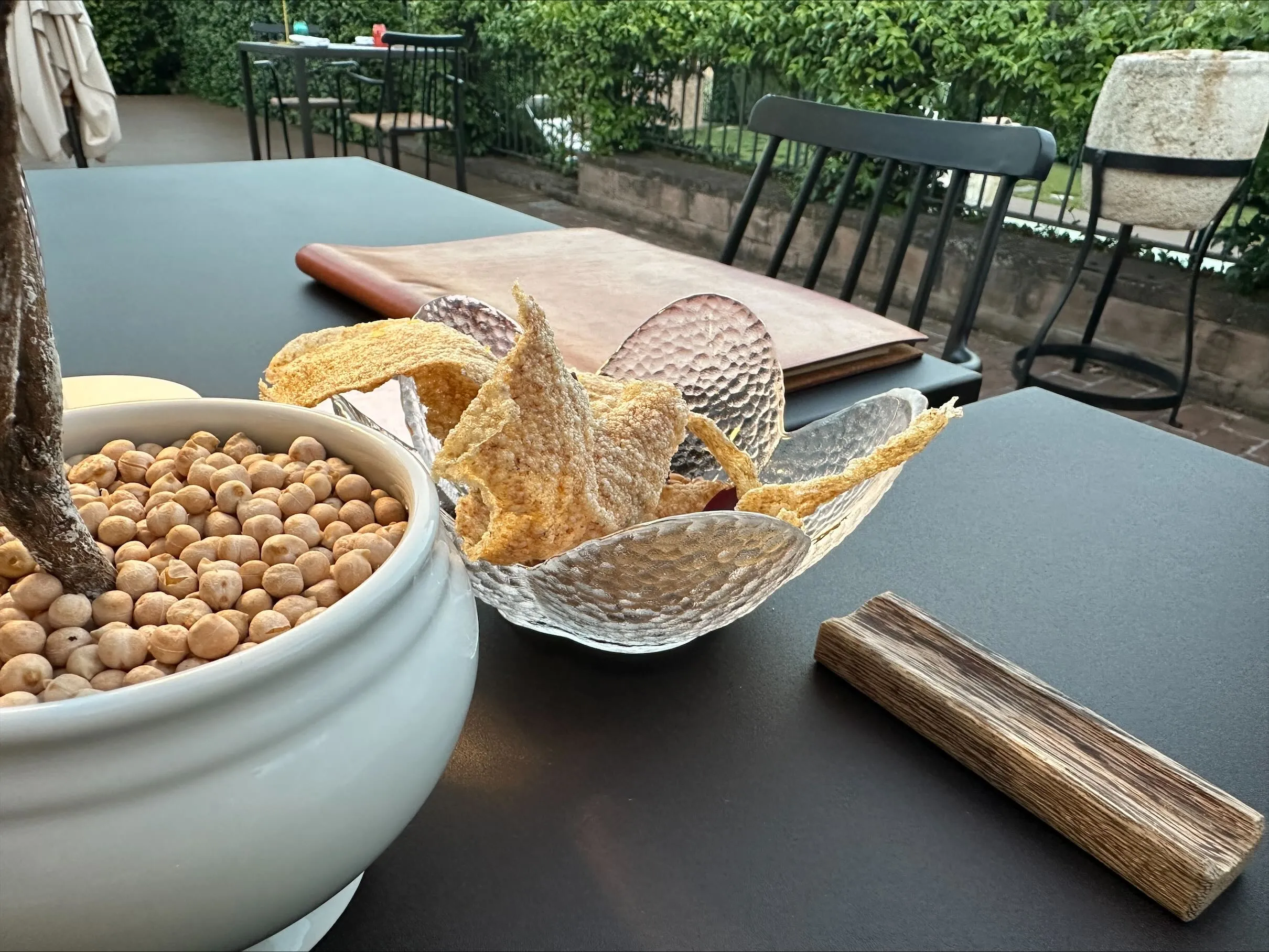
Another crisp, based on grains, is surprisingly light and flavourful. (7+/10)
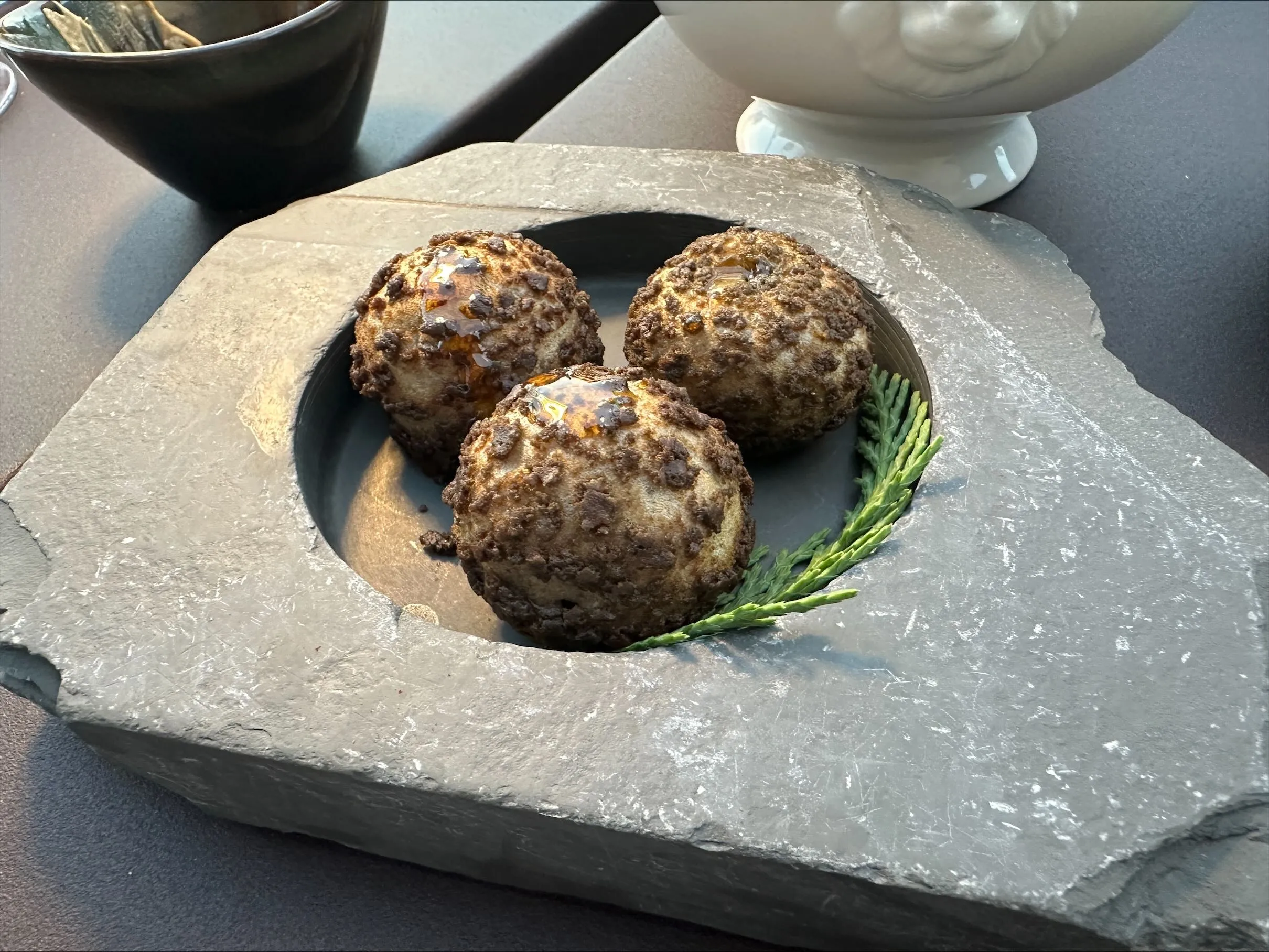
Dough balls, (very) vaguely meant to look like truffles, are filled with a rich cream and have, again, a crispy exterior. (6/10)
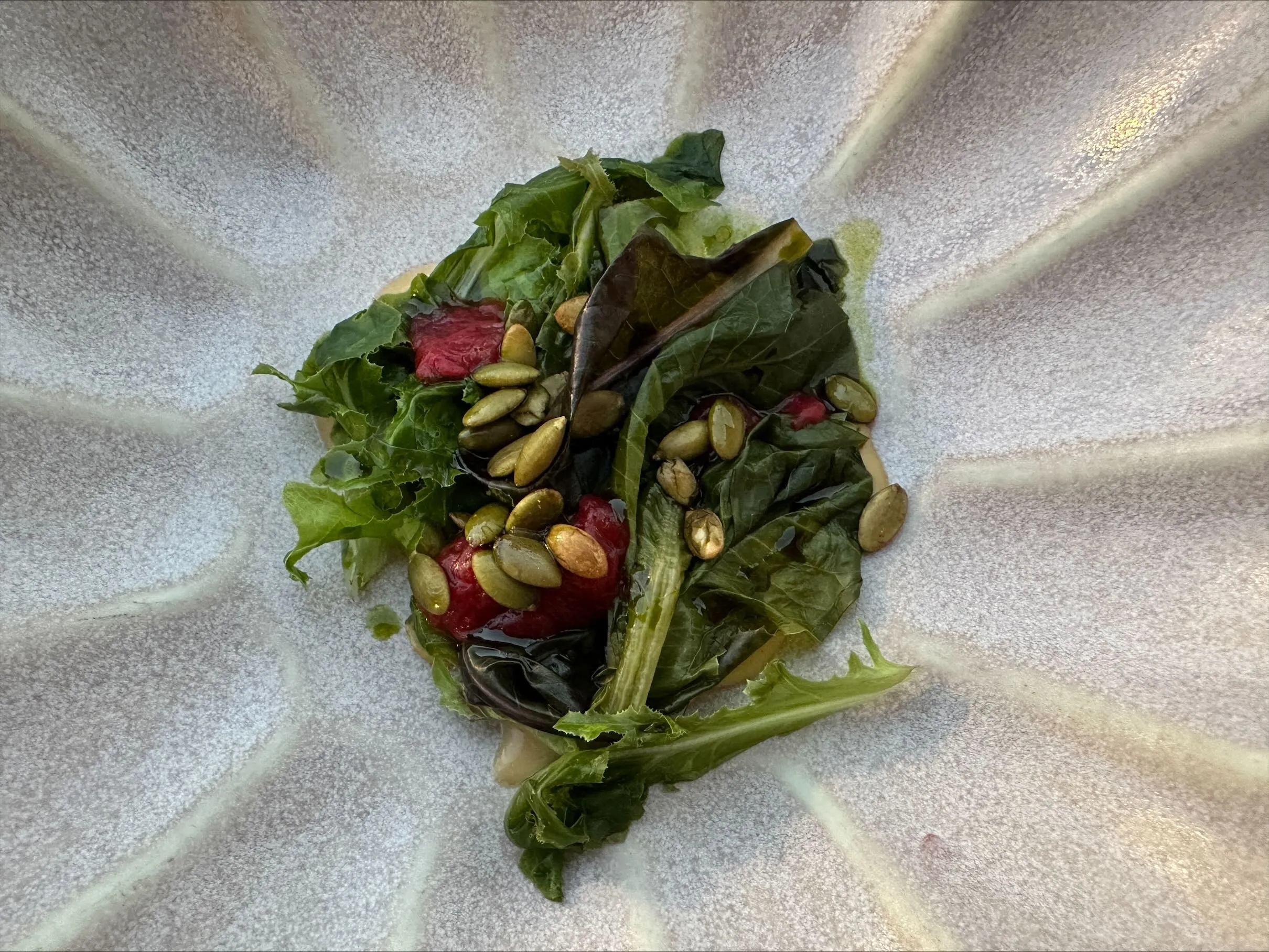
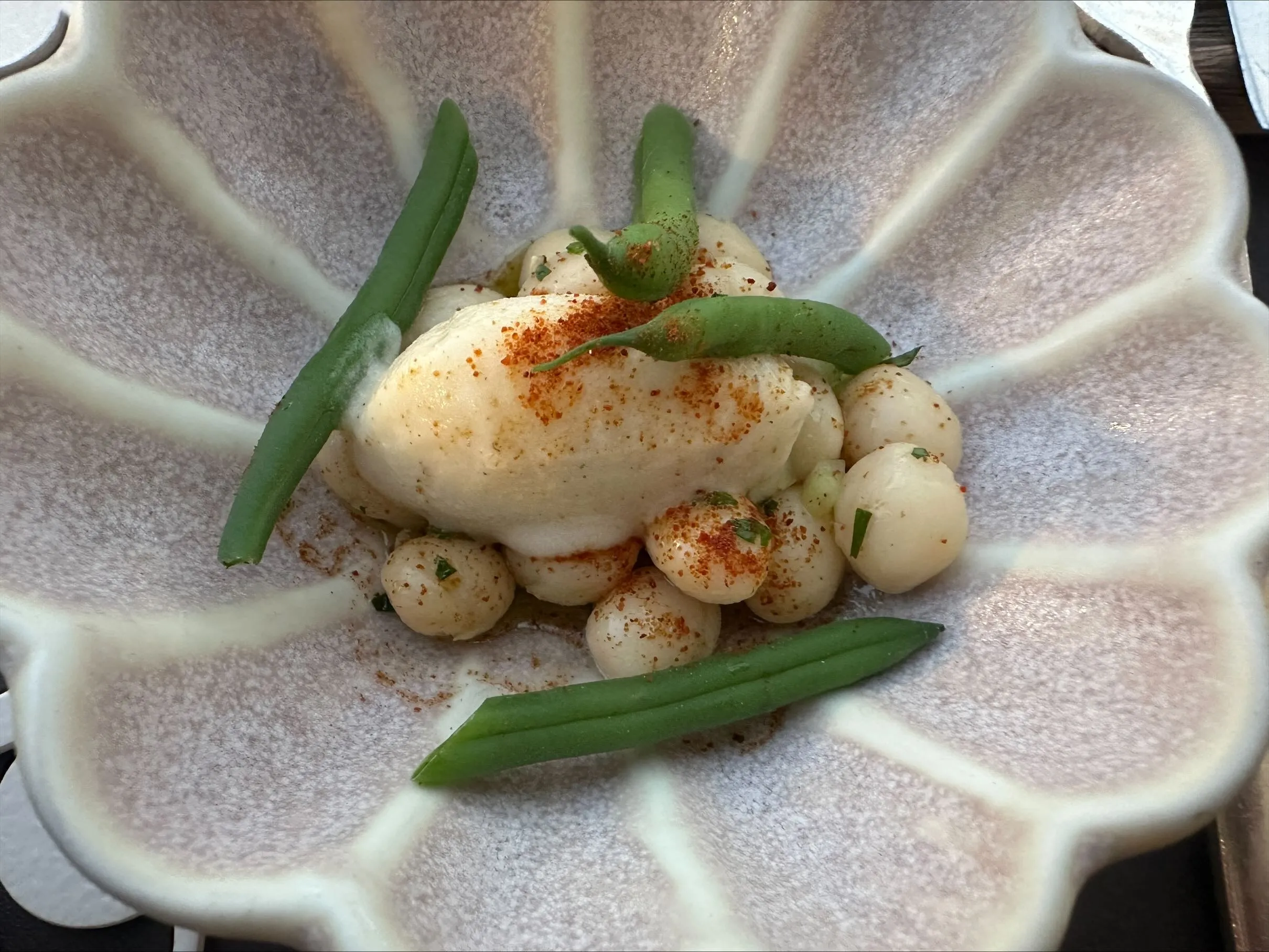
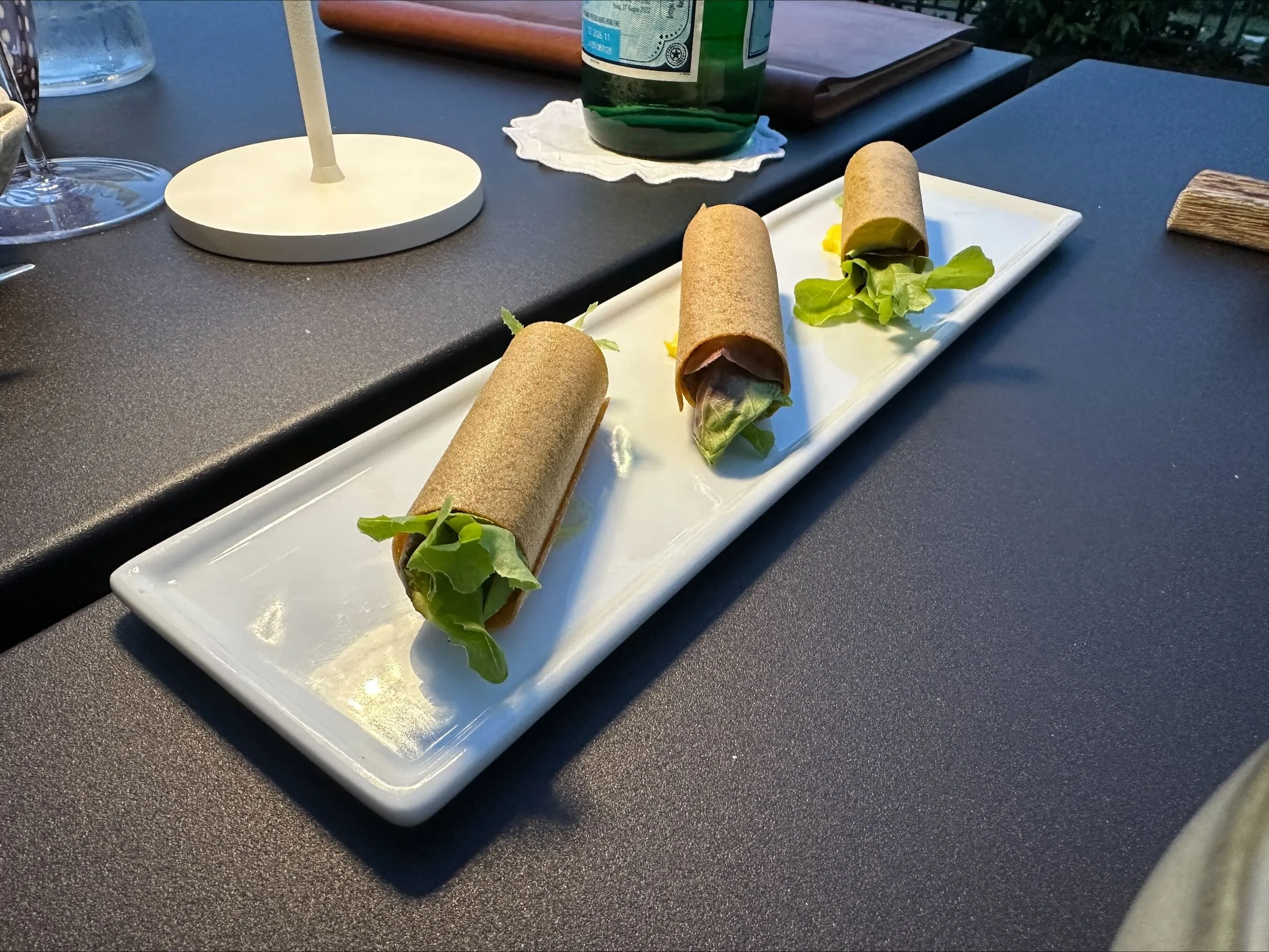
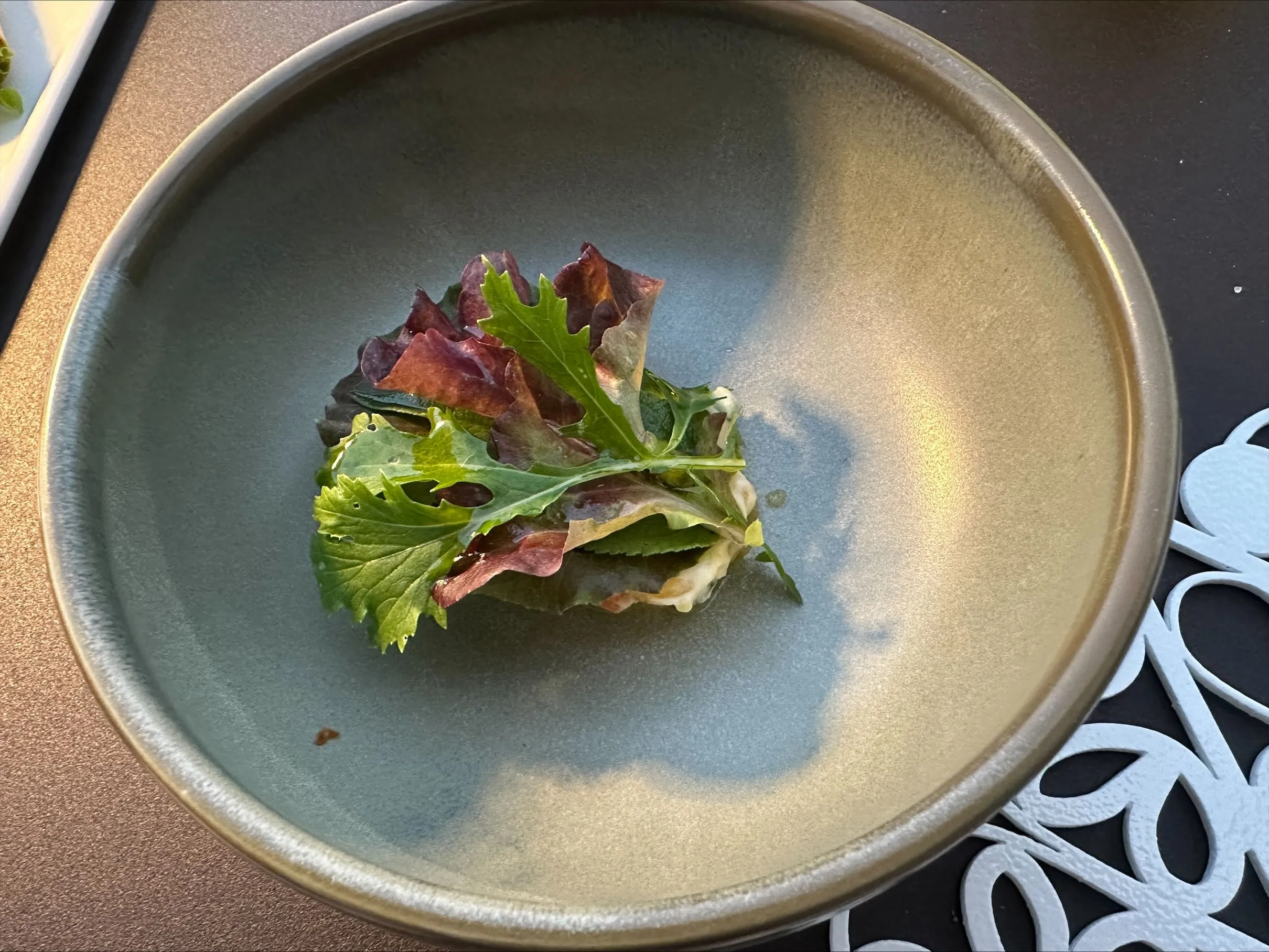
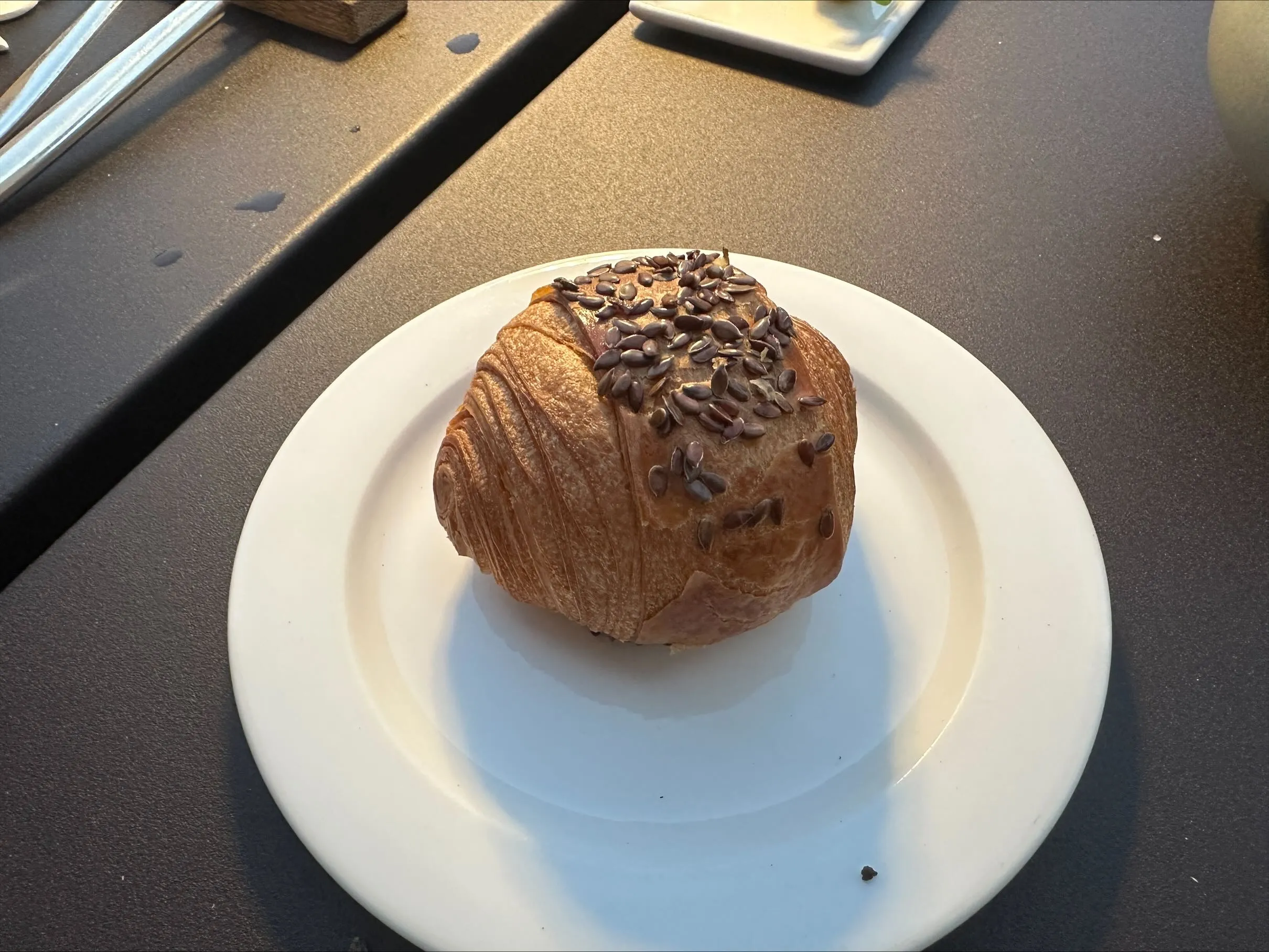
After such a crispy and slightly mediocre beginning, I’m hoping for some fresher flavours. The first course, Orto (“garden”), promises just that. It takes a while to arrange the required five (!) plates, but it’s well worth it: the central dish is a marinated (and as a result, not at all crispy) salad with berries. Pumpkin seeds add a little crunch and complement the vegetal flavour of the salad. The most surprising element is a peanut-based sauce, which binds everything together beautifully. Rich nutty sauce, sweet and acidic berries, slightly bitter marinated salad: a fascinating and delicious combination. The wiltedness of the salad actually works favourably here. A bean dish on the side is equally impressive: the beans perfectly cooked and full of flavour, a bean ice cream with a delicate sweetness that mirrors that of the peanut sauce, and a few fresh green beans for contrast. Crispy cylinders filled with salad and a tangy aioli-like sauce add a nice contrast with their texture and (this time crispy) salad. A Waldorf salad covered in fresh salad leaves is well made, but less impressive than the other components. A puff pastry roll adds some substance, though I prefer the superb sourdough bread later offered with olive oil. This dish has it all: extremely high-quality ingredients fresh from the restaurant’s own garden, unusual but fully convincing flavour combinations, and the technical skill to execute each element flawlessly. Superb. (9/10)
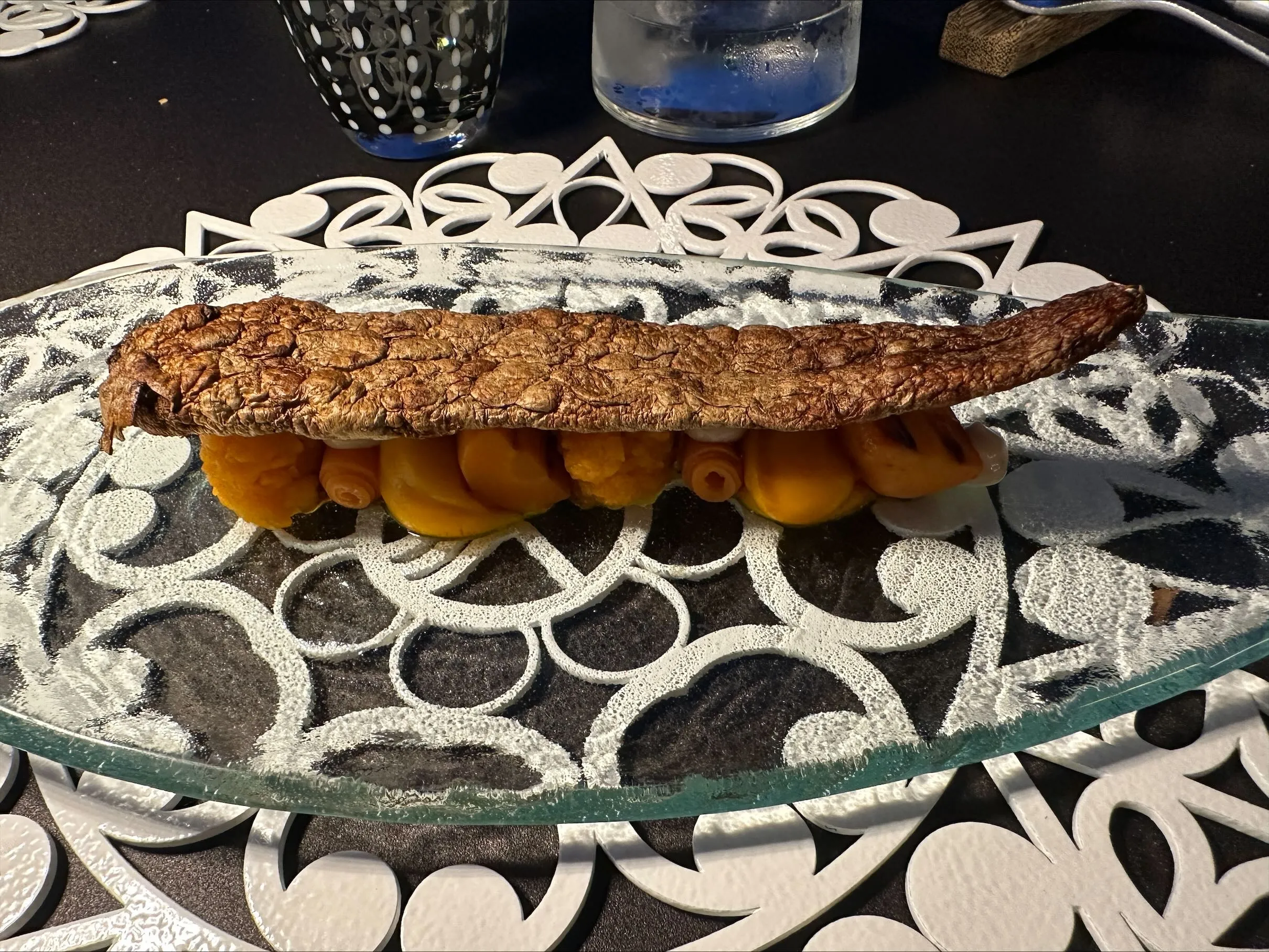
Next we turn our focus to carrot. Indeed, we turn all of our focus to carrot, since there’s hardly anything else on the plate: carrot tartare, carrot puree, roasted carrot, rolled carrot, and a crispy carrot that looks like a granola bar that’s seen the underside of a car tire. I always feel a little ambivalent about such one-ingredient dishes: they are conceptually compelling and offer chefs the opportunity to showcase their technical skills with a single ingredient; but conversely, they are often a little bit, well, one-note. This carrot composition exemplifies both tendencies: it is technically very well executed, especially the carrot crisp on top, which has a roasted caramelized flavor and none of the chewiness that sometimes ruins dried vegetables. Yet, the whole thing would benefit from a little sauce to bind everything together, and perhaps a citrus or herbal note to add a contrasting layer of flavour. (7+/10)
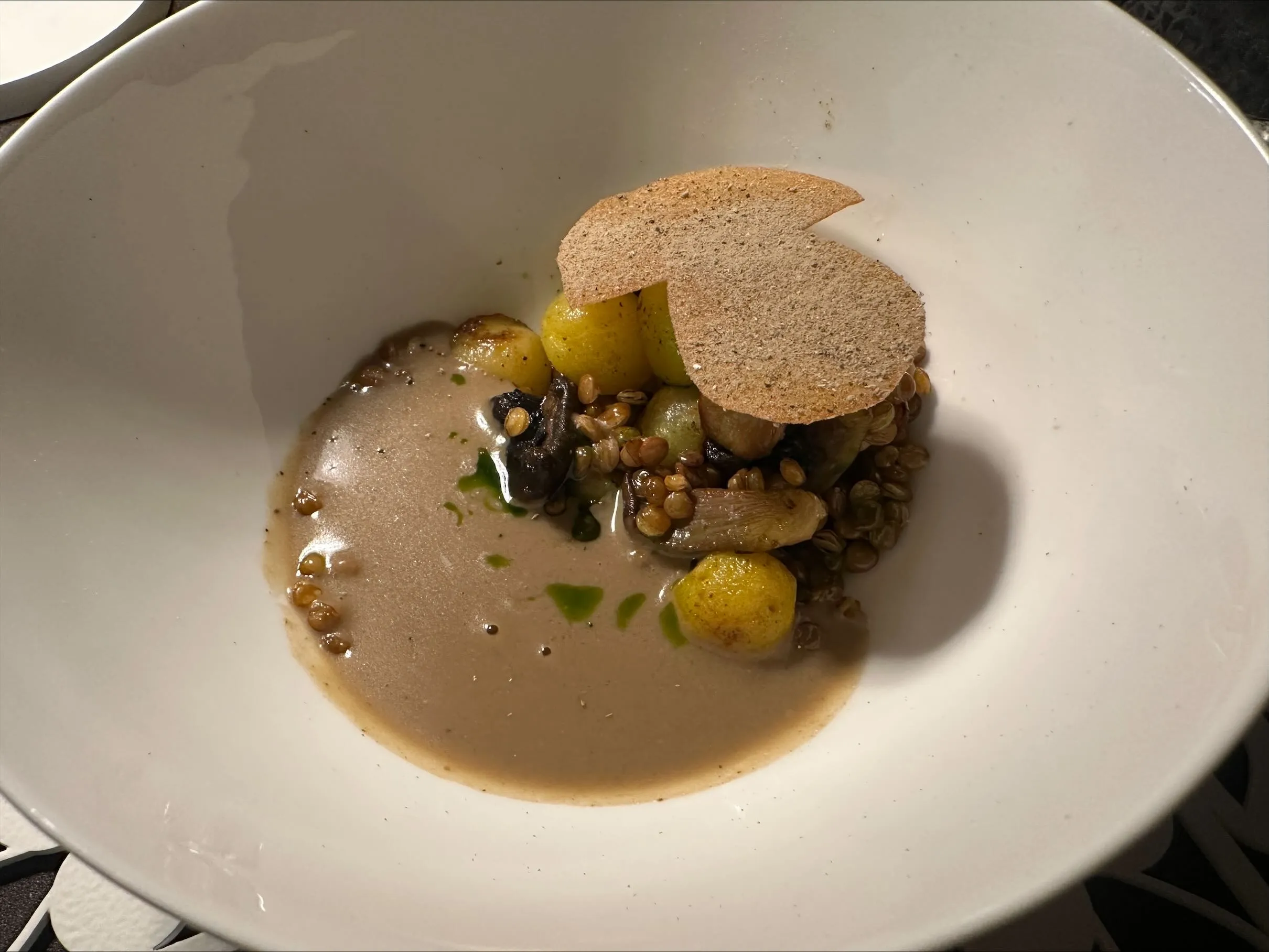
A mushroom soup with fried mushrooms, potatoes, and lentils is a little more straightforward than the high-concept carrot, but convinces with a deeply umami and mushroom-y soup, surprisingly flavourful potatoes, and lentils that add a nutty, earthy flavour and a crunchy texture. The mushroom crisp on top is not just visually amusing, but well-seasoned with mushroom powder. (8-/10)
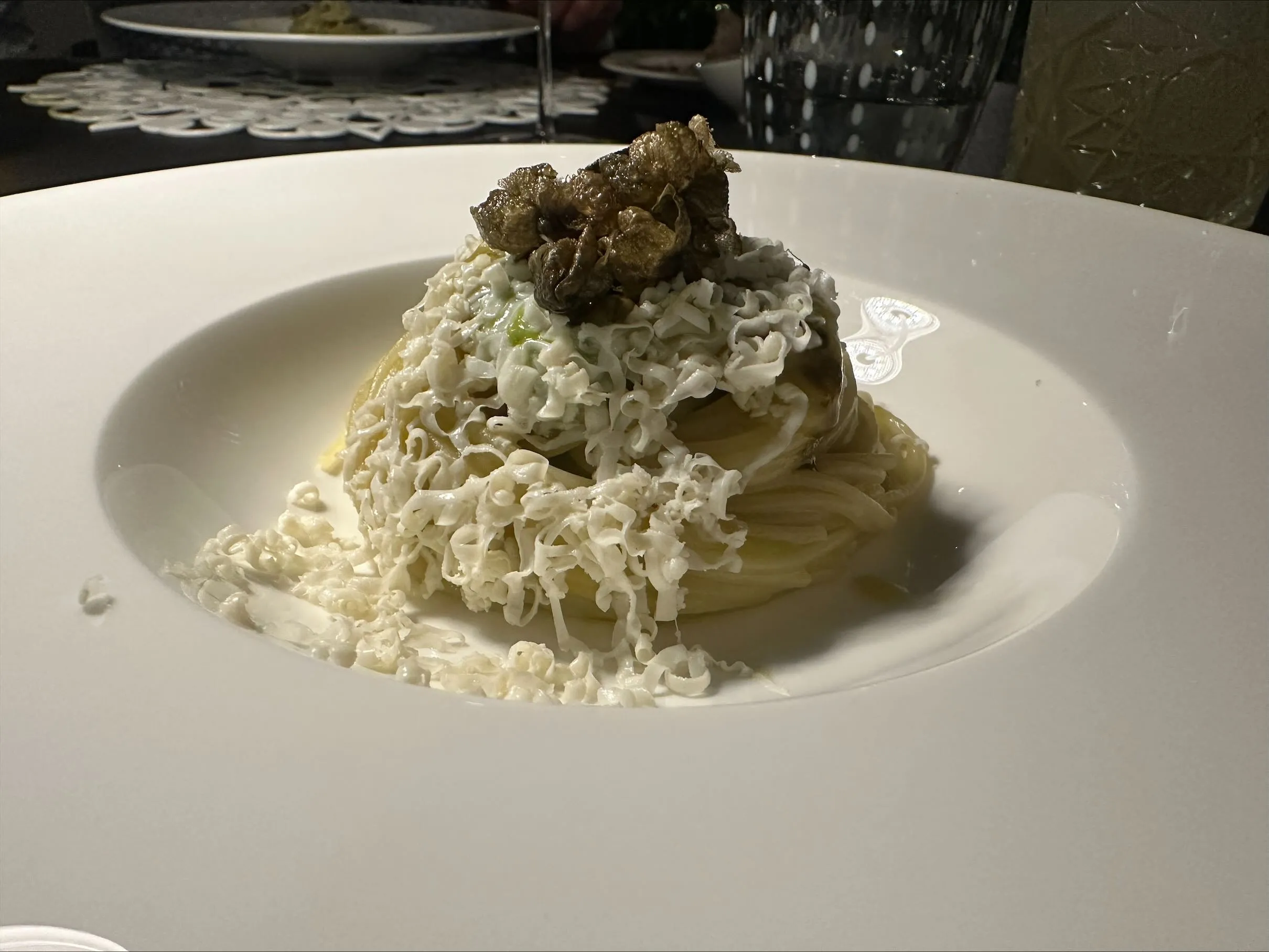
We move on to the pasta portion of the menu. First up are spaghettini with smoked ricotta, mountain herbs, bay leaf extract, and fried capers. This looks simple, casual almost, but has little in common with the pasta at your typical Italian neighbourhood restaurant: the pasta is very thin, but clearly of excellent quality and cooked just right. The ricotta, mountain herbs, and bay leaf extract combine to form a remarkably complex and layered sauce with a generous creaminess. The friend capers add some crunch and a stronger, contrasting flavour that works well with the sauce. A seemingly simple dish with a remarkably complex and deep flavour. (8+/10)
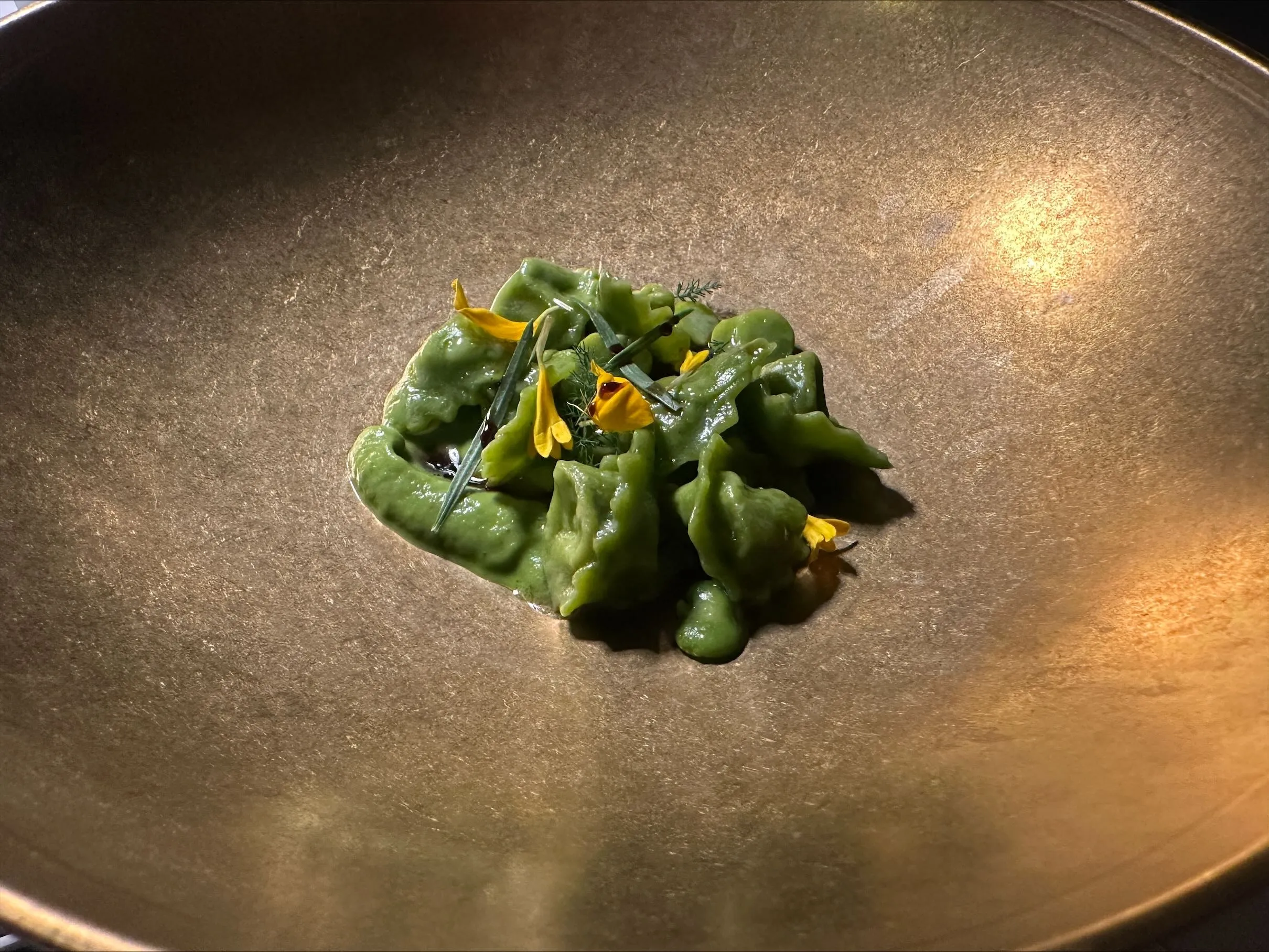
The second pasta dish: tortellini filled with smoked potato on a pea sauce with herbs. Each element here is superbly executed: the perfectly cooked pasta, the smooth, smoky potato filling, and the bright, fresh, sweet pea puree. But when combined, especially with the herbs on top, the result is much more than the sum of its parts, a fascinating combination of smoky earthiness, sweet freshness, and aromatic herbal notes. There’s nothing more to say except that it’s over much too soon. (10/10)
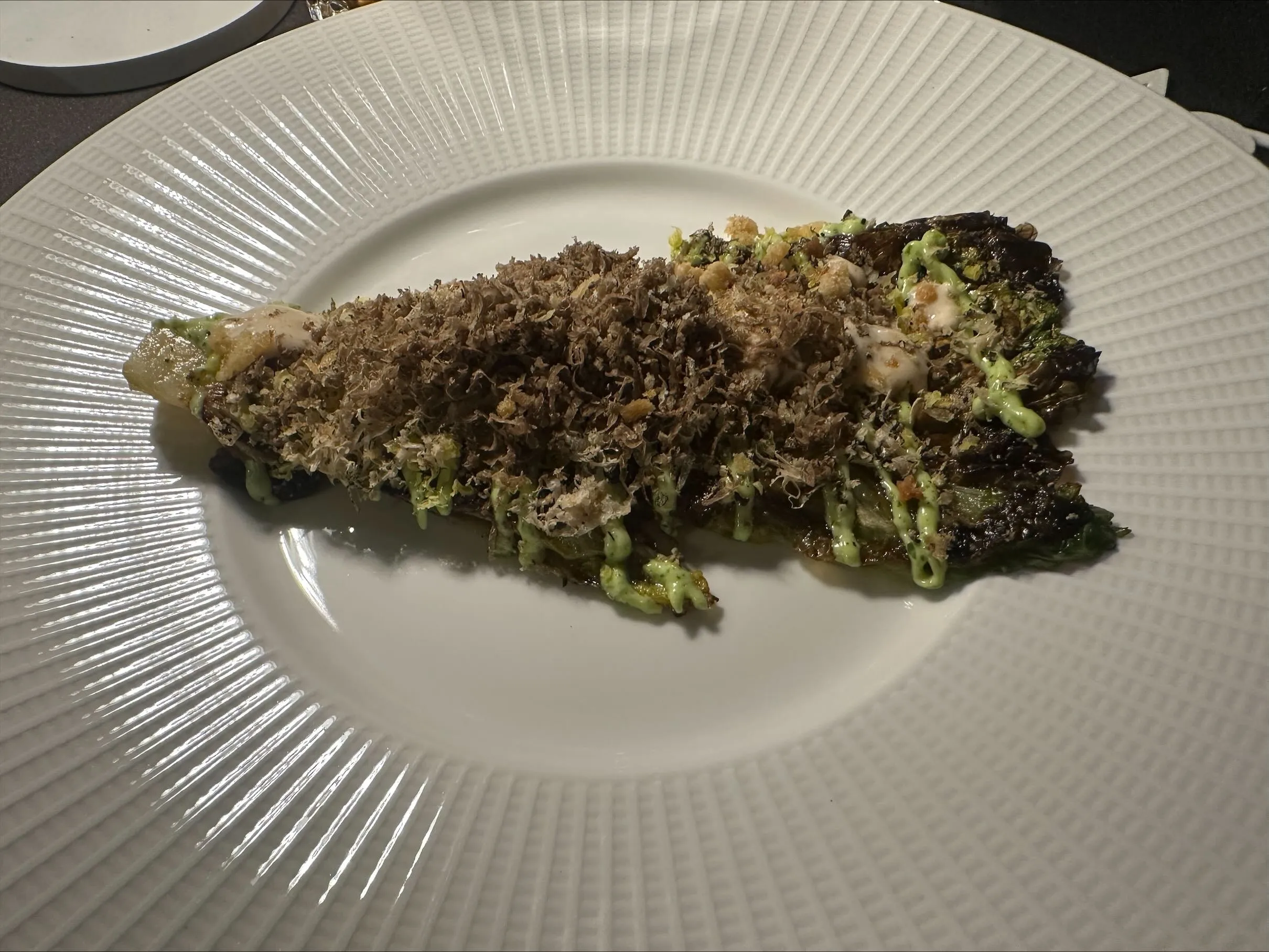
After the two primi, we are now onto the secondo of the tasting menu: endive with hazelnut, a green sauce (details not noted), grated cured egg yolk, and summer truffle. The endive has been caramelised and partially charred, which nicely balances its naturally bitter taste; the sauces add a nutty and rich flavour profile, which is reinforced by the cured egg yolk and plays nicely with the earthiness of the truffle. This lacks the astonishing refinement of the previous two pasta courses, but is no less delicious. A slightly rustic dish that is better eaten than analysed. (7+/10)
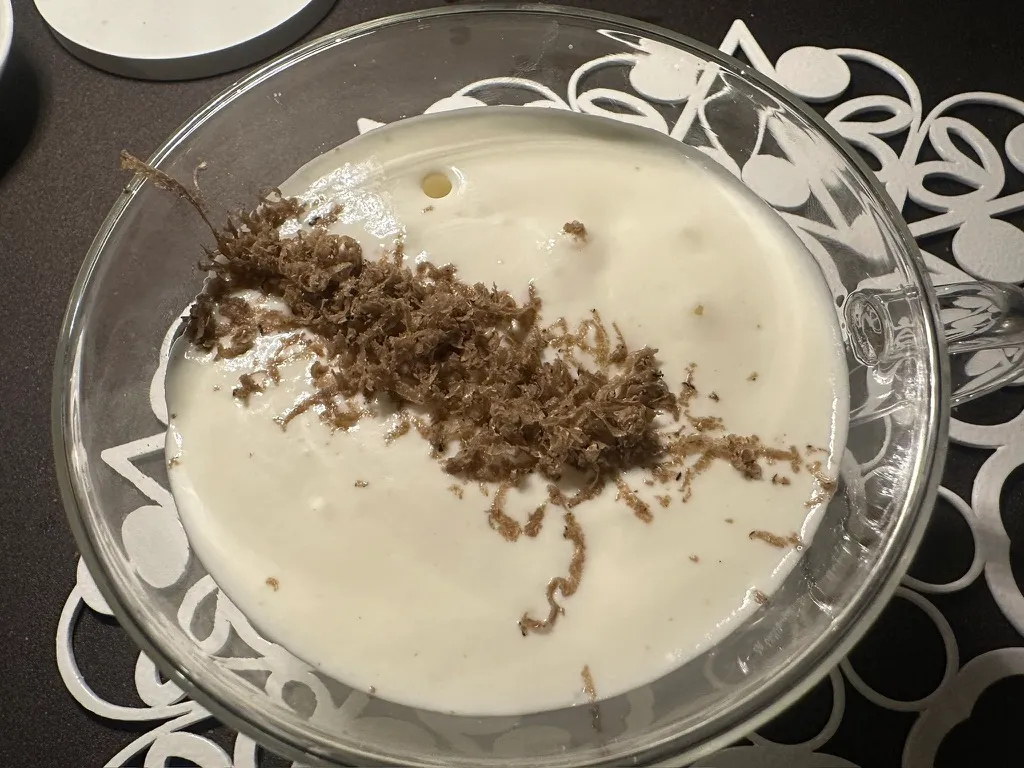
Before dessert, the additional a la carte course arrives: a soft-boiled egg from a chicken fed with hemp, which apparently makes the egg (and, hopefully, the chicken) healthier, sits atop a jerusalem artichoke purée and is covered in a cheese foam, topped with summer truffle. I cannot comment on the health benefits of the egg, but I can attest to the fact that it was an unusually flavourful egg. Combined with the cheese foam, this makes for a very rich dish, but the jerusalem artichoke adds a welcome earthy and slightly sweet note. Safe flavour combinations executed with high-quality ingredients and flawless technique. (7+/10)
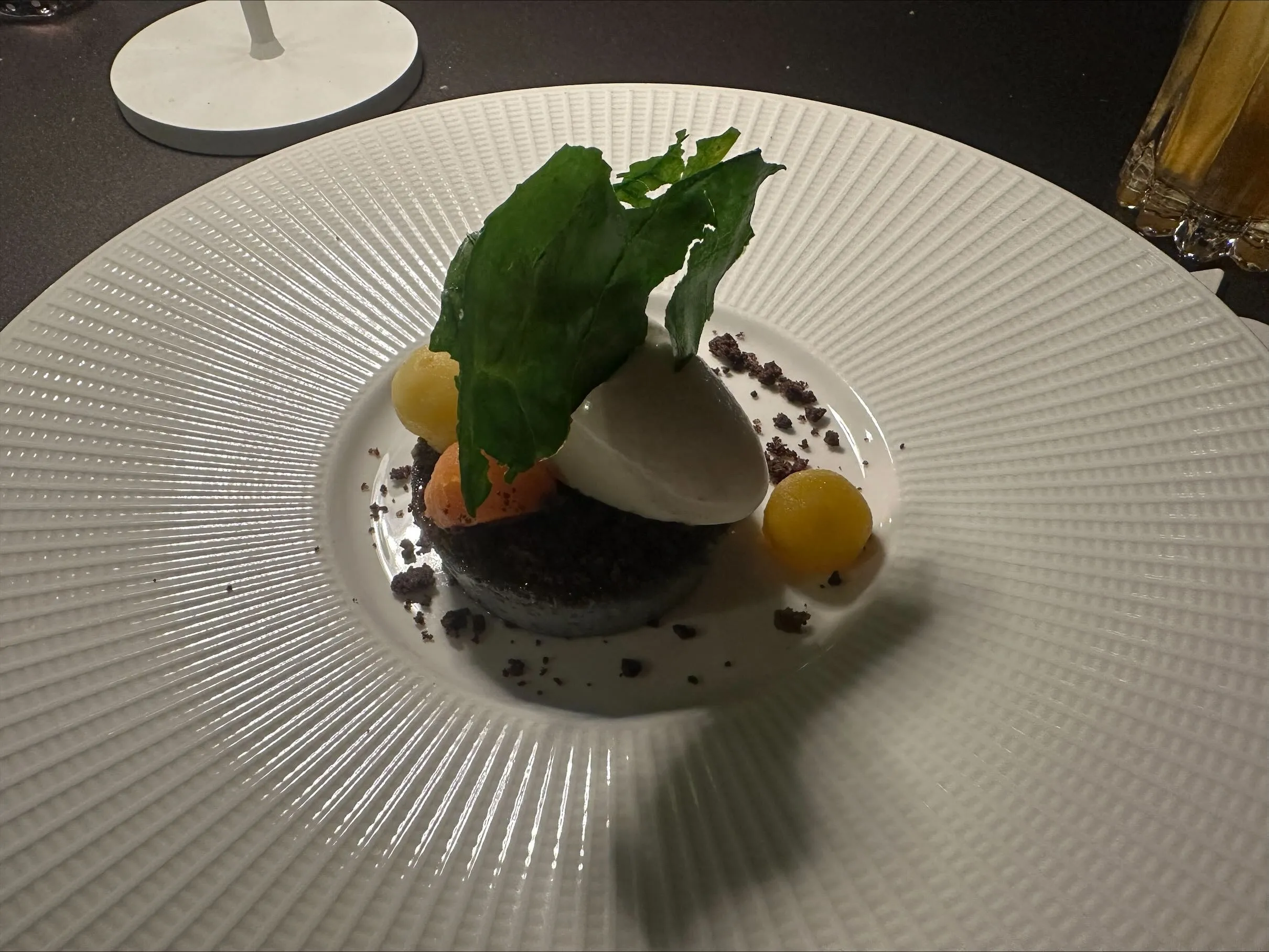
The dessert comes looking suspiciously healthy with a crisp green leaf on top. Below that is a carrot creme brulee and an almond ice cream with little balls of cooked and slightly sweetened vegetables. At this point I must confess a general dislike for overly savoury desserts — I’ve just been a good boy and ate my vegetables so now I want some chocolate and caramel in return, thank you very much. On a technical level, the creme brulee is well made, as is the almond ice cream, although both lack sweetness. The vegetable balls are more questionable with their mealy texture and subdued taste. While there are no obvious technical flaws, and I am sure the relative lack of sweetness is intentional, this hardly provides a satisfying conclusion to what has been a fantastic meal (6/10).
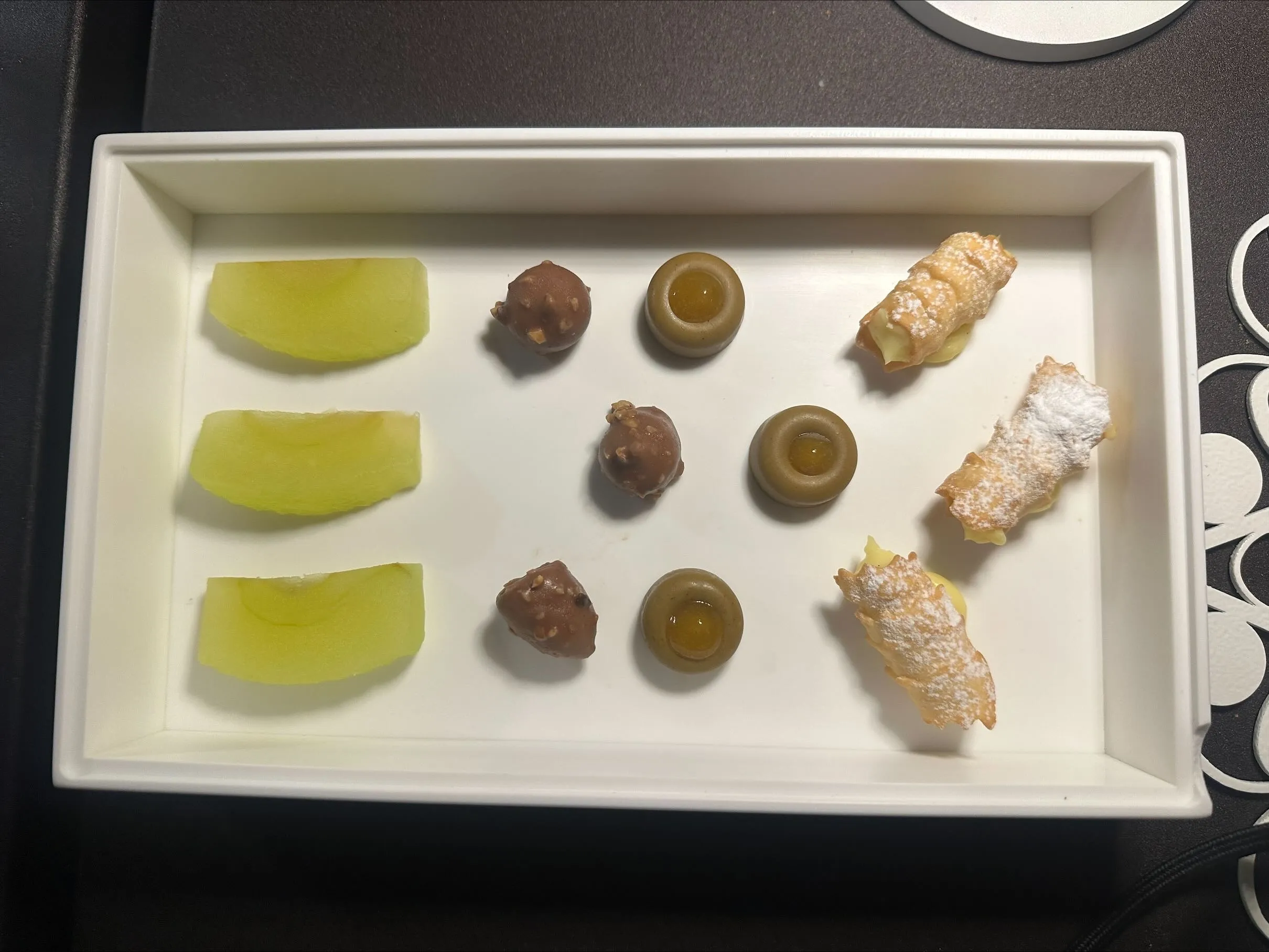
The petit fours that follow are, perhaps because the dessert didn’t prepare me appropriately, almost too sweet, but offer well-executed traditional flavour profiles. The standout is a piece of apple soaked in an alcoholic marinade that has a surprising complexity and crunch. (7/10)
La Bandiera offers a fresh, modern cuisine rooted in the Italian culinary tradition and executed with great technical skill. With this, it would stand out in any of the major restaurant cities of the world, but to deliver such contemporary refined cuisine in such a remote location speaks of the love and effort that the family invests into their restaurant. I admire their dedication. The result is very much worth a detour.