MoSuke
| Food rating | 7/10 (rating system) |
| Michelin stars | |
| Vegetarian menu availability | Vegetarian menu on request |
| Website | mosuke-restaurant.com |
Mory Sacko shot to fame in the fall of 2019 on the French edition of Top Chef. If you watch a YouTube clip of him, it’s easy to see why: always smiling, energetic, and with a flair for audacious flavour combinations. In September 2020 he capitalized on his newfound fame by opening his own restaurant, MoSuke, in Paris. Small and tucked away in the 14th arrondissement, MoSuke has become one of the toughest reservations in Paris. I had already resigned myself to one of the less in-fashion restaurants in Paris, hardly a terrible fate, when my repeated checking of the reservation website suddenly revealed an 8pm reservation in the middle of a planned Paris trip. Luck favours the persistent.
The restaurant is modern and welcoming, furnished in a relaxed French-Japandi style. The staff often struggled with English, but in a good-natured, charming way that I associate more with Italy than France. All set then for the main attraction: Sacko’s cuisine, which draws on his family’s roots in Senegal and Mali and his personal interest in Japan, grounded in solid French technique. This, in fact, was my main reason for coming — West African cuisine is rare in all of Europe, but West African-Japanese-French fusion is probably unique, certainly at a Michelin-starred level. This is offered as a no-choice tasting menu with a vegetarian option on request. I’m intrigued, excited, and hungry; an ideal setup.
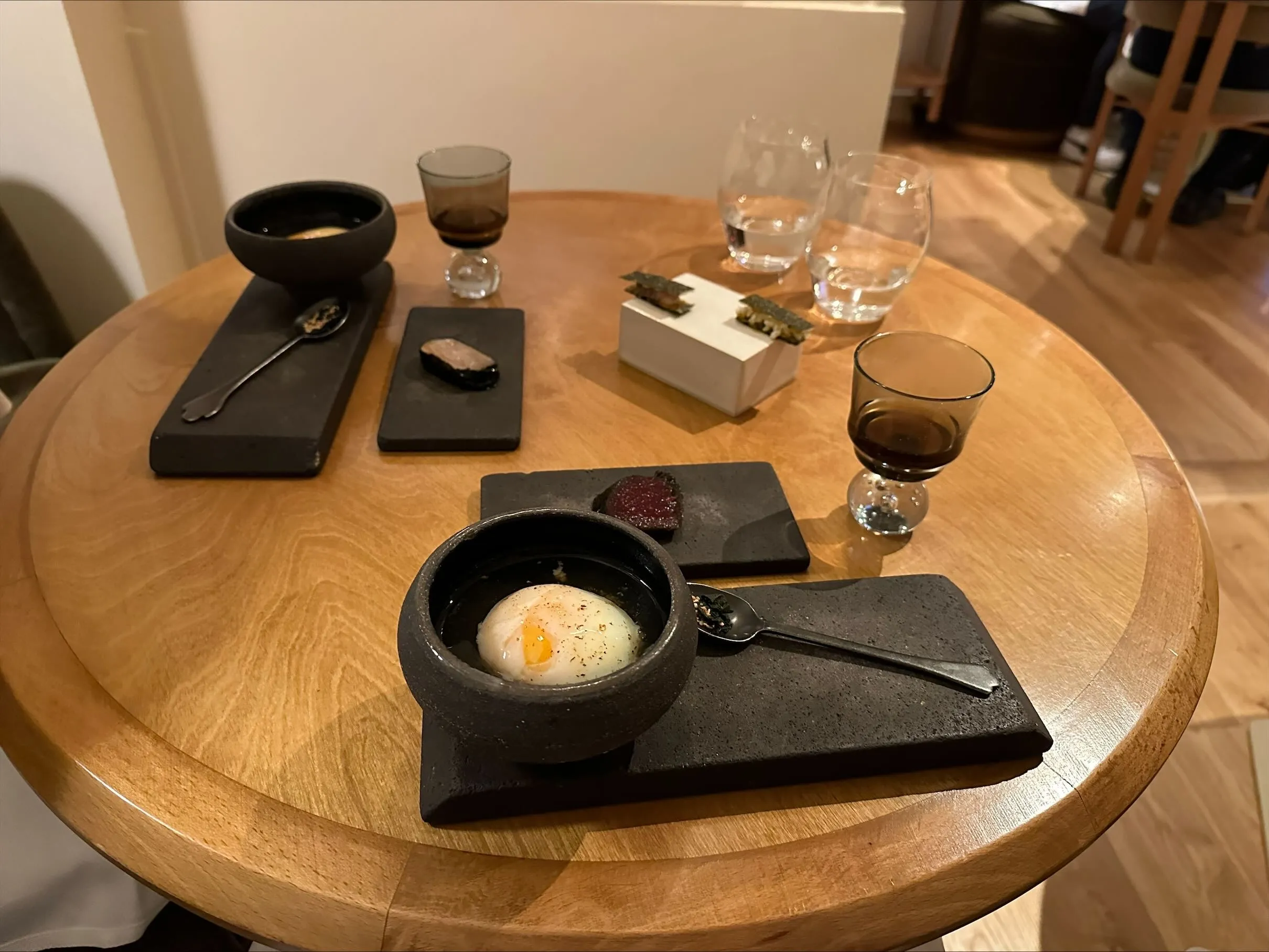
The first set of snacks is decidedly Japanese: an onsen egg is well-cooked but fairly bland and a strangely substantial portion as a starting snack. A shot of well-flavoured but not particularly memorable dashi is served on the side, alongside a piece of beetroot sushi and a nori cracker with puffed rice. There is little fusion here, but a lot of watered-down Japanese ideas. Still, everything is well made, and given how hungry I am, I don’t mind the substantial egg to start. (6/10)
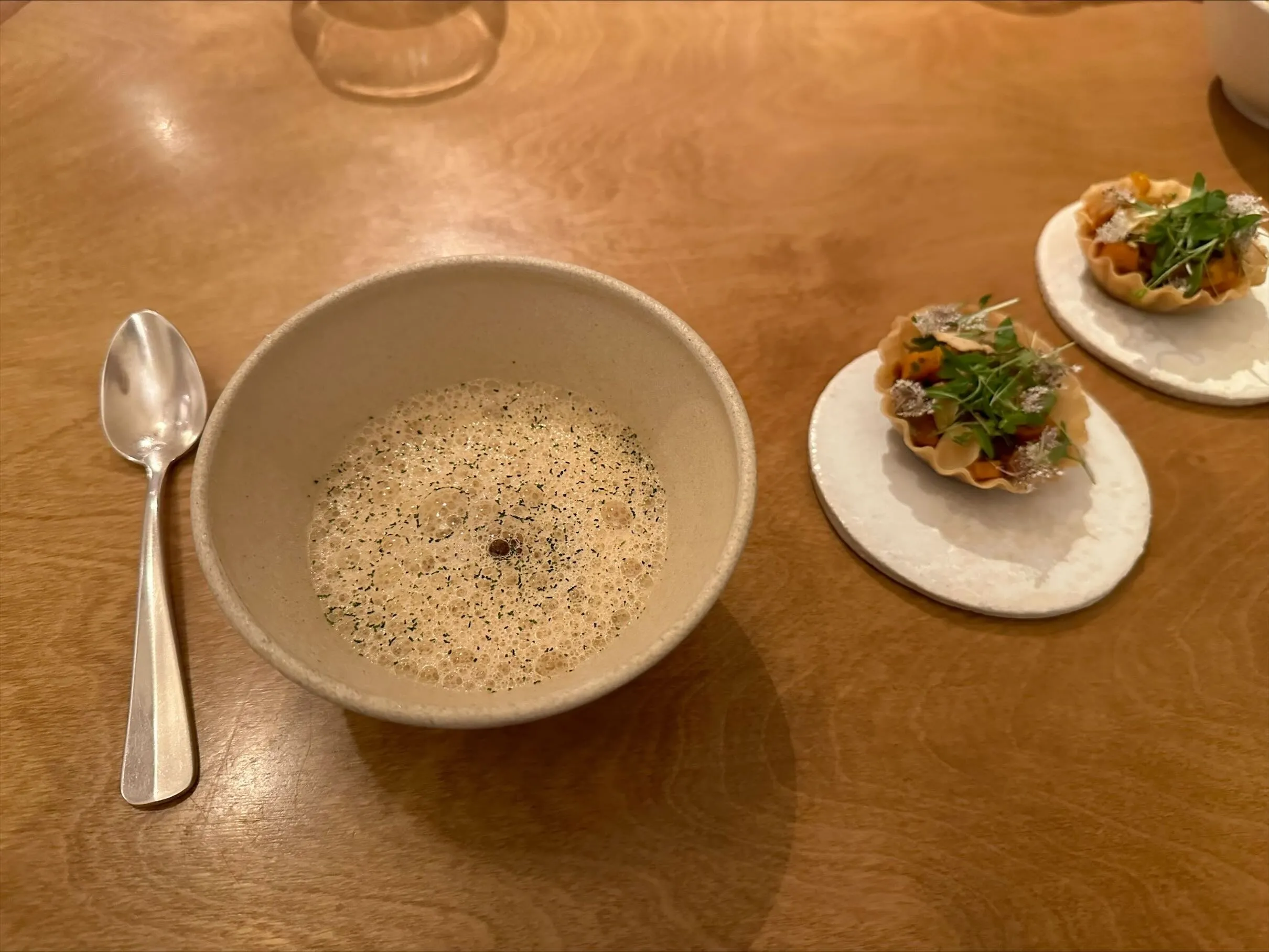
The second set of snacks abandons the Japanese theme, but is more enjoyable. Eggplant caviar with smoked tomato foam is light but intensely flavored and served at an ideal temperature (8/10). A straightforwardly flavoured tartlet of carrots, nuts, and ras el hanout tastes decidedly North African (7-/10).
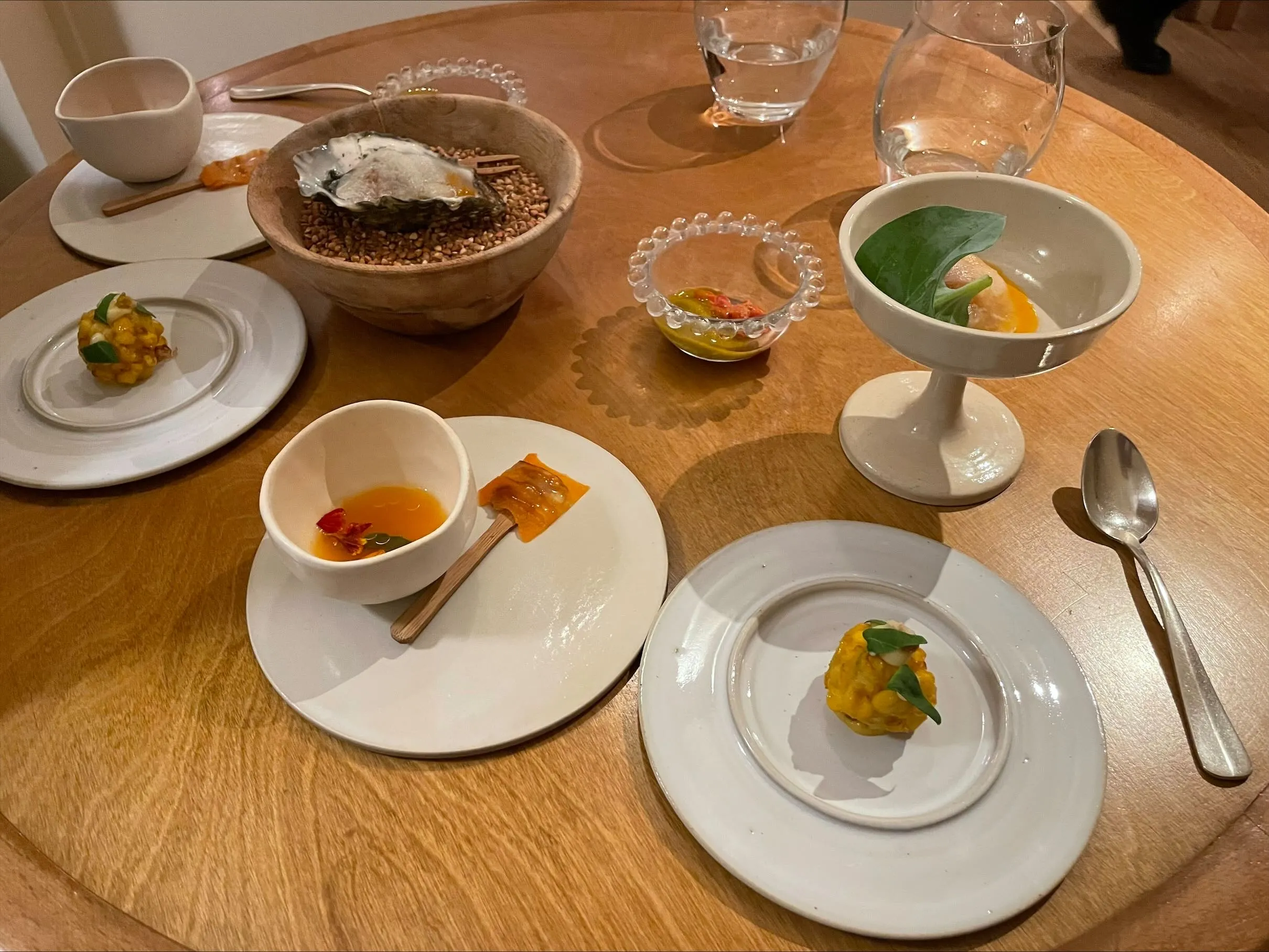
We continue with yet another set of snacks. A beetroot tartare with an Ethiopian sauce moves us to East Africa (7/10) — hopefully, we’ll make a beeline to our destination West Africa from here and won’t take the long way around the cap. But no, the next snack has us jumping back to Japan with Daikon and a green leaf whose identity the language barrier prevents me from discovering. It works excellently with the daikon, though, and is a much more interesting Japanese-inspired snack than the first set (8/10). A corn tempura with sesame mayo ostensibly stays on the Japan-inspired theme, but the tempura is doughy and has little in common with the light, Japanese variety (6/10). A melon lollipop with a spicy melon sauce is harder to place on a map, but all the more delicious (8/10).
At this point, I have already tried 10 different dishes and completed a small world tour, and we haven’t even made it to the first course yet. The snacks were fun but variable in quality. Less might be more here.
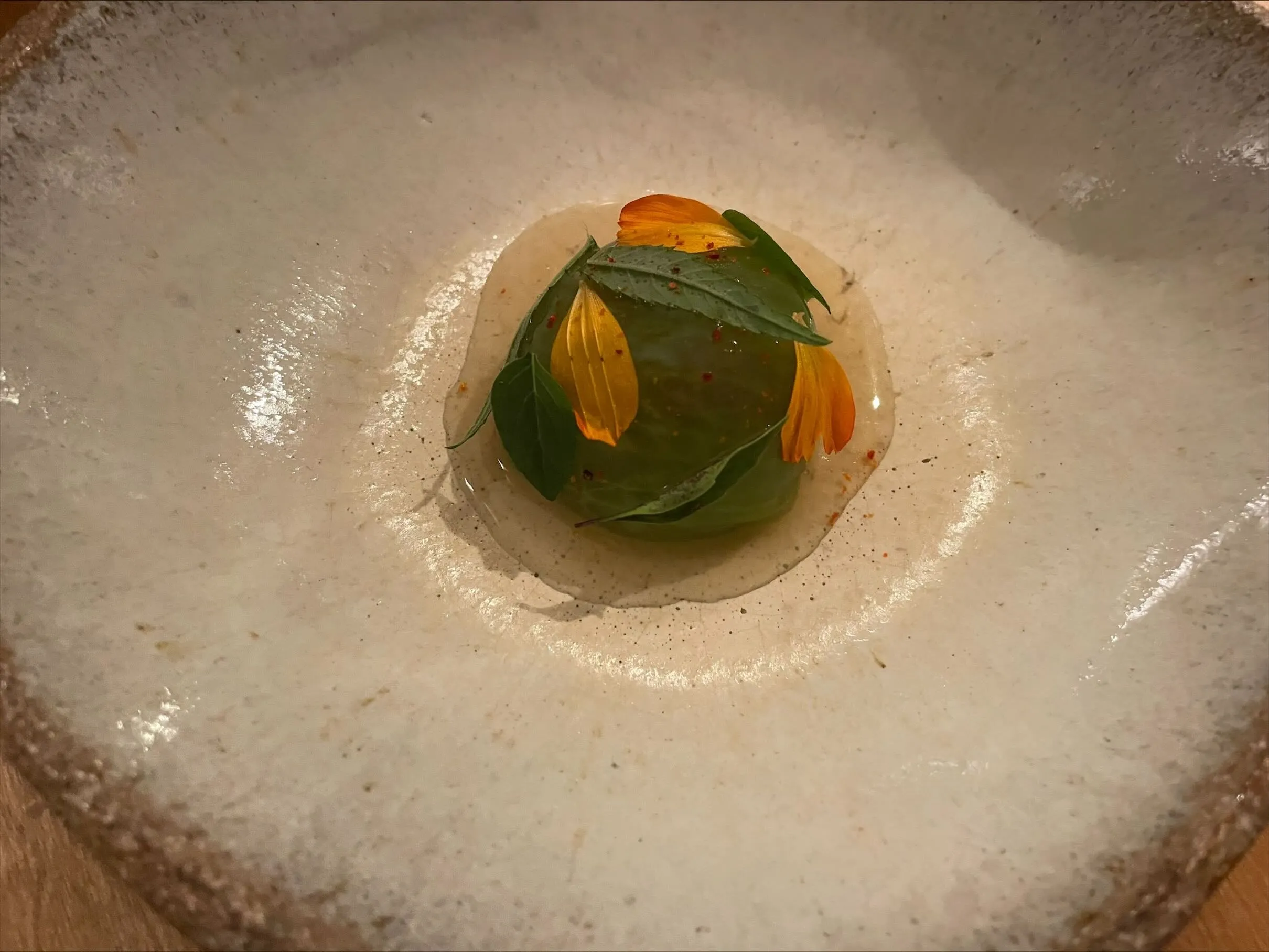
The first proper course is a green tomato with a sauce from Benin, which sadly fails to leave any impression on me. (6/10)
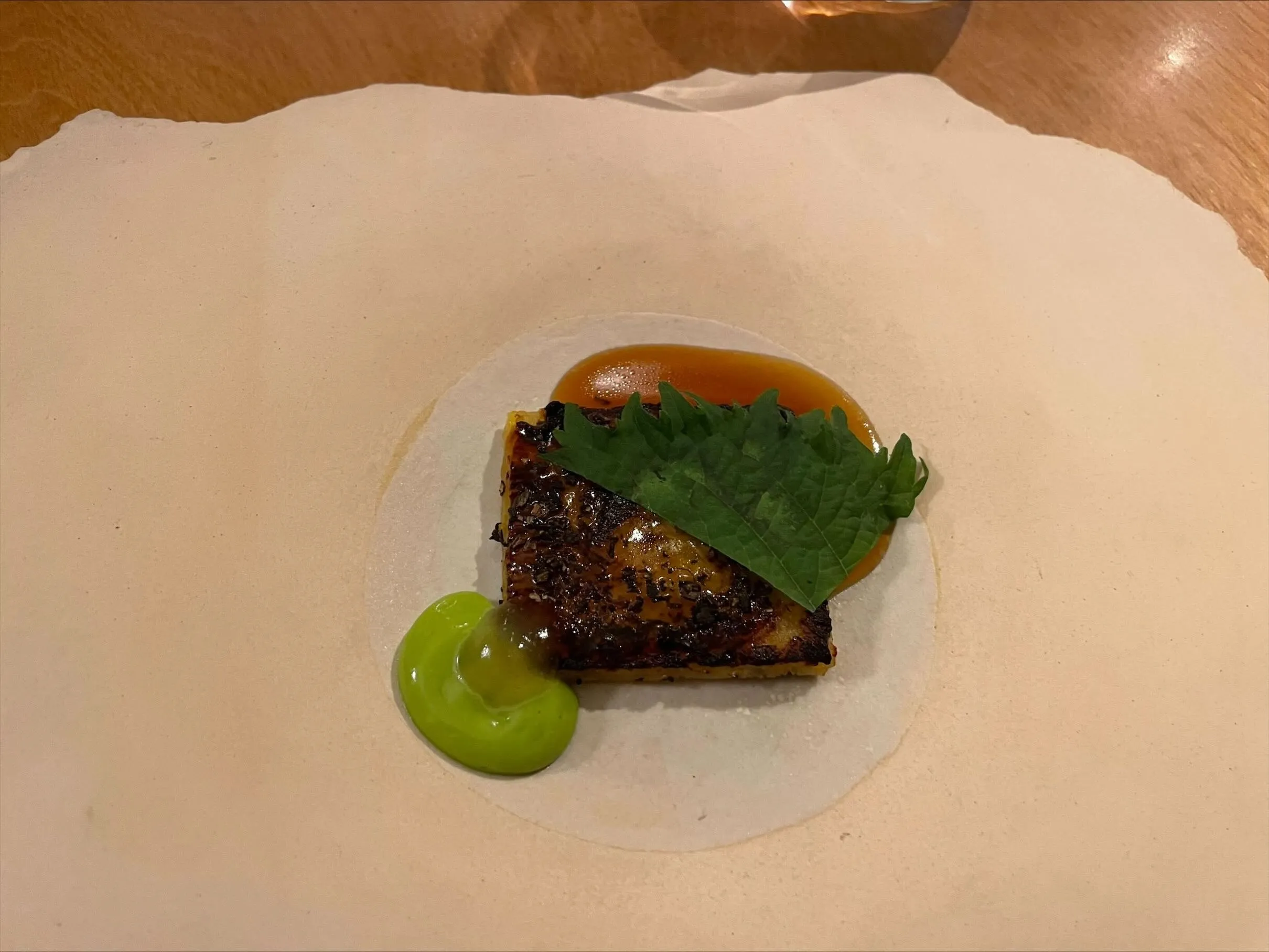
A grilled plantain with shiso leaf, teriyaki sauce, and green mayo is more interesting. Although I do not find plantain, with its somewhat mealy texture and sweet taste, an ideal centerpiece for dish, the sauces and nice char make this an enjoyable course. (7-/10)
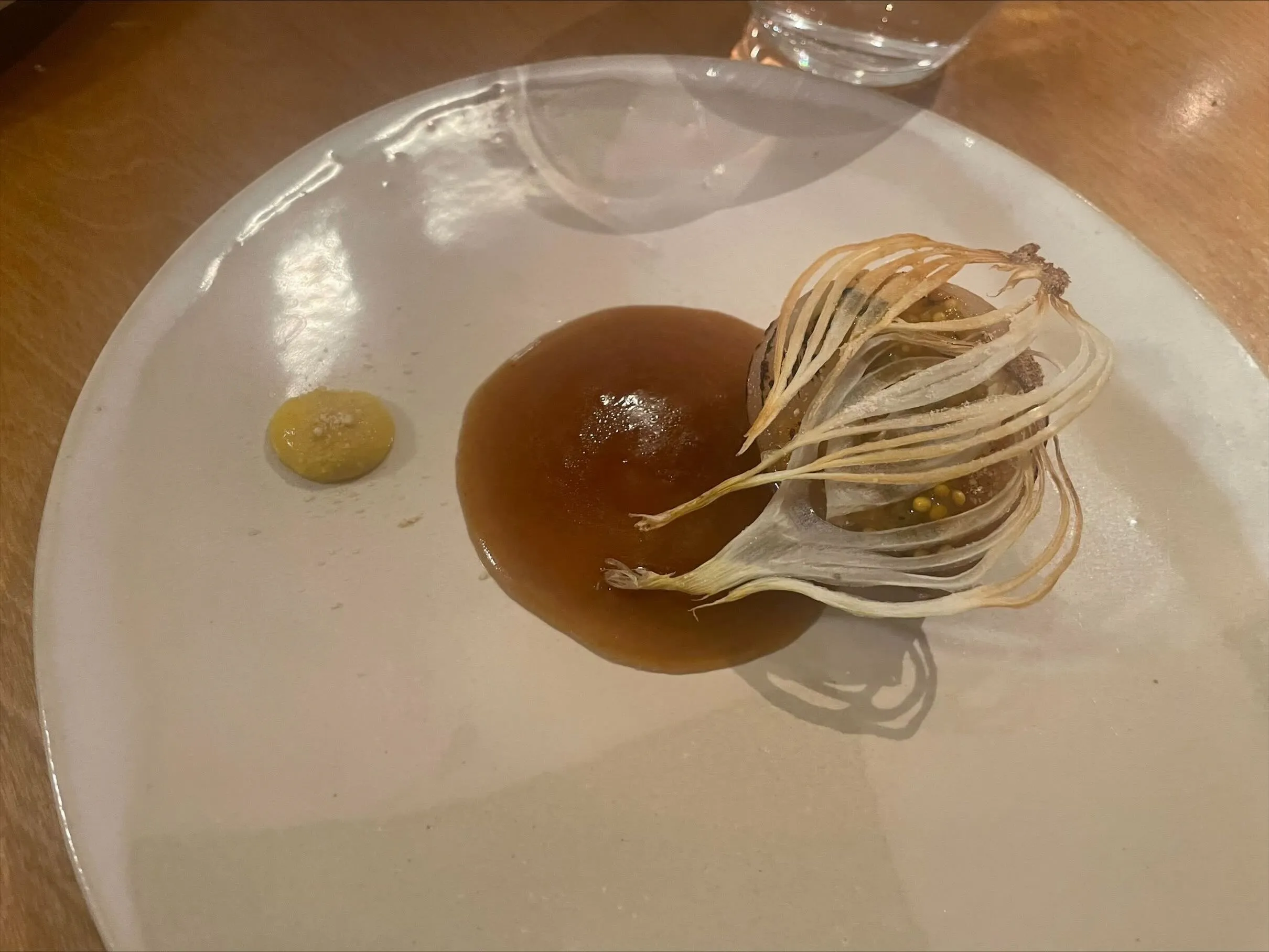
A Roscoff onion with an onion reduction and spicy yuzu mustard raises the level considerably. The wonderfully deep onion flavor is cut by the spiciness of the mustard and the complex acidity of the yuzu, with some fried onions on top for texture. An well-executed, reduced plate that is sharply focused on highlighting the qualities of its main protagonist, the onion. (8/10)
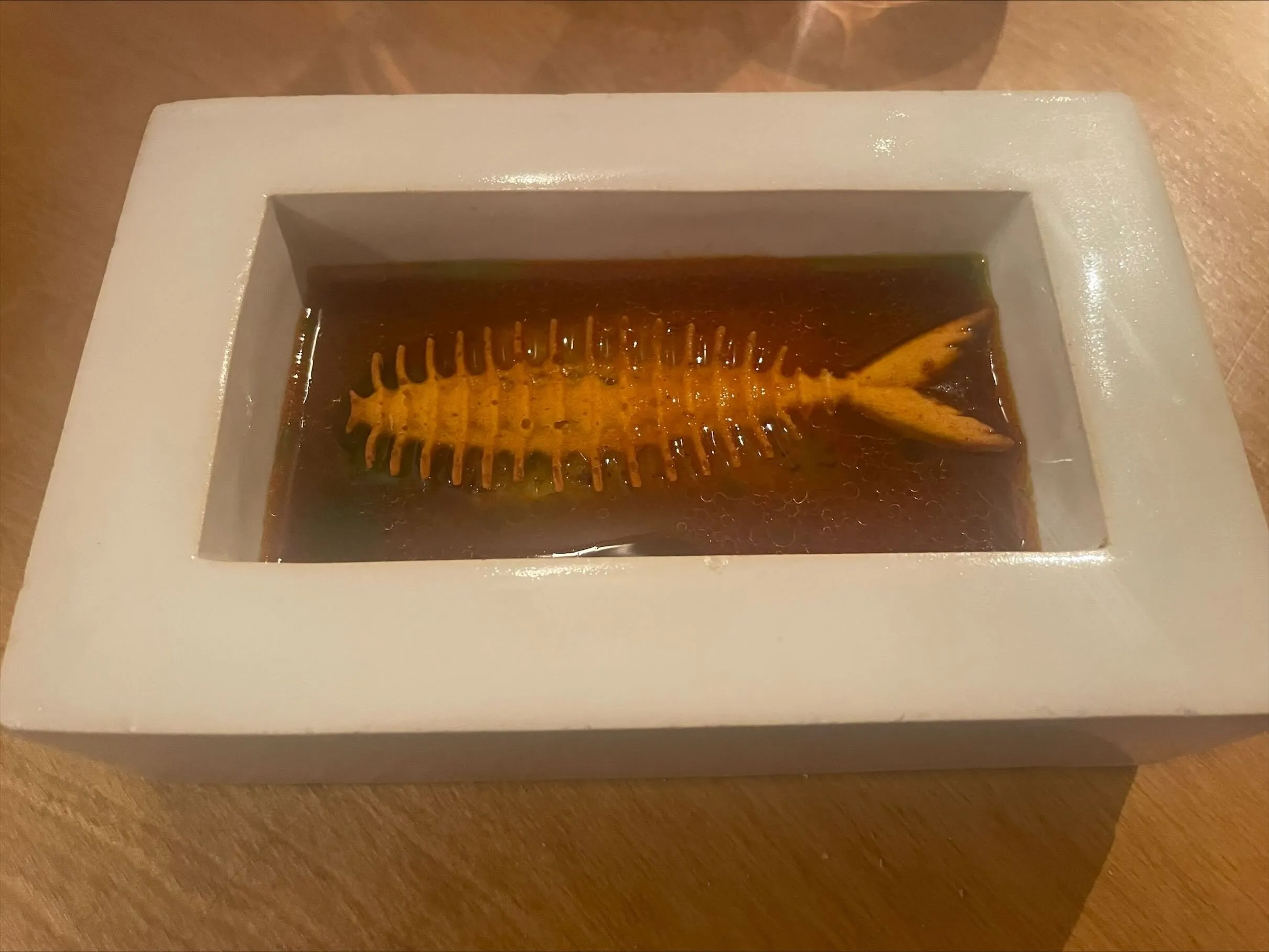
The next course appears with a fish-shaped biscuit on top, which makes more sense in the non-vegetarian version of the menu. Here, the fish is replaced with grilled yellow watermelon (watermelon-shaped biscuits admittedly have less aesthetic appeal), but the dish is dominated by its spicy tomato sauce. The fruity sweet watermelon, the tomato in the sauce, and the spicy biscuit could make for an interesting combination, but any subtle flavours are washed out by the heat of the sauce. It’s certainly bold, but for my taste a little too bold, even though I am not a spice wimp by European standards. (7-/10)
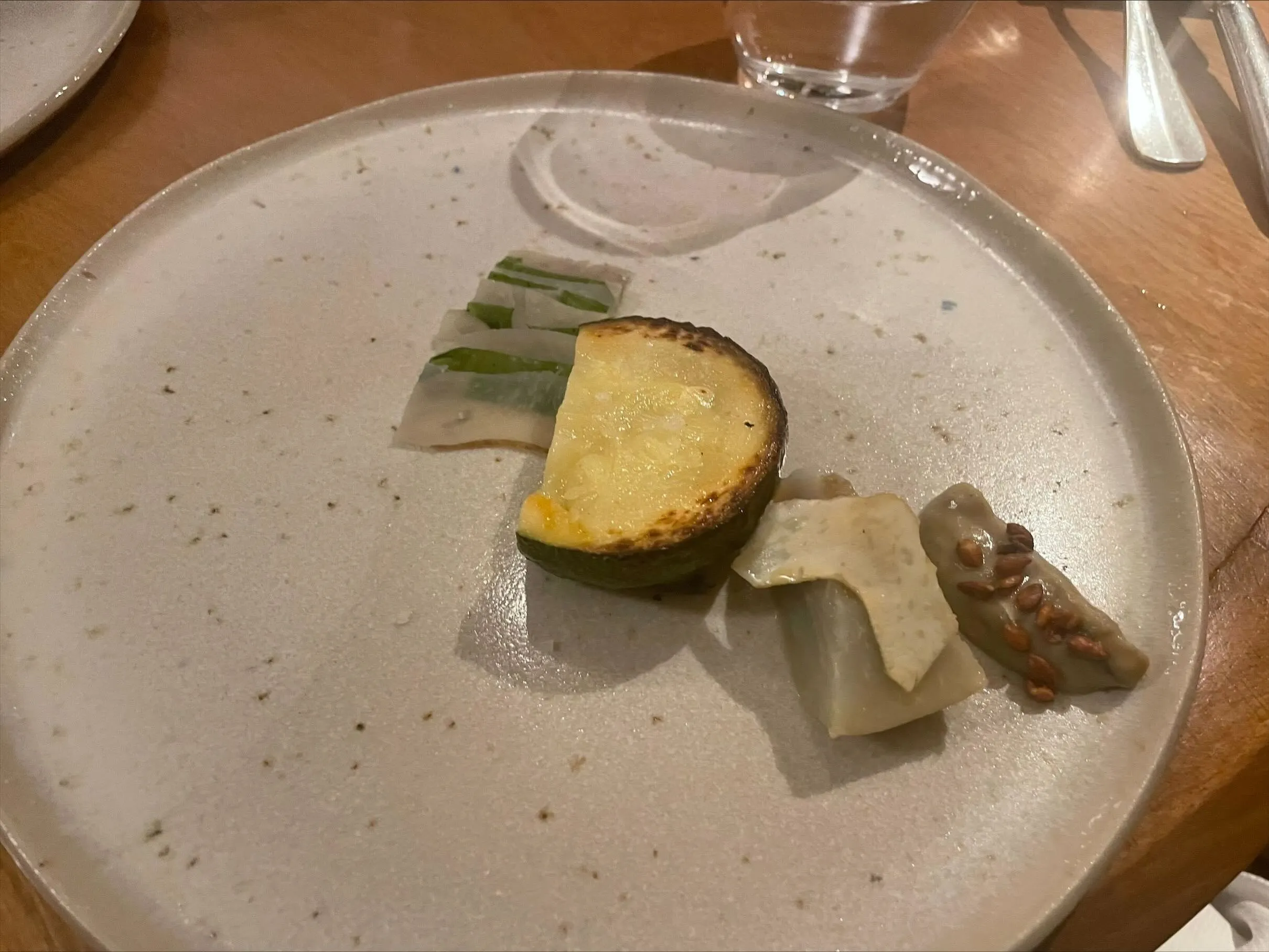
The next dish leans almost entirely French, with grilled zucchini, cooked artichoke, and a smoky puree. Details not noted. The puree is nice, but the rest is extremely bland. Especially the artichoke, usually one of my favorite vegetables, is disappointing. (5/10)
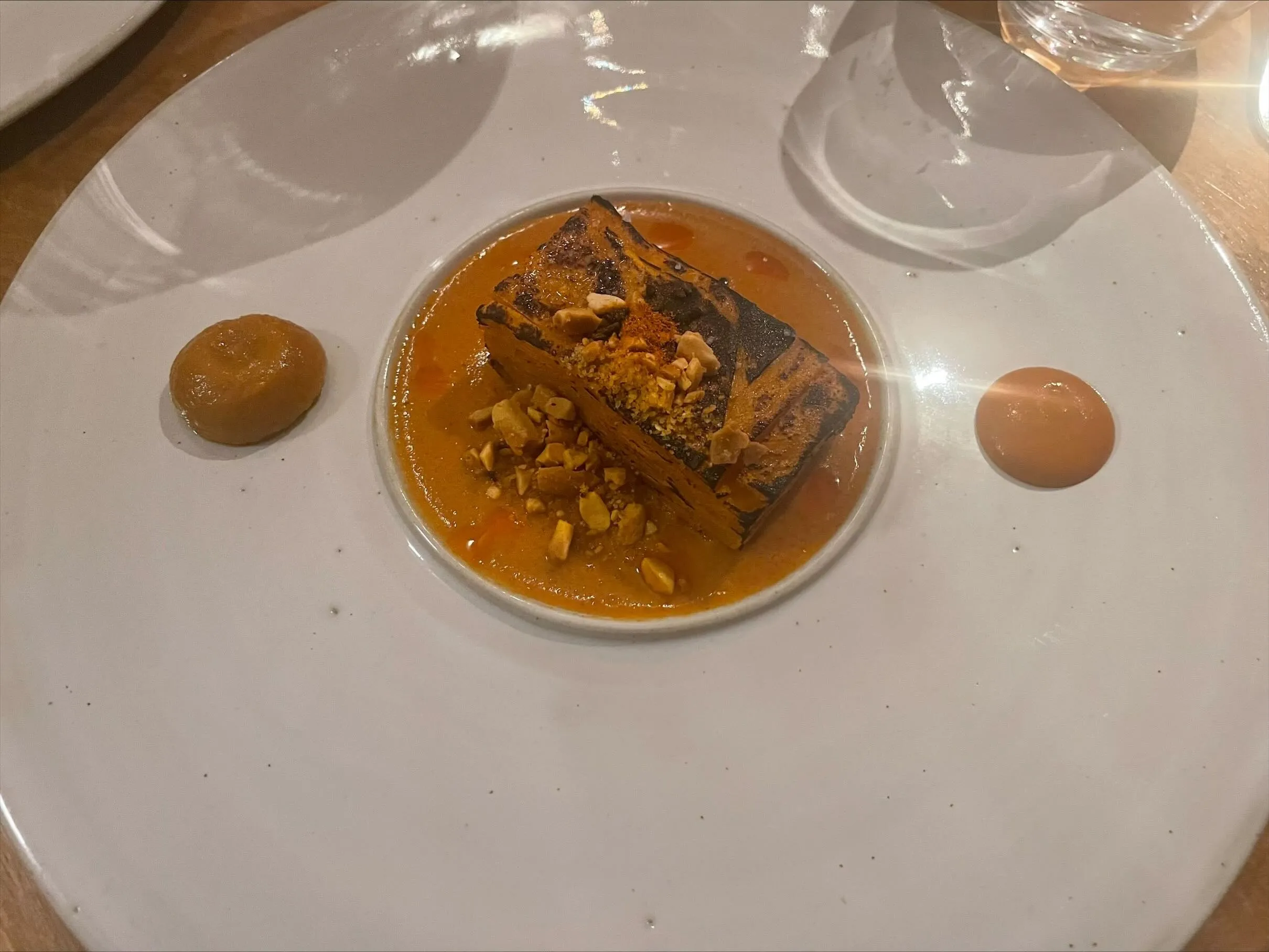
We now firmly reach West Africa with a layered sweet potato dish with a Malinese peanut sauce. This is pleasant, but a little too homogenous for my taste. The sweet potato and the sauce are both slightly sweet, quite rich, and very mushy. A few peanuts are not enough to provide meaningful texture, and after a few bites, I am wishing for something fresh, crunchy, and ideally acidic to cut through the otherwise one-note affair. Most of the enjoyment here is provided by the complex spices in the peanut sauce, but I feel like that sauce could have been put to better use. (6+/10)
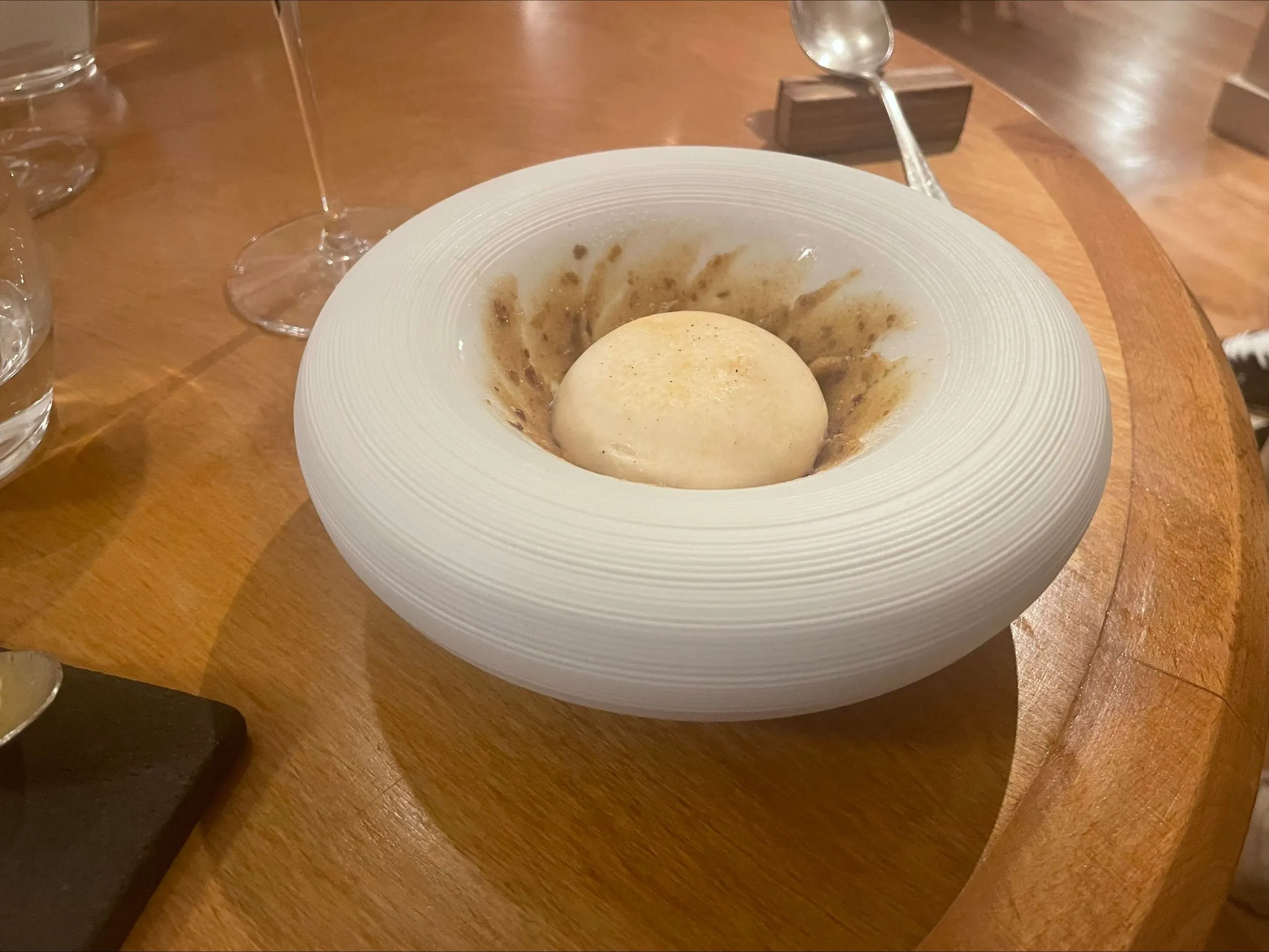
Our first dessert is a Senegalese-inspired dish with milk foam and some sort of biscuit. I can’t really comment on its Senegalese roots, but the result is not terribly unique and could easily be rebranded as a bistro dessert during Christmas time. Especially after the richness of the previous dish, I would’ve wished for something a little more fresh. Regardless, this is still a well-made and enjoyable dessert. (6/10)
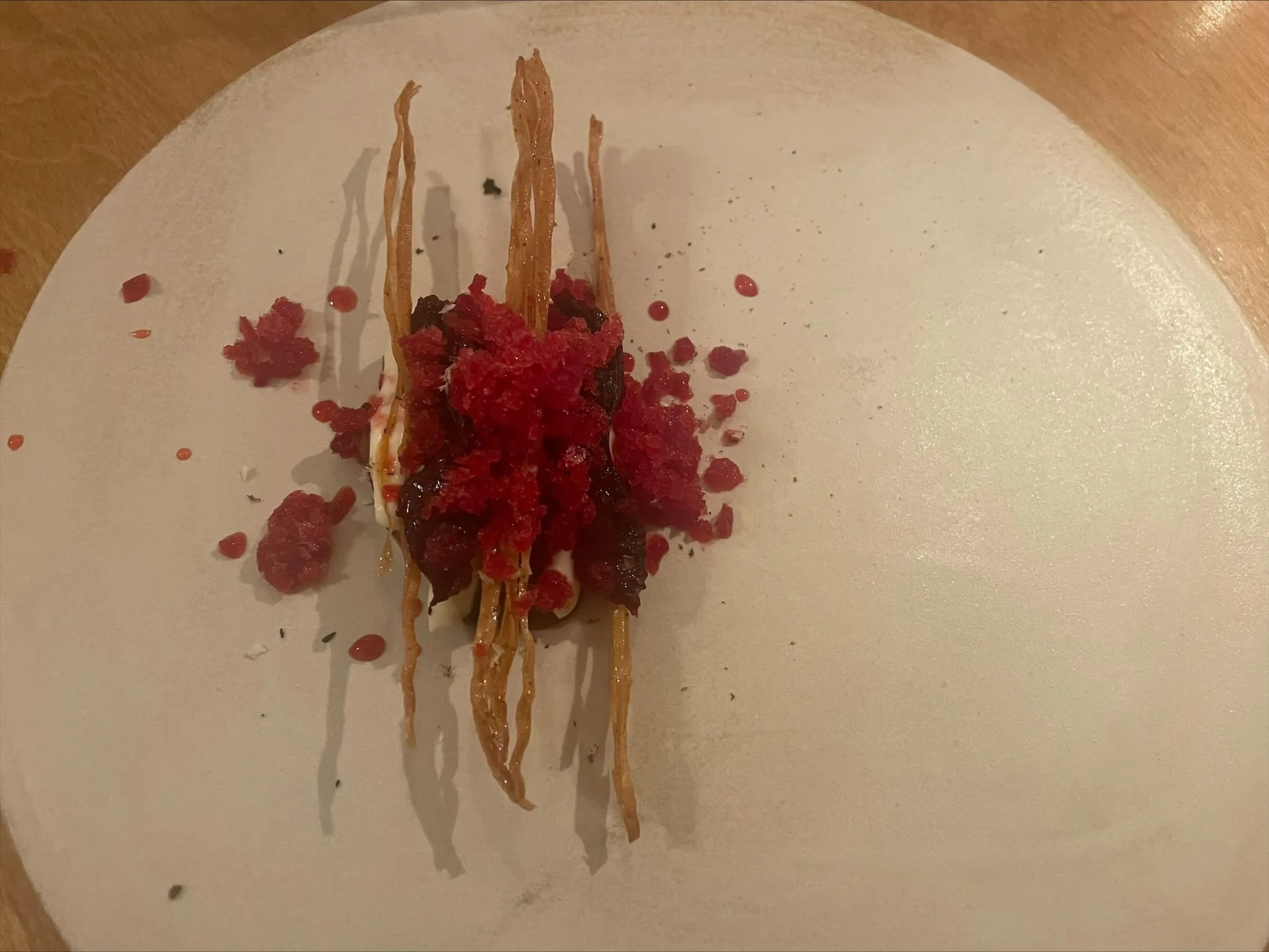
The fresh and fruity flavors I had been hoping for in the previous dessert now arrive in full force in the form of an arrangement of plums, plum granita, diplomat cream, and sweet strands of pastry. The plum flavor is superb, as are the creamy and crispy elements that accompany it. This is a very Euro-centric dessert, but going purely by taste, for me it’s the strongest dish of the menu. (8+/10)
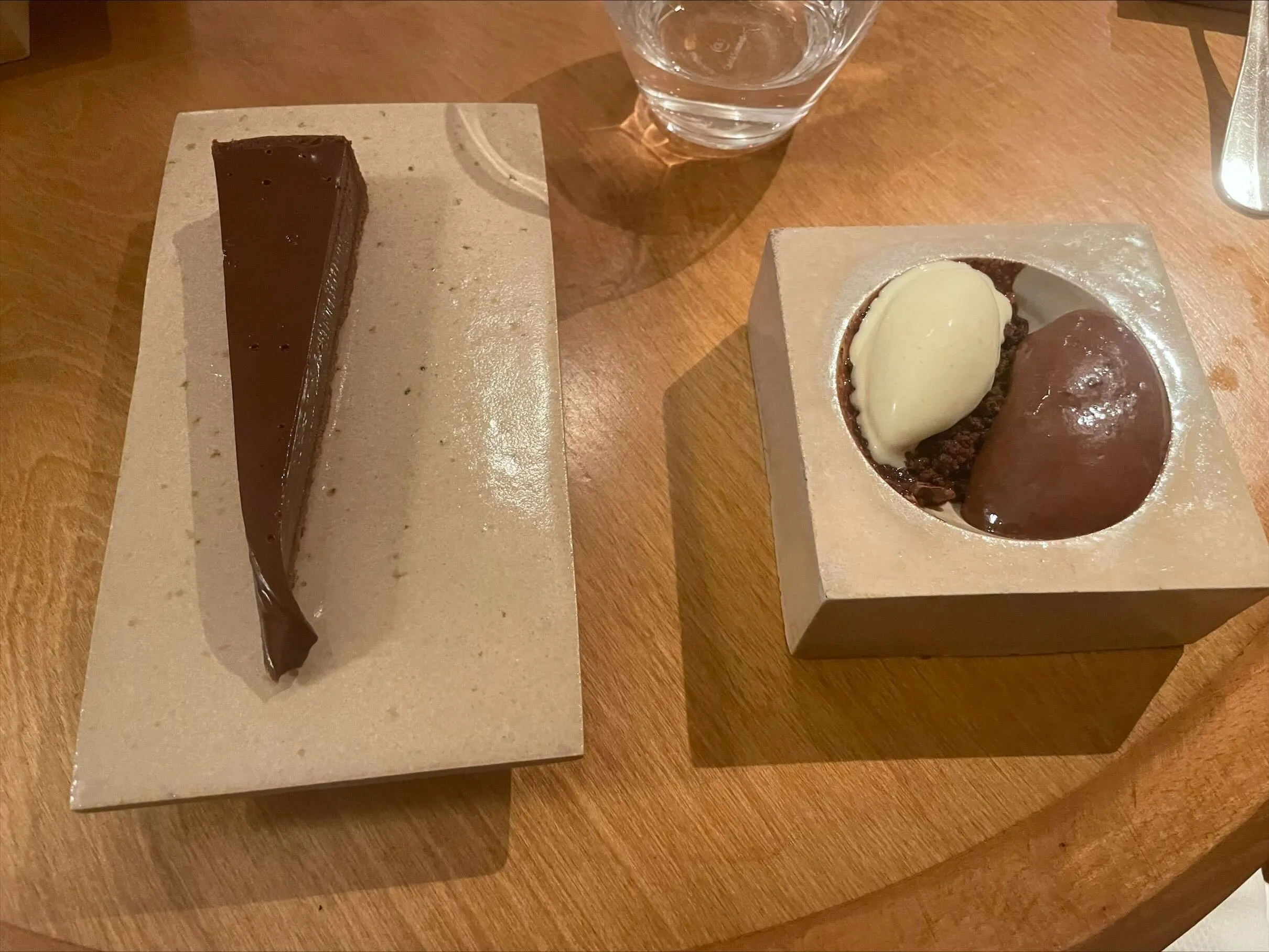
We end, classically French, with a chocolate tart. This is expertly made, deeply flavoured with high-quality chocolate, and thoroughly enjoyable. It comes with a side dish that, against all odds and common sense, strongly tastes of wasabi. I’m not a fan of wasabi or overly savoury elements in sweet desserts, so half a spoonful convinces me to focus entirely on the excellent tart. (7+/10)
At the end of the meal, the chef comes around personally to chat. All of that on-screen charm translates perfectly into real life. The table next to us, a group of six tourists from Asia, repeats over and over that this was the best meal of their lives. I share their appreciation for the overall experience offered by MoSuke, but I cannot concur on the food alone. Some courses were excellent, most notably the onion and the plum dessert. Others, like the not-a-fish course or the sweet potato dish from Mali, were interesting and completely new to me, but there were also some clear misses, e.g. the grilled courgette dish. The menu certainly delivers on its promise to incorporate French, Japanese, and African influences, but this is done mostly by alternating, not integrating, flavour profiles. The juxtaposition of Japanese courses with their mild, precise flavours and more heavily spiced African-inspired courses did not always succeed.
That said, I had a very enjoyable evening overall. The menu, with its countless snacks and courses, never gets boring. The atmosphere in the restaurant is relaxed and warm, and the vegetarian menu is a genuinely well-thought-out and equal alternative to the meat-based version. I’m excited to see what MoSuke’s cuisine develops into over the years and hope I will have another chance to sample it in the future. Assuming, of course, I can get a table.