Restaurant Stucki
| Food rating | 6/10 (rating system) |
| Michelin stars | |
| Vegetarian menu availability | Dedicated vegetarian menu |
| Website | tanjagrandits.ch |
My first association with Basel are pharmaceuticals: both of the major Swiss pharmaceutical companies, Roche and Novartis, are based here. But Basel is also Switzerland’s gastronomic capital, with 13 starred restaurants in total and less than half the population of Zurich. I suppose all those pharma profits have to be spent somewhere… Restaurant Stucki benefits from the pharmaceutical industry in a more direct way, being supported by an heir of the Roche family. I speculate whether this might be a reason why the prices are surprisingly affordable (CHF 255), at least by the standards of 2 starred restaurants in Switzerland.
Tanja Grandits took over this restaurant from its previous chef, Hans Stucki, in 2008 and has since become Switzerland’s most highly decorated female chef. She is also well-known as a cookbook author with an emphasis on vegetarian cuisine. As such, Stucki offers a fully vegetarian menu. Her cuisine is particularly known for her use of spices, still unusual in European fine dining, and colorful plating. All this sounds very enticing, so I’m excited for my lunch.
The restaurant is designed in a modern and comfortable style, but is much larger than I had expected, with multiple dining rooms and lots of staff bringing out plates at a rapid pace. As a result the atmosphere has a slightly corporate feel to it, which is amplified by the courteous but impersonal service.
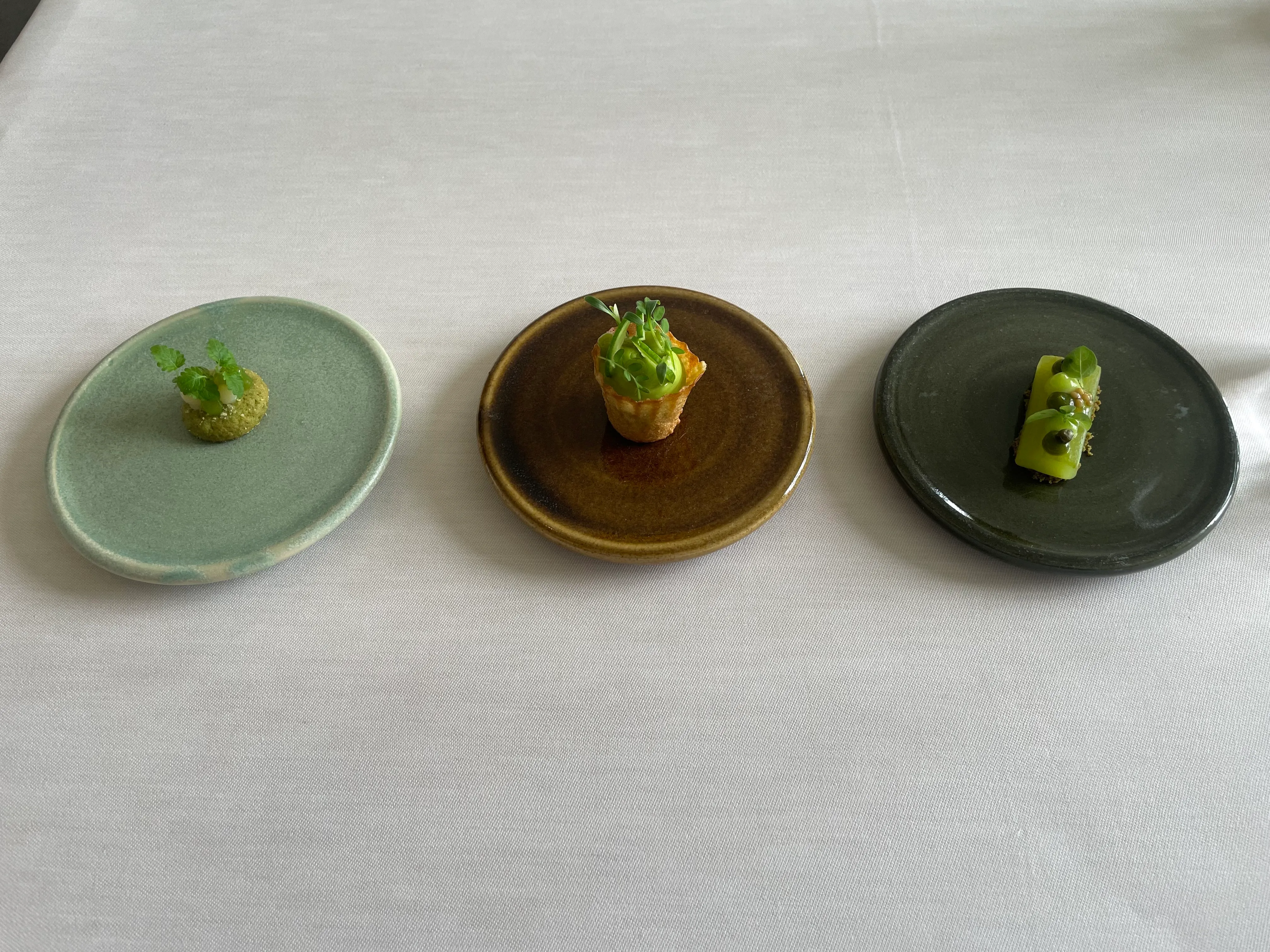
We start with a trio of cucumber-based bites: right, a pickled cucumber, in the middle a cucumber cream tartlet, and left a cucumber sable. The pickled cucumber tastes like, well, pickled cucumber of a rather ordinary kind. The tart doesn’t taste of cucumber at all, it’s a slightly acidic green cream with an otherwise undefined but pleasant taste. The sable is interesting insofar as it’s dry and crumbly, but does taste distinctly of cucumber, a taste that feels distinctly wet. Overall this is a pleasant but unremarkable start. (7/10)
At this point unfortunately my phone runs low on charge and I ask the service to charge it. As a result, there are no pictures for the next two dishes.
The first official course of the menu features, unusually, tofu. This is paired with fennel, sesame, and yuzu ponzu. On paper this sounds excellent: high quality (especially silken) tofu can be excellent, and I love fennel. On the plate, it’s much less excellent: mediocre tofu is left raw and unmarinated, the fennel has very little taste, so overall the only noticeable taste is that of the yuzu ponzu, which tastes fairly average and not much of yuzu. (6/10)
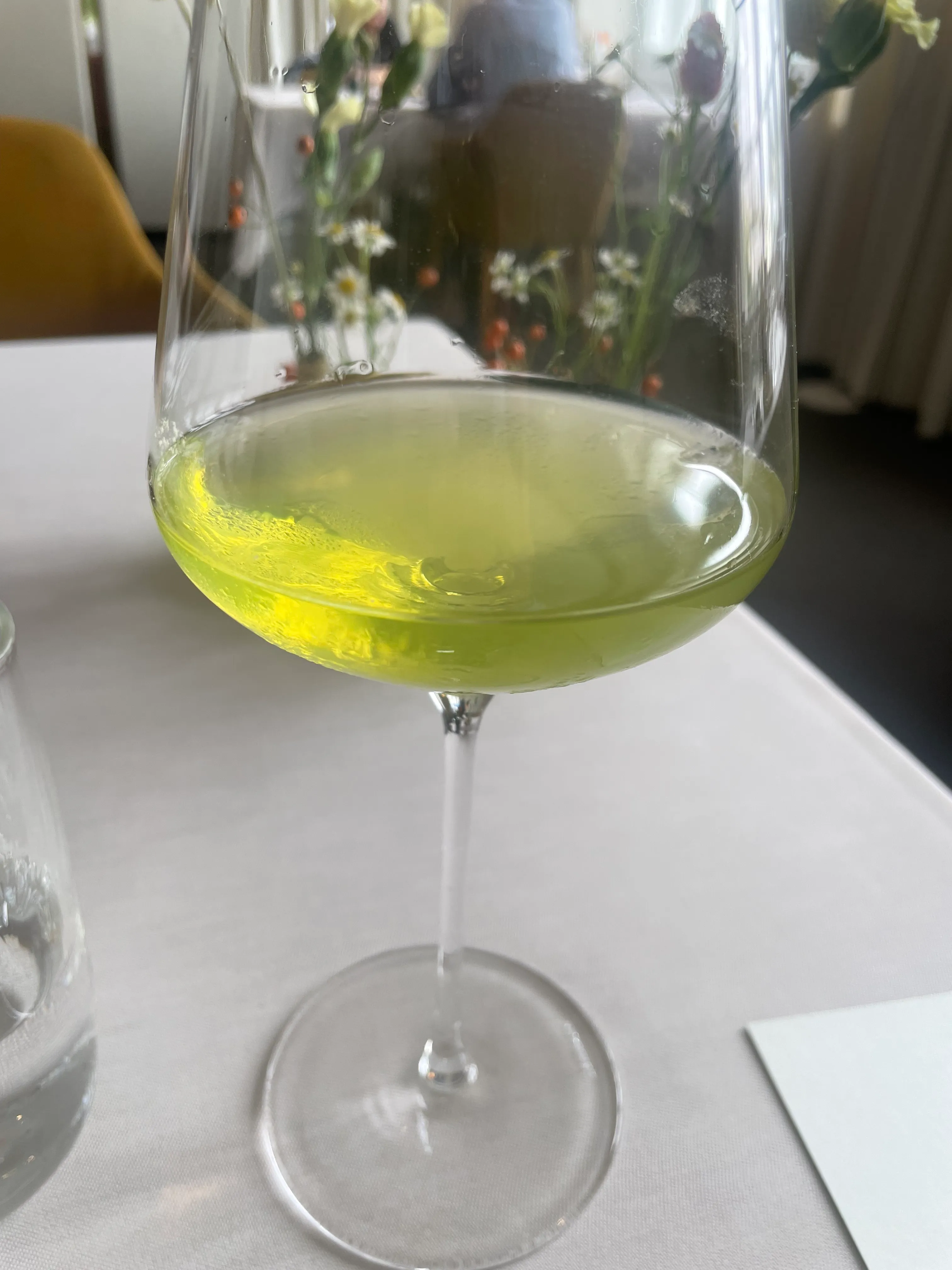
I also get a glass of the alcohol free pairing, a very light drink of basil and lime. It’s elegant, but very subtle and fairly predictable (if you’ve ever tasted basil, and who hasn’t, you basically know what this will taste like). (7+/10)
The second course is green beans with elderflower labneh and hazelnuts. The beans are of good but not exceptional quality and are overwhelmed by an acidic creamy sauce. I cannot detect elderflower. This is an improvement on the first course, but hardly anything to remember. (7/10)
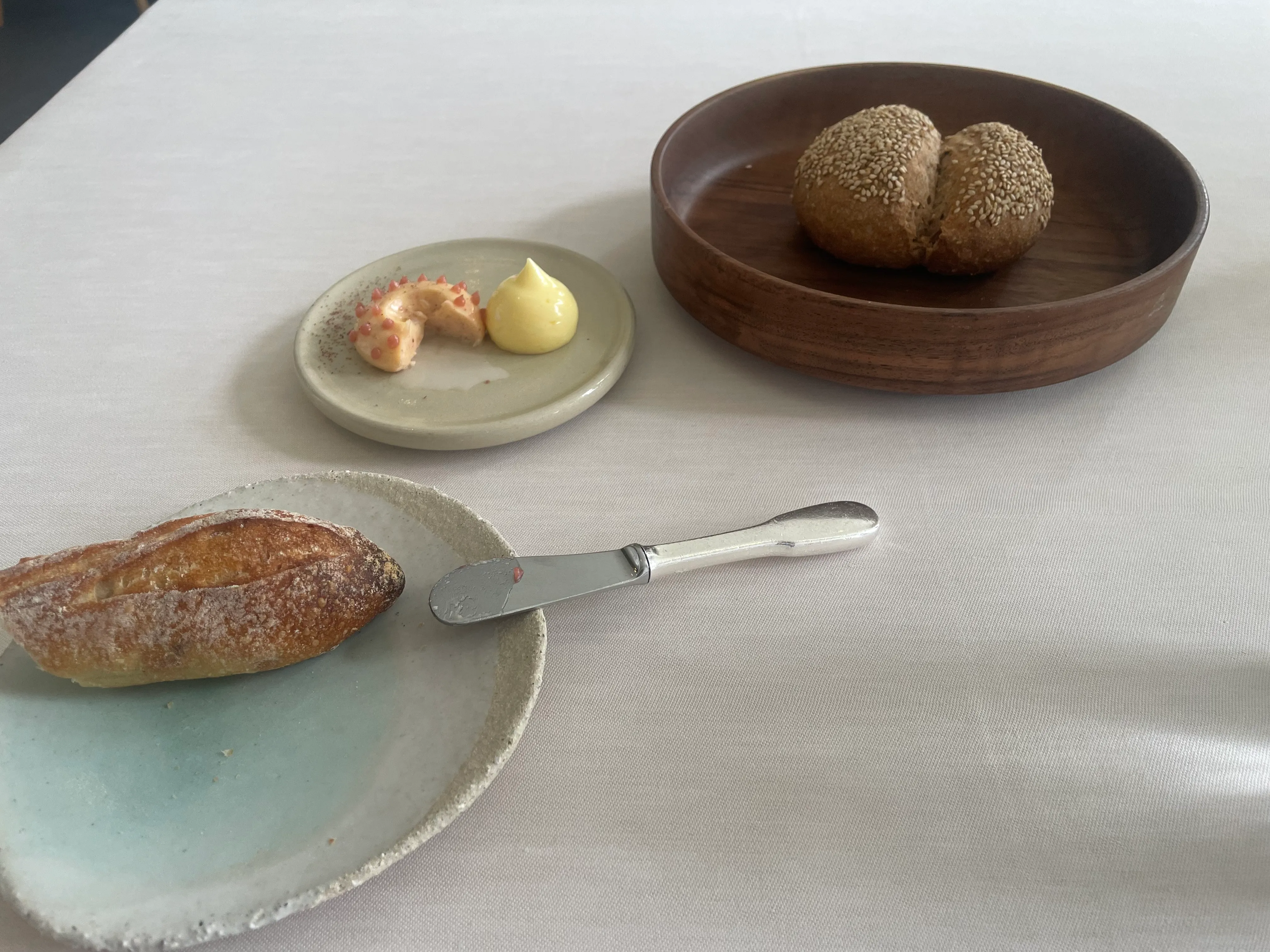
Bread consists of a fairly ordinary baguette and a roll. It’s apparently homemade, but tastes identical to average bakery bread (which, given German standards, is still quite good). The butter is flavoured with rose and is interesting, but cold and rock hard. Naturally that’s a problem that fixes itself over time, but I’d rather not have it at all. (6/10)
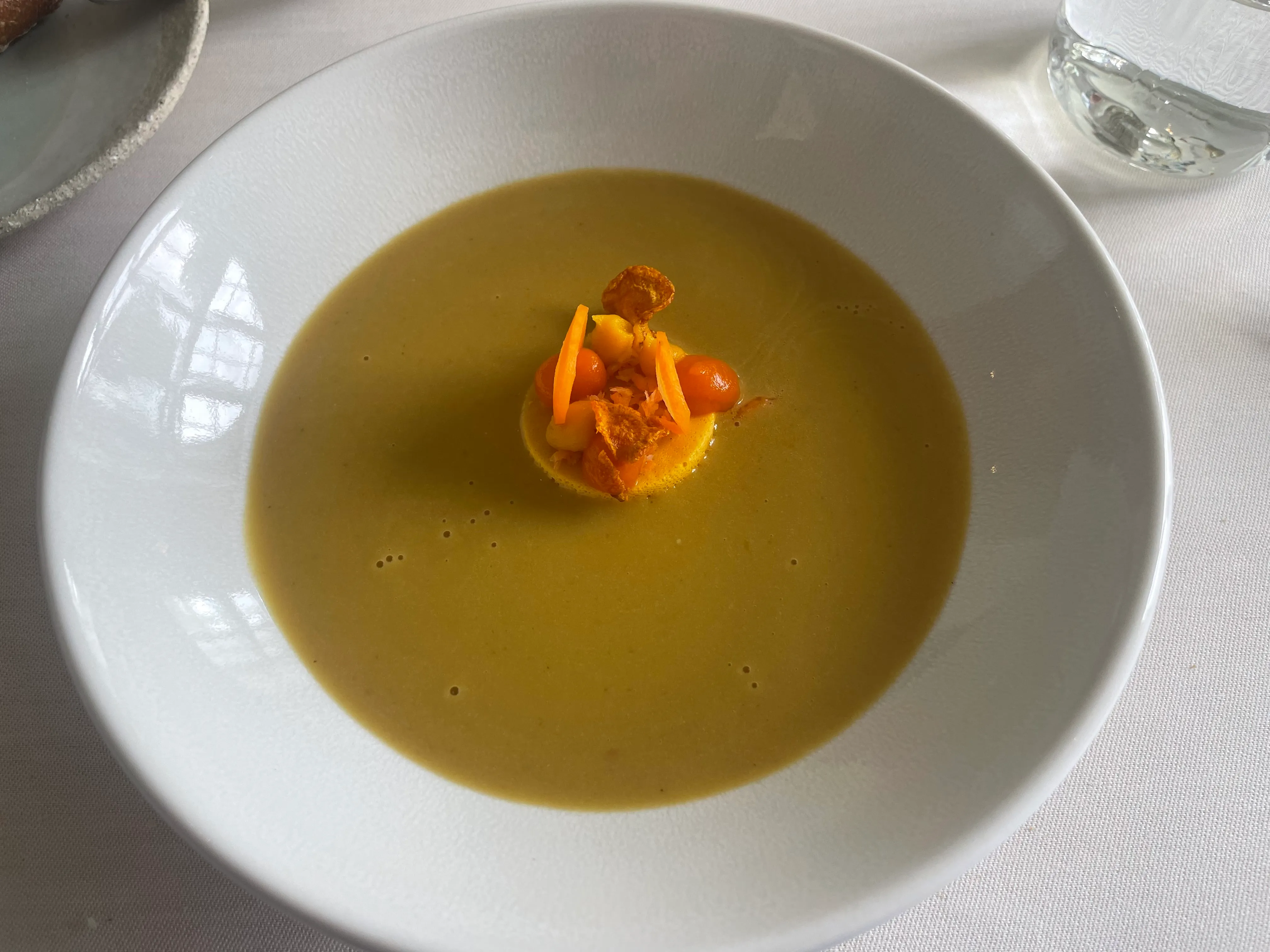
We continue with another favourite ingredient of mine: carrot. One of the best days in recent memory was when I found out my local supermarket sells a higher grade of carrots than the standard organic ones. They’re twice the price, come in annoying one pound trays, but I haven’t looked back since. That’s a long way of saying: I love carrots and I’m excited for the next dish, which pairs them with a coconut flan and lemongrass soup.
An artful tower of carrot based preparations arrives. The soup covers this beautiful arrangement and only leaves a little carrot island in the middle. The soup tastes of lemongrass, curry powder, and disappointment. It does not taste of carrot. Neither does the little flan in the middle, which tastes of nothing at all. The problem with the menu so far is exemplified in the carrot garnish on top: raw slices of carrots are the only natural element of the plate, but they taste like supermarket carrots, the ones I used to buy, before I discovered the better ones on the little tray. The focus here seems to be on complicated preparations, not high quality raw materials. (6/10)
At this point I’m only 1/3 of the way through the menu and the pacing is painfully slow. It’s going to be a long lunch. The staff don’t seem particularly passionate about the food either (apart from the sommelier, who is great). The other guests seem to have a mildly good time at best. I can relate. At least my phone has some charge again…
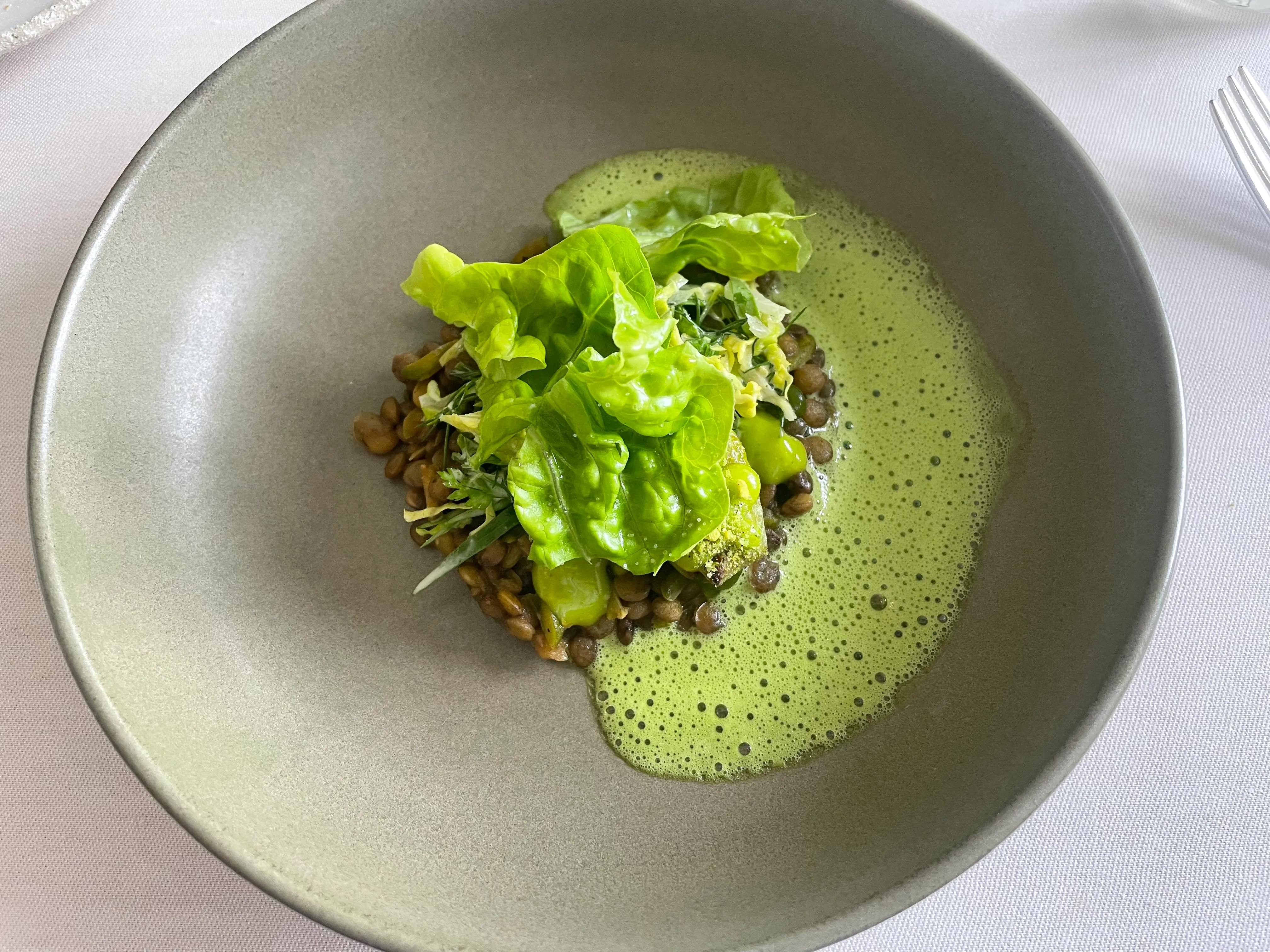
The next course features lentils, another ingredient rarely seen in fine dining restaurants, but one that can be undoubtedly delicious. These are not. They’re undercooked, oversalted, paired with an inconsequential pistachio beurre blanc (where the pistachio contributes little except color) and topped with various greenery. It’s the smallest portion of lentils I’ve been served in my life (the photos are deceiving because all the plates were unusually small), and one of the first I don’t finish. There’s also a piece of bay leaf flavoured leek, which is drowned out by the saltiness of its platemates. (6/10)
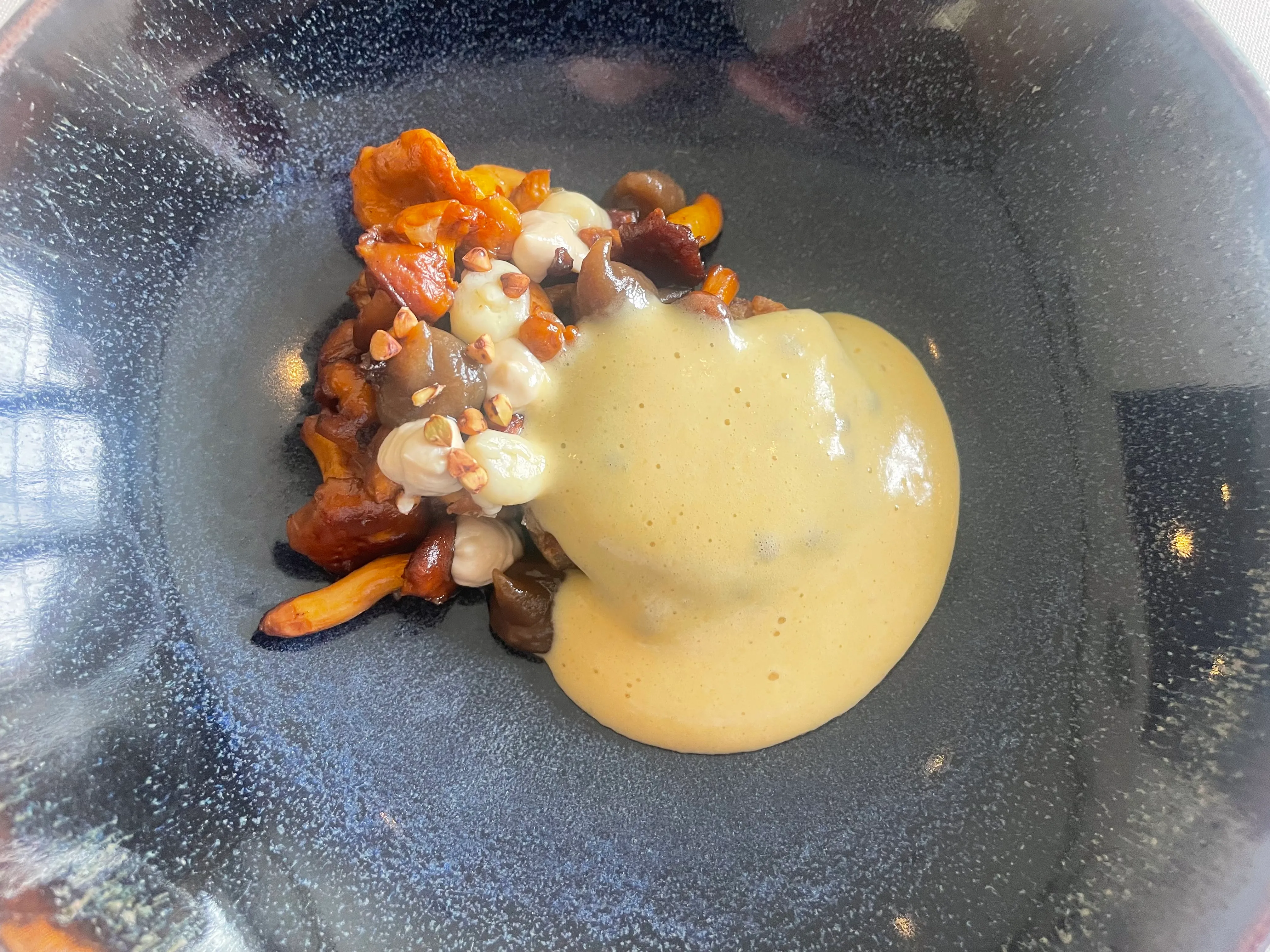
We continue with chanterelles, pretzel knodel, and a coffee yoghurt (which appears to be essentially a hollandaise, no coffee present). It’s all tasty, it’s all kind of average. I’d be happy to be served this as an appetizer in a nice bistrot. (7-/10)
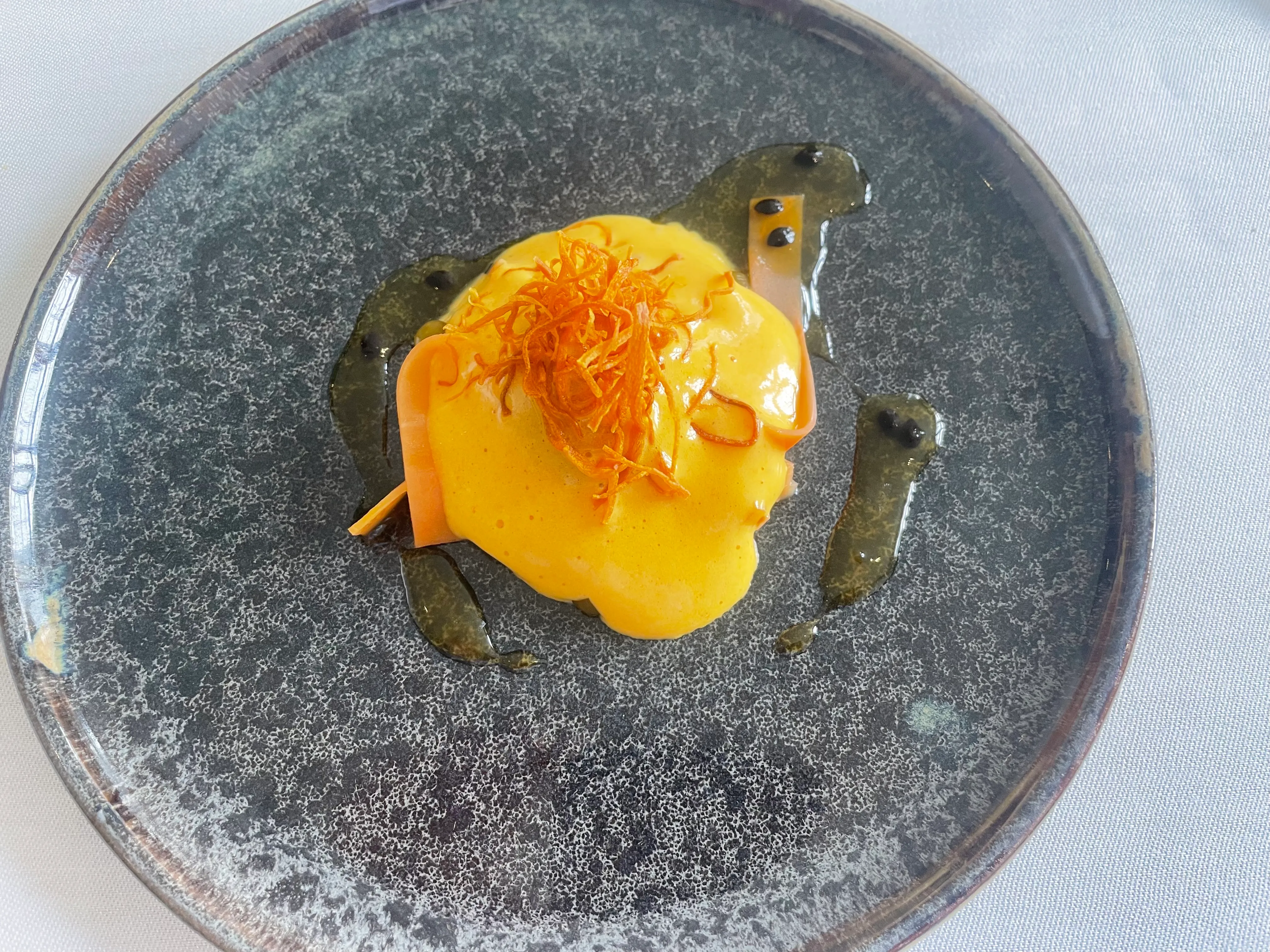
With the next course, we seem to have arrived at the dessert section of the menu already: a ricotta dumpling with a pleasantly chewy sweet potato dough is covered in various forms of sweet potato and passion fruit honey. Setting aside the fact that this tastes like a dessert, it’s the first actually delicious dish of the menu: the ricotta is excellent, the sweet potato foam adds richness, the passion fruit honey is sweet and fruity. (8/10)
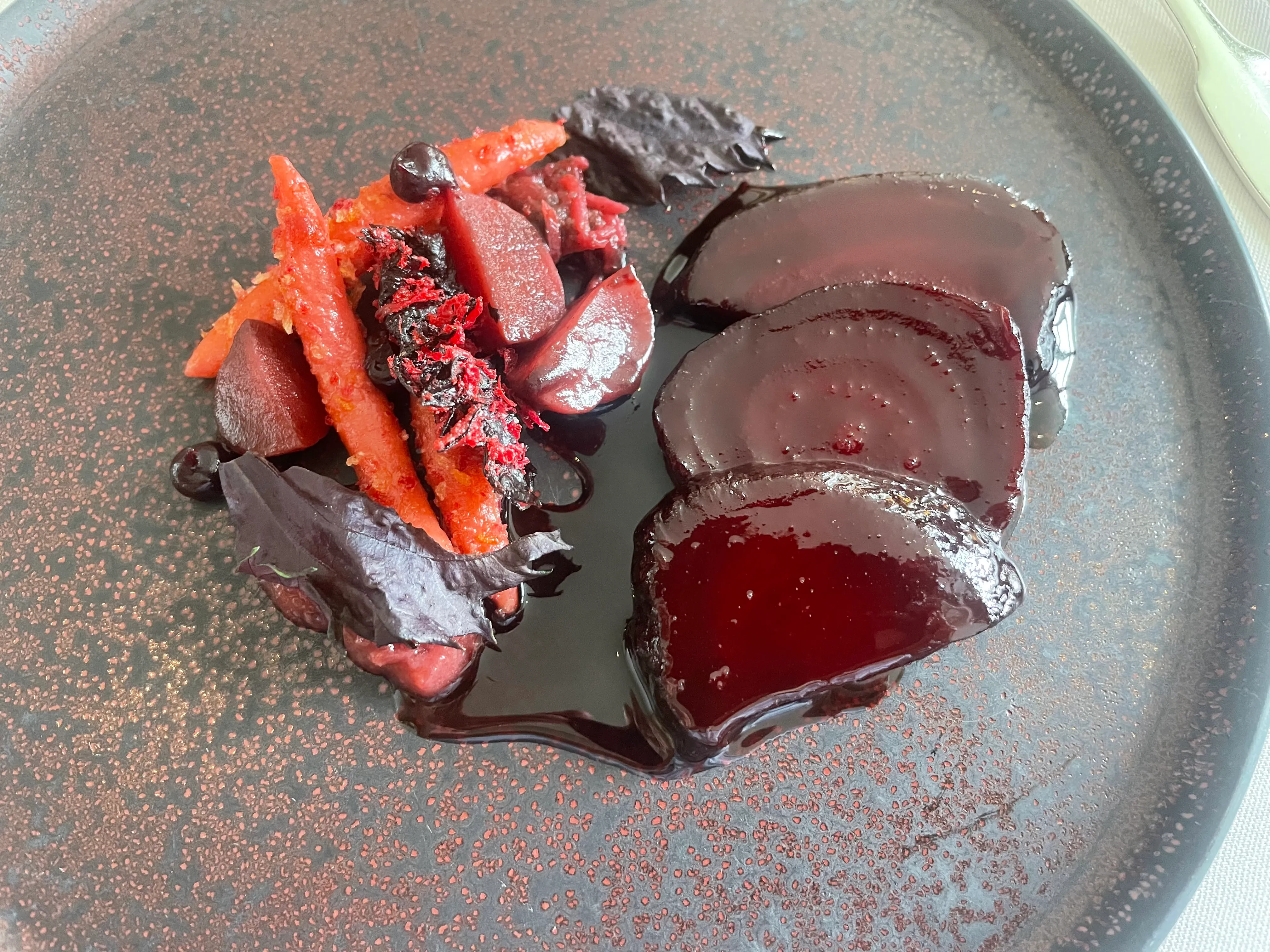
Alas, the dessert in the previous course was a ruse: we’ve only now made it to the main course, which consists of beetroot with shiso Schupfnudeln and Langpfeffer glaze. Or maybe we’re still in the dessert section, because the glaze is tooth achingly, absurdly, horribly sweet. The other ingredients don’t stand a chance. (5/10)
At this point, I ask them to speed up the pacing a bit. This works a little too well, because the next course, clearly pre-plated, arrives about 30 seconds afterwards.
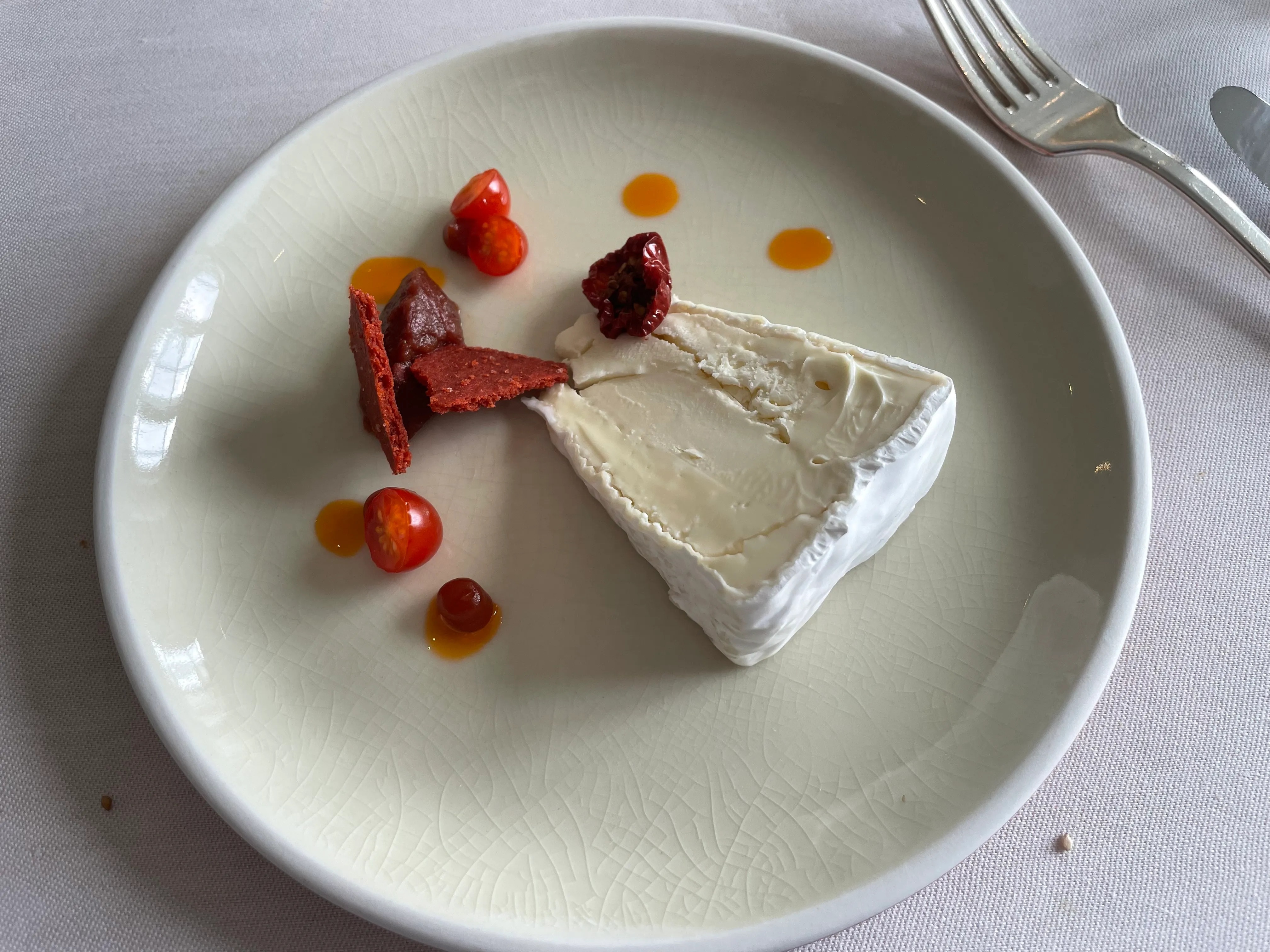
A nice piece of Brillat Savarin is served with various forms of tomato. These are, on the whole, good, except for a horrible dried tomato that I make the mistake of trying to eat. (6/10)
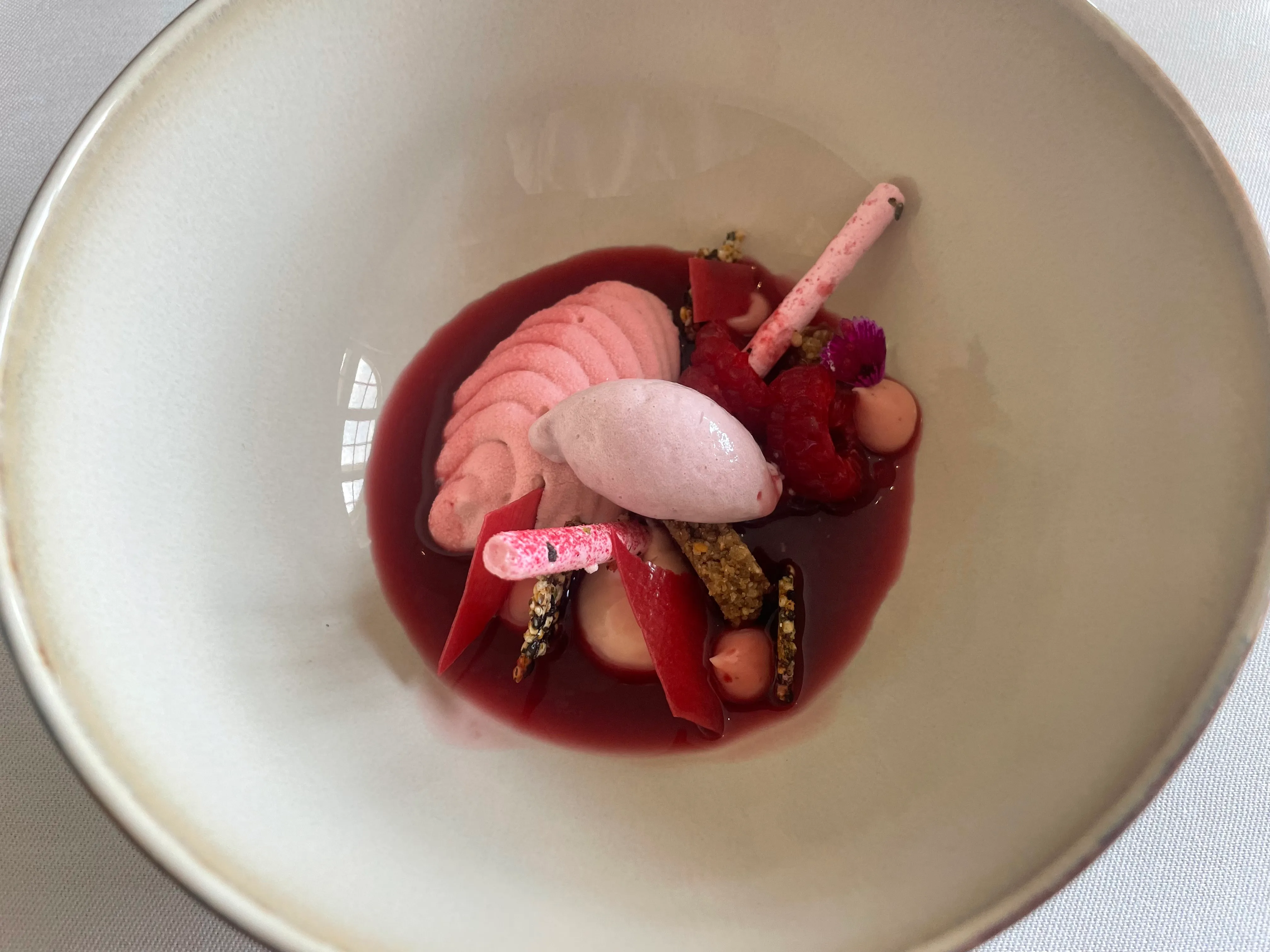
The first official dessert course is advertised as a pre-dessert (though by my count this is already the third dessert) and features raspberries in various forms. It’s pleasant. (7/10)
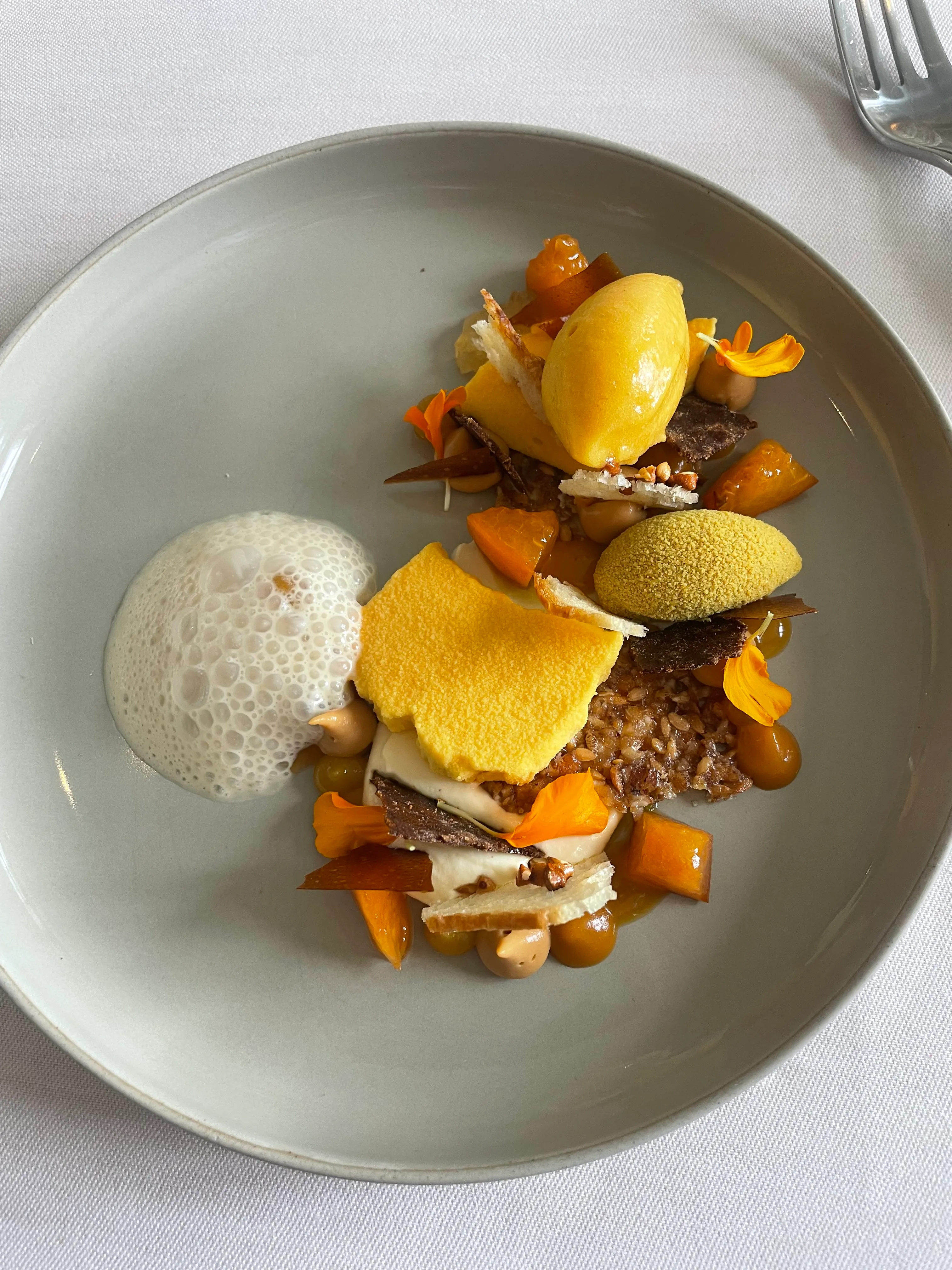
The official (by my count fourth) dessert is centered around apricot. It consists of a million different components, most of them creams of various kinds, assembled with great technical skill. I try various spoonfuls, hunting for authentic, delicious apricot taste, but my search is unsuccessful. Still, one of the better dishes of the menu. (7/10)
At this point, my desire to leave outweighs my sense of reviewing duty and I forget to photograph the petit fours. They were fine. (7/10)
This meal left me disappointed and confused. Yes, there were obvious technical errors (the lentils, the painfully sweet sugar glaze on the beetroot, the inedible dried tomato on the cheese). But more importantly, I don’t understand the point of this style of cooking. It seems like here, a lot of effort and technical skill was used to dull or overpower the natural flavour of the ingredients. Those ingredients, in the few cases where they were left in their natural form, seemed to be of ordinary quality. On a surface level, this was a meal that proved all the trappings of a fine dining menu: complicated preparations, intricate plating, formal service, white tablecloths. But was the food actually delicious? On the whole, no.
Mediocre food, painfully slow service, a stuffy interior: in short, one of the least enjoyable fine dining experiences I’ve had.